In this series
Which God Idols Should NOT Be Kept at Home? Vastu Rules & Safe Alternatives

One of the most searched questions in the Hindu household space is also one of the most misunderstood: which god idols should not be kept at home? The question comes from a genuine place of devotion — people want to worship correctly and ensure their home mandir supports the household’s spiritual life.
The short answer: restrictions are not about which deity is being worshipped, but about the specific form, size, condition, and placement of the idol — and about the level of ritual care certain forms require.
Why Some Idols Have Strict Rules at Home
In the Hindu tradition there are two categories of sacred image: those intended for household (griha) worship, and those intended for temple (devalaya) worship. Temple-consecrated murtis — formally consecrated through Prana Pratishtha — require daily Shodashopachara (16-step) puja: bathing, dressing, feeding, and worship at specific times. Most household restrictions stem from this principle: certain forms create ritual obligations that ordinary households cannot realistically fulfill.
Idols and Forms Generally Avoided in Home Mandirs
1. Shivling — With Conditions

Not prohibited at home, but with specific conditions:
- Size must be small — no larger than the thumb (Angushtha Matra). Very large Shivlings require temple-level worship
- Daily abhishek (ritual bathing with milk, water, or panchamrit) is traditionally required
- Must have a proper Yoni base with drainage spout. Incomplete Shivlings without the Yoni are inauspicious
- A broken or chipped Shivling should never be worshipped — respectfully immerse in a river
Safe alternative: A Shiva painting in his benevolent Soumya form — seated in meditation, as Ardhanarishvara, or as Shiv Parivar — carries the deity’s presence without the ritual obligations of the Shivling.
2. Nataraja (Dancing Shiva) — Use With Care
The Nataraja’s Tandava is Rudra Tandava — Shiva’s fierce, destructive dance, associated with cremation grounds and cosmic dissolution. Vastu experts generally recommend the Nataraja as an art object in the living space rather than as a worship image in the mandir.
Safe alternative: Shiva in meditative or Shiv Parivar form.
3. Mahakali / Bhairava / Fierce Tantric Forms
These powerful Tantric forms require specific initiation (diksha) and worship protocols that ordinary households are not equipped to maintain. Kali in her benevolent Dakshina Kali form (worshipped in Bengal) is appropriate; the most terrifying Tantric forms are not.
Safe alternative: Durga in her victorious, benevolent Mahishasura Mardini or Navadurga forms.
4. Broken or Damaged Murtis
Universally agreed across all Hindu traditions: a broken, chipped, or damaged murti should never be worshipped. Even a small chip on a finger, nose, or foot makes a murti ritually incomplete. Damaged murtis should be respectfully immersed in a flowing body of water — never thrown in the trash.
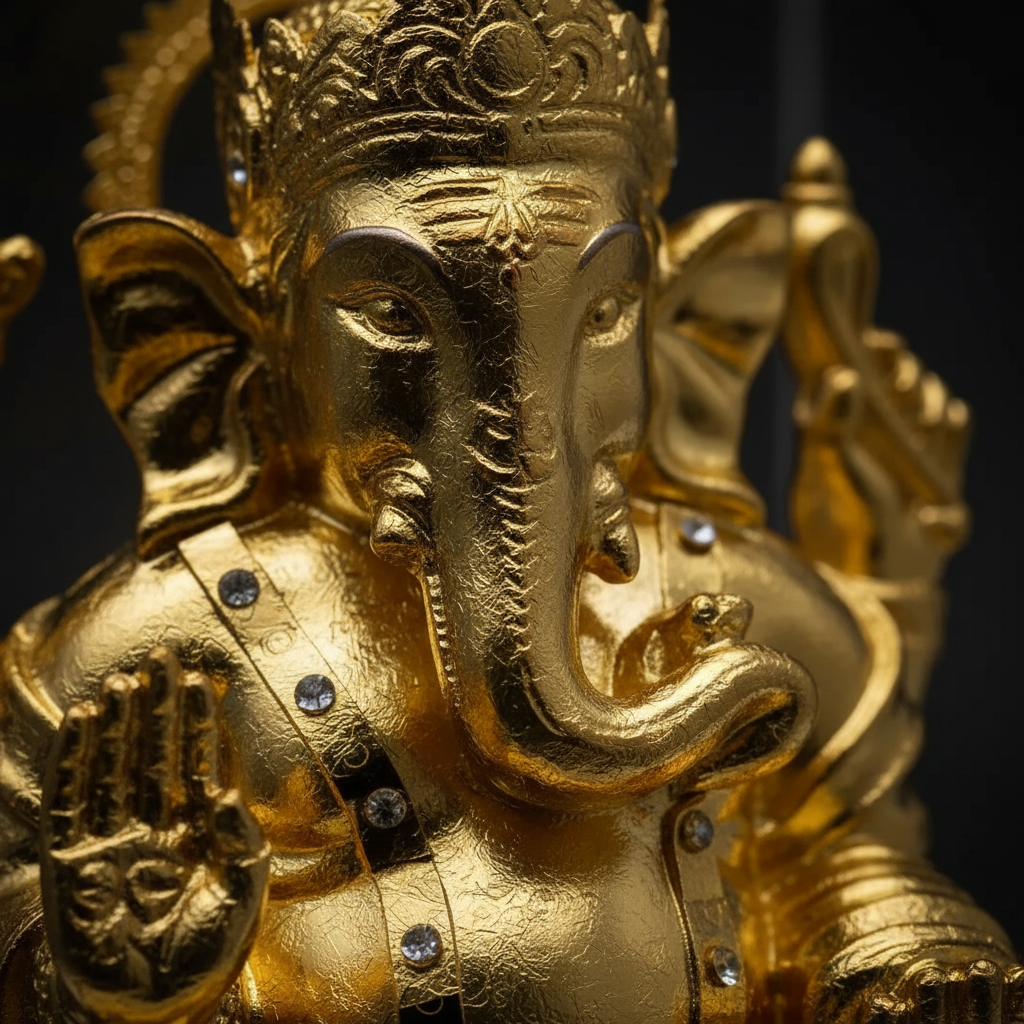
Safe alternative: A framed sacred painting cannot chip or break. A 24K gold foil painting protected by acrylic remains intact and auspicious for decades.
5. Very Large Murtis
Murtis taller than approximately 9–10 inches (standing figure) are considered appropriate for temples rather than homes. Very large murtis create the same obligations as temple murtis: formal daily Shodashopachara puja that few households can realistically maintain.
Safe alternative: Smaller murtis (4–8 inches) or a painting of any size without size-based ritual obligations.
6. Multiple Shivlings or Duplicate Deity Images
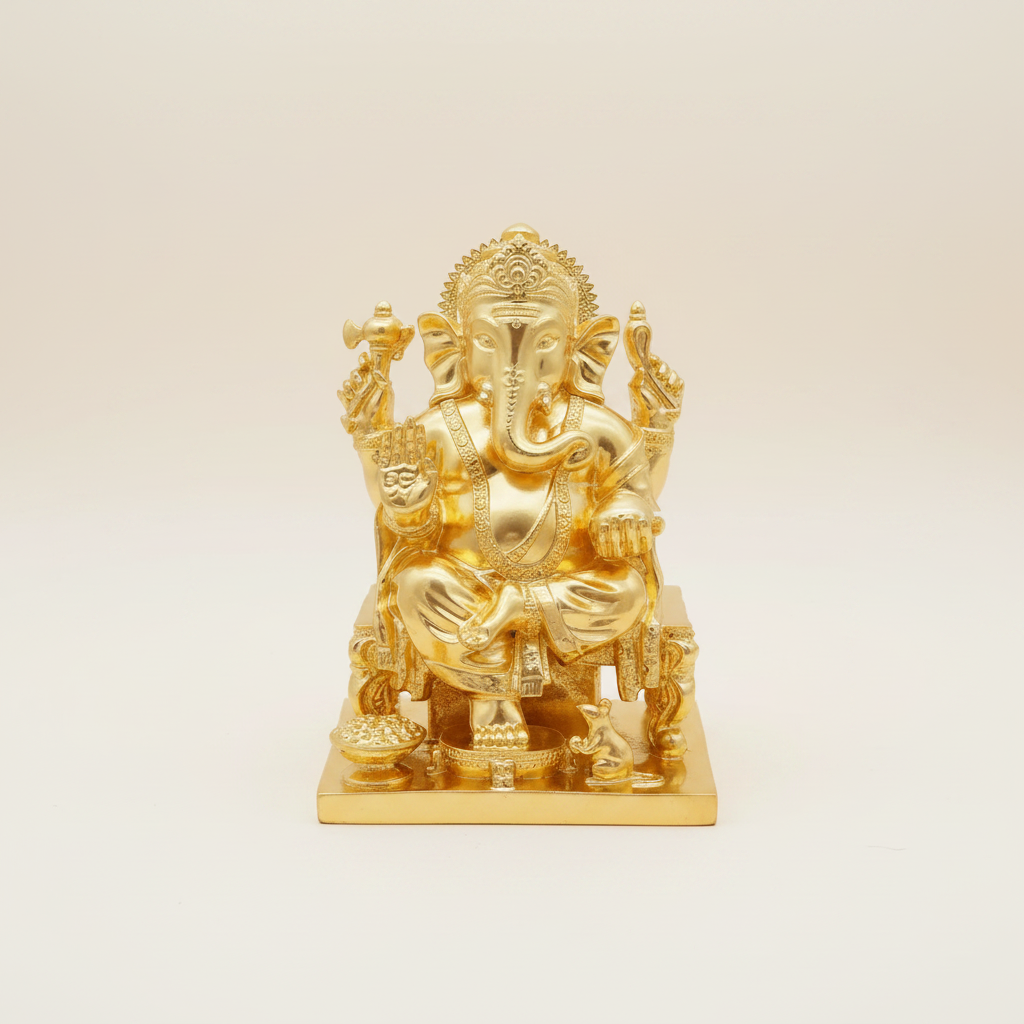
More than one Shivling in the home mandir is inauspicious in most Vastu traditions. The same principle applies to multiple Ganesha murtis (more than two) and multiple Surya images.
7. South-Facing Murtis
Any murti placed so the devotee faces South during worship is inauspicious (exception: Hanuman, whose protective energy is intentionally directed South).
What About Framed Sacred Paintings?
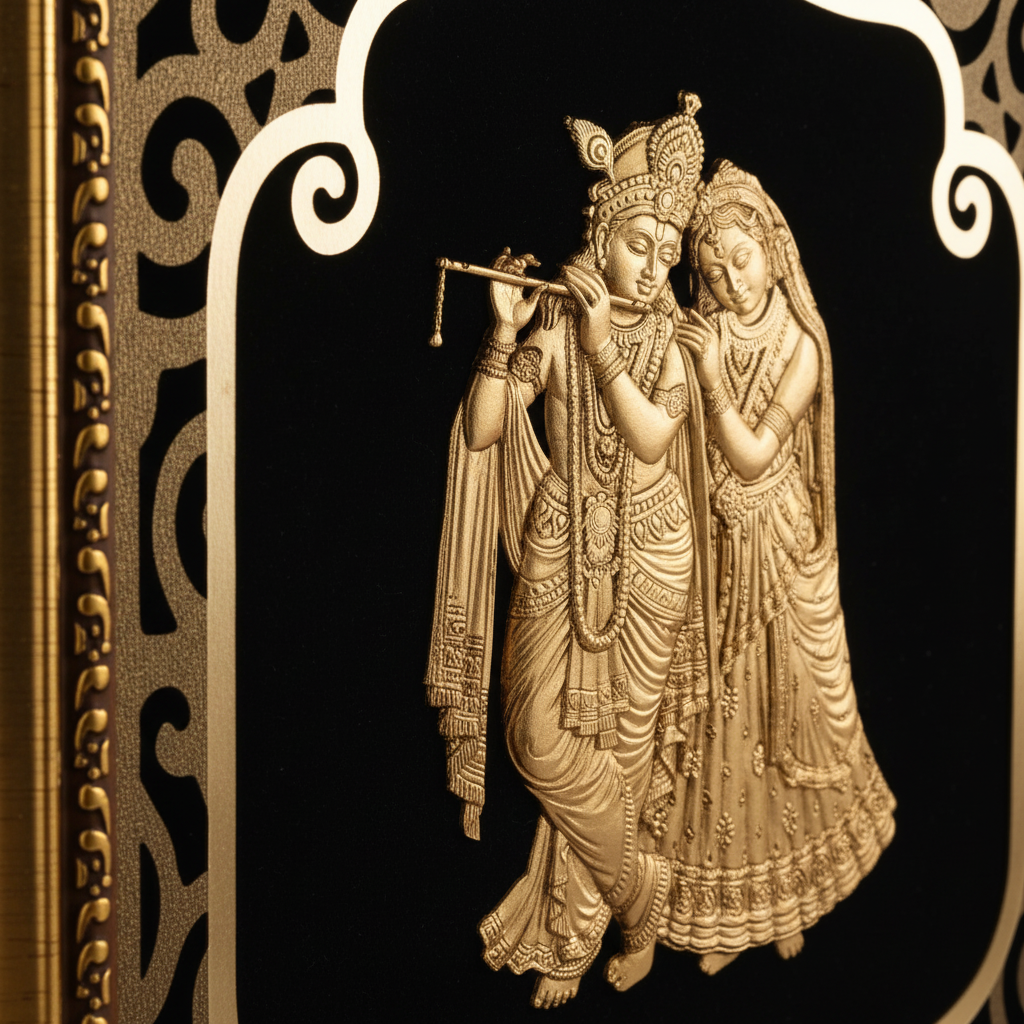
Framed sacred images — paintings and prints — are subject to far less stringent rules than three-dimensional consecrated murtis, because they do not typically undergo Prana Pratishtha and do not carry the same ritual obligations. The practical rules are simple: keep them clean, do not place them in bathrooms or on walls shared with toilets, maintain a daily lamp and flower offering, and do not place them on the floor.
A 24K gold foil sacred painting is in many ways the ideal sacred image for modern household worship: it cannot chip or break, requires no ritual bathing or dressing, any size is appropriate, and genuine gold never tarnishes or fades — remaining as radiant in ten years as on the day it arrives.
Summary
- Shivling: Keep if small and you can maintain daily abhishek → otherwise use a Shiva painting
- Nataraja: Fine as art, avoid in the mandir as a worship image → use Shiva in meditation or Shiv Parivar
- Fierce Tantric forms: Only with proper initiation → use Durga in benevolent form
- Broken murtis: Never worship. Immerse respectfully → replace with an intact painting
- Very large murtis: Requires temple-level care → use smaller murti or painting of any size
- South-facing: Avoid (except Hanuman) → reposition to face East or North
Explore our collection of 24K gold foil paintings in Ganesha, Lakshmi, Durga, Shiva, Krishna, Saraswati, and Hanuman forms — the safest, most beautiful, and most lasting way to honor the divine in your home.