In this series
How to Create a Sacred Space at Home: The Complete Guide

A sacred space — a dedicated area in the home for worship, prayer, and stillness — is one of the most powerful things you can create for the spiritual life of your household. It does not require a large room, an elaborate setup, or significant expense. What it requires is intention: the deliberate act of setting apart a space and treating it as the dwelling place of the divine.
Step 1: Choose Your Location
Vastu Shastra provides clear guidance on where to place your sacred space:
- Northeast corner: The ideal — the most spiritually charged zone, receiving solar energy from the East and abundance energy from the North simultaneously
- East wall: Second choice — devotee faces East during worship, aligning with the rising sun and new beginnings
- North wall: Third choice — particularly auspicious for Lakshmi worship
- West wall: Acceptable when the above are not available
- South: Avoid (exception: Hanuman facing South)
If none of the ideal locations are available, choose the best option and proceed with full intention. Direction matters — but devotion matters more.
Step 2: Decide on Scale
- Minimal (shelf altar): An 18–24 inch wall-mounted shelf with one or two sacred images, a lamp, and a flower offering — ideal for apartments
- Standard (mandir unit): A 2–3 foot dedicated mandir cabinet with 3–5 deity images, Kalash, and puja items — the most common household setup
- Full puja room: A dedicated room with full ritual equipment, multiple deity images, and space for seated worship
Step 3: Set Up the Physical Altar
Cover the altar surface with a clean red, yellow, or orange cloth. Add a Kalash — a brass or copper pot filled with water, topped with mango leaves and a coconut — to establish the sacred space as an active dwelling place of the divine. Place a lamp (ghee diya, oil lamp, or permanent electric lamp) as the most essential element after the deity image: a lamp lit daily transforms the altar from a static arrangement into a living sacred space. Add incense to purify the air and create a sensory boundary between the sacred and the everyday.
Step 4: Choose Your Sacred Images

The most common deity configurations for a household mandir:
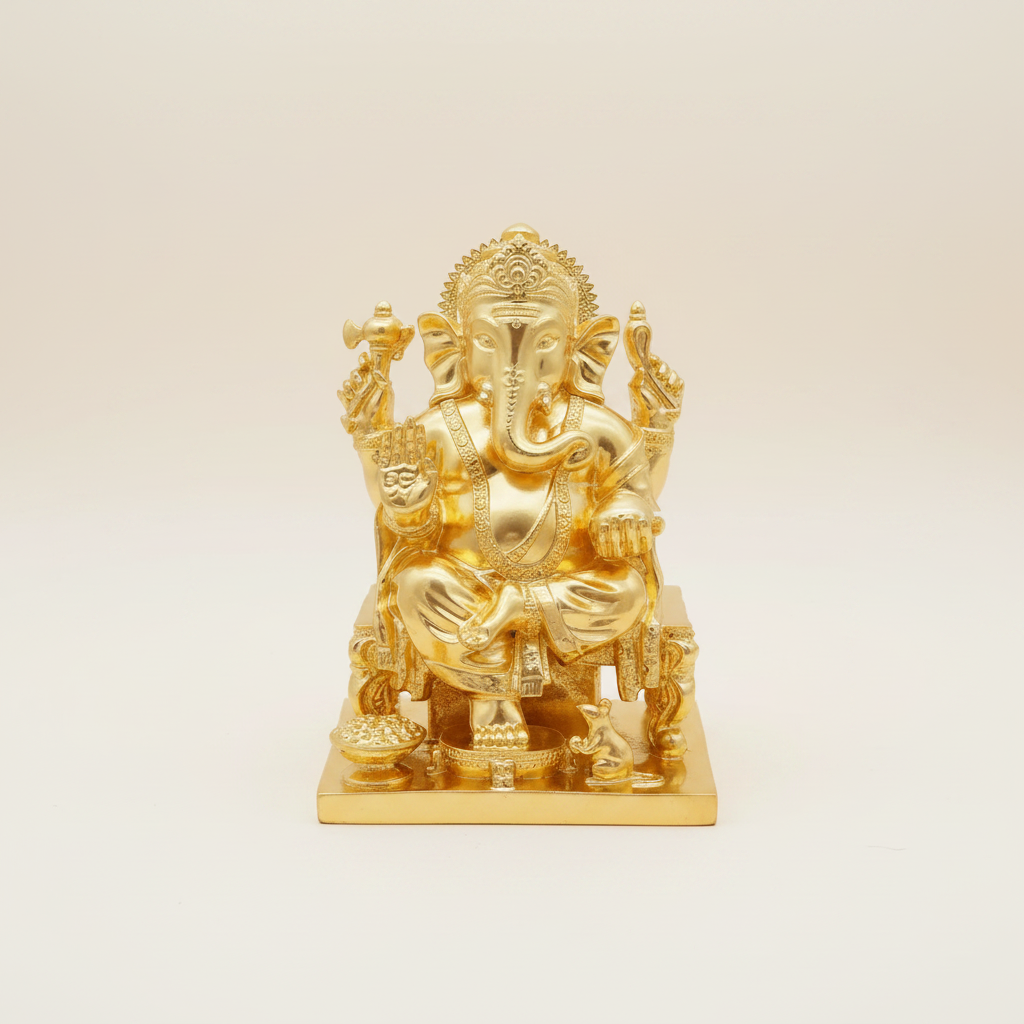
- Ganesha + Lakshmi: The foundational pairing — remover of obstacles and goddess of abundance, ensuring auspicious beginnings and prosperity
- Ganesha + Lakshmi + Saraswati: Covers the three fundamental domains: auspicious beginnings, material abundance, and wisdom
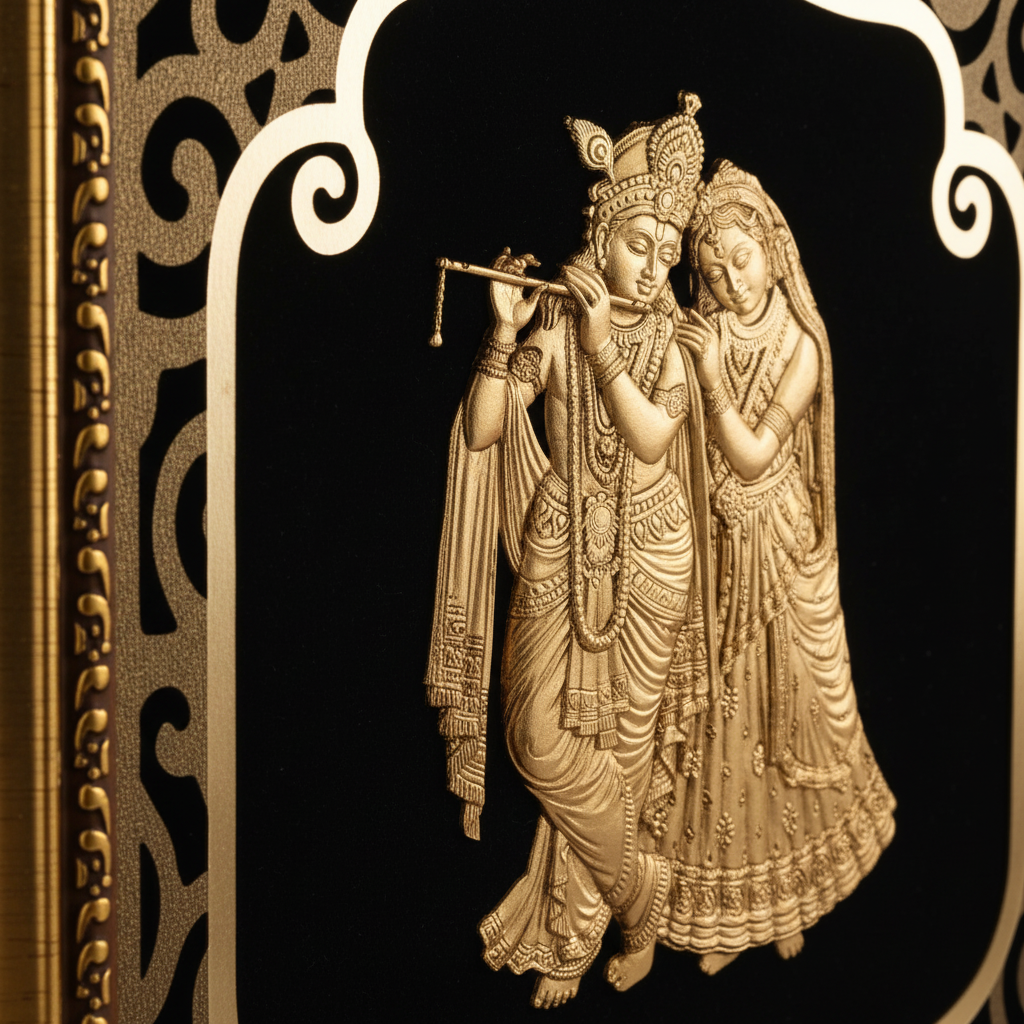
- Radha-Krishna: For Vaishnava households — the highest expression of divine love
- Durga: The goddess of protection — particularly important where protection of the family is a primary concern
- Family deity (Kuldevi/Kuldevta): Always holds a place of honor
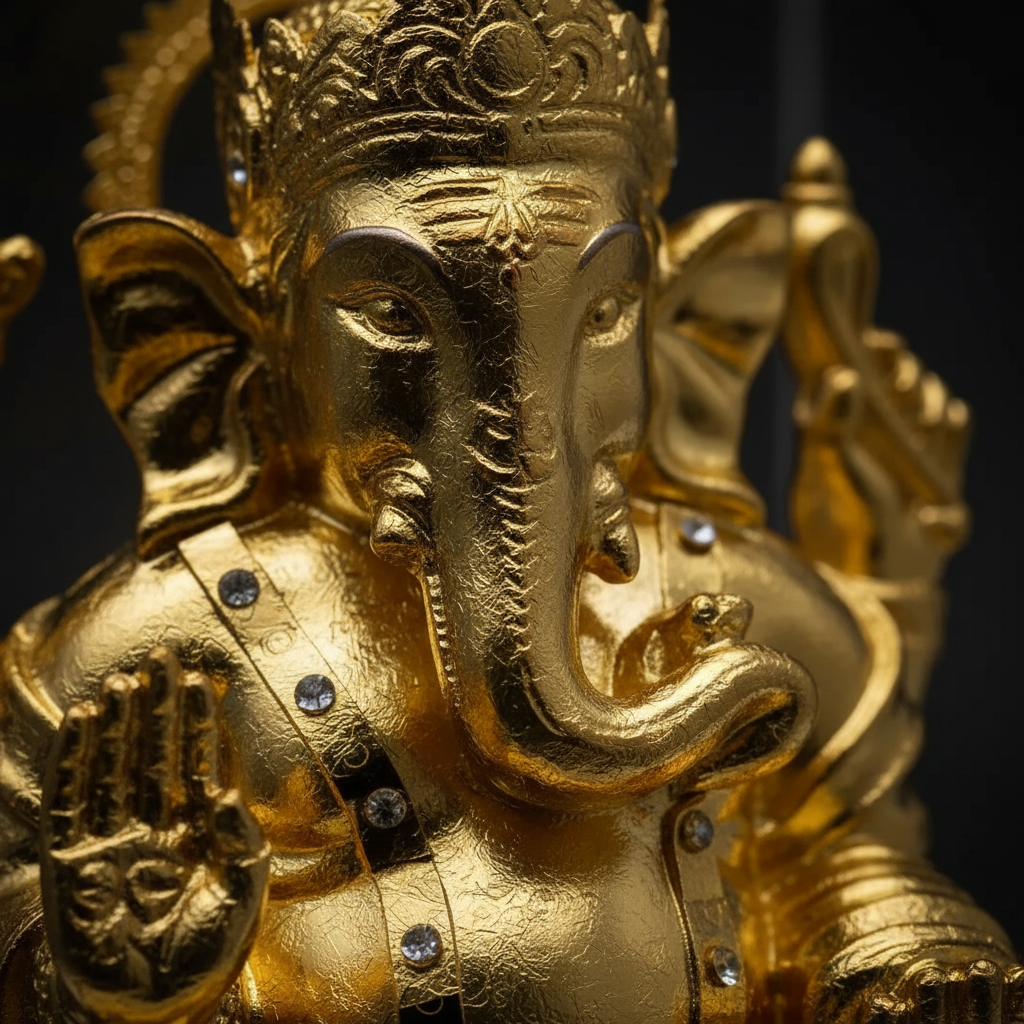
Paintings vs. Murtis: Paintings take less space and are easier to install; a 24K gold foil painting brings luminosity no print can replicate. Murtis allow more tactile daily service — bathing, dressing, offering food. Many mandirs combine both: a central painting as the visual anchor with flanking murtis for daily service.
Step 5: Arrange the Altar
- Ganesha always occupies the first position (left side as viewed by devotee) and is worshipped before any other deity
- All images face the same direction — ideally East or North
- The lamp is placed in front of and slightly to the right of the central deity (from devotee’s perspective)
- Fresh flowers at the base: tulsi for Vishnu/Krishna, red hibiscus for Devi, white flowers for Saraswati
- All deity images at or slightly above devotee’s eye level when seated
Step 6: Establish a Daily Practice

A sacred space without daily practice is simply a display. A basic morning puja takes five to fifteen minutes:
- Wash hands and face before approaching the mandir
- Light the lamp and incense
- Offer fresh flowers or petals
- Ring the bell to purify the space
- Recite the deity’s mantra — even three repetitions is sufficient
- Perform aarti: wave the lit lamp clockwise before the deity while singing the aarti
- Bow and receive prasad
A brief evening aarti — lighting the lamp, ringing the bell, waving the light — takes under five minutes and closes the day with the same sacred frame. Once a week, on the day associated with your primary deity (Friday for Lakshmi, Wednesday for Ganesha, Monday for Shiva, Thursday for Vishnu/Krishna), perform a more thorough cleaning and extended puja.
Step 7: Maintain the Sacred Space
- Remove wilted flowers daily — dead flowers on an altar are inauspicious
- Wipe down the altar surface and deity images with a clean dry cloth regularly
- Change the Kalash water weekly
- Keep the area free from clutter — shoes, bags, and everyday items should never be placed near the altar
- Replace the altar cloth when soiled or worn
The Sacred Image at the Heart
Every element of the sacred space exists to frame and support the central deity image. A 24K gold foil painting at the heart of your mandir reflects the light of the morning sun and the evening lamp with an inner radiance that no print can replicate — the focal point of the household’s devotion, blessing the home continuously across years and decades.
Explore our collection of Ganesha, Lakshmi, Durga, Saraswati, Krishna, and Hanuman 24K gold foil paintings — and find the sacred image that will be the heart of your home’s sacred space.