In this series
Lakshmi Puja for Diwali: Rituals, Offerings & Sacred Art
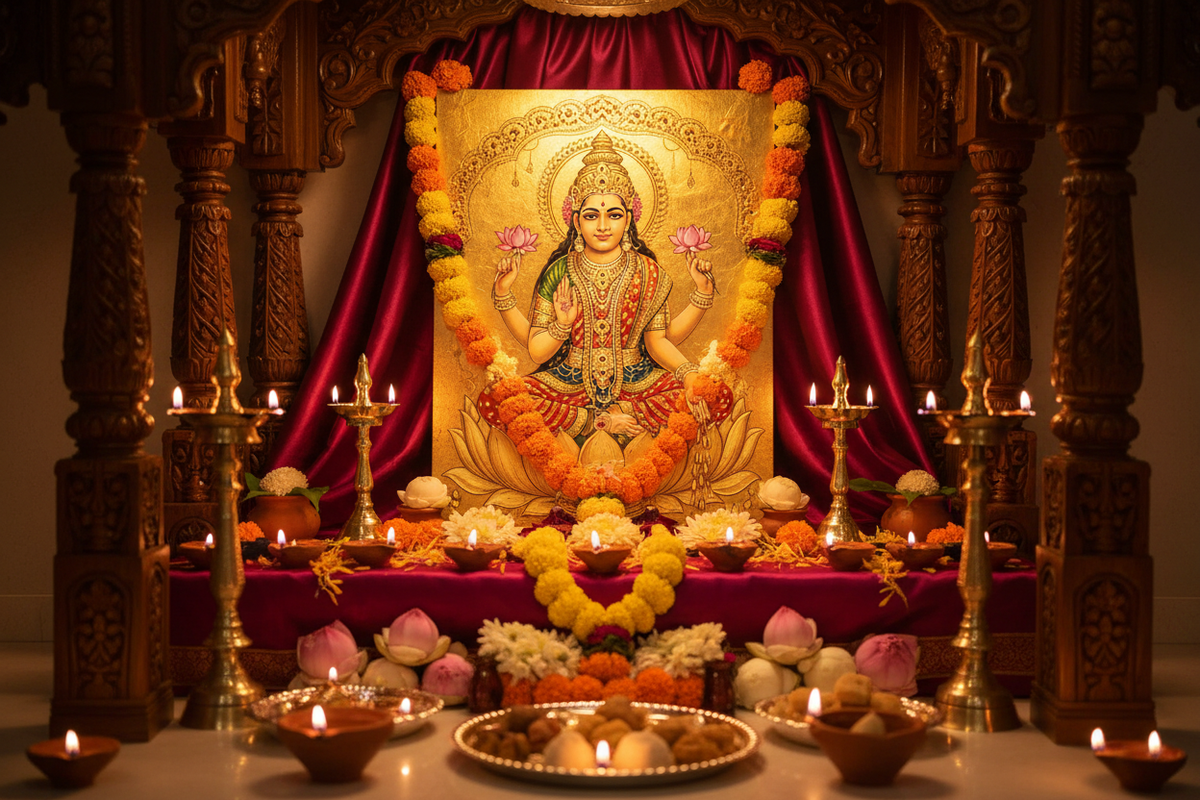
Of all the nights in the Hindu calendar, the Diwali Amavasya — the new moon night of the festival — is considered the most sacred time to perform Lakshmi Puja. On this night, Goddess Lakshmi, the divine embodiment of wealth, prosperity, and grace, is said to roam the earth and bless homes that are clean, illuminated, and adorned with devotion. This guide walks you through the complete Lakshmi Puja ritual for Diwali: the preparation, the offerings, the sacred art, and the spirit behind it all.
Who Is Goddess Lakshmi?
Lakshmi (also written as Laxmi) is one of the principal deities of Hinduism — the consort of Lord Vishnu and the goddess of wealth, fortune, beauty, and abundance. She is depicted seated or standing on a lotus flower, with gold coins flowing from her palm, embodying the generosity of divine grace. During Diwali, she is worshipped alongside Lord Ganesha — the remover of obstacles — who is always honored first before any other deity.
In iconographic tradition, Lakshmi is shown with four arms representing the four goals of human life: dharma (righteousness), artha (prosperity), kama (desire/love), and moksha (liberation). Her sacred imagery — whether as a gold foil painting or a consecrated murti — carries this symbolic power into your home.
When to Perform Lakshmi Puja on Diwali
Lakshmi Puja is performed on the main night of Diwali — this year, October 27, 2026. The most auspicious time is during the Pradosh Kaal (the period after sunset, roughly 1.5 hours after dusk) and ideally during the Nishita Kaal (midnight), which is considered the peak moment of Lakshmi’s presence on earth.
- Pradosh Kaal: Best for family puja with children — early evening, after sunset
- Nishita Kaal: Preferred by traditional practitioners — around midnight
Check a Hindu Panchang (almanac) for your specific city’s exact muhurat times for 2026.
Step 1: Prepare the Sacred Space
Preparation begins before the day of Diwali. In the days leading up to the festival:
- Deep-clean your entire home — Lakshmi does not enter spaces that are dirty or cluttered
- Clean and refresh your home mandir; replace old flowers, clean the deity images
- Draw a rangoli at the entrance and in front of the mandir using flowers, colored powder, or rice flour
- Place small diyas along windowsills, doorways, and the perimeter of your home to guide Lakshmi in
- Draw or place Lakshmi ke Charan (Lakshmi’s footprints) leading from the front door toward your mandir

Step 2: Gather the Puja Samagri (Ritual Items)
Before beginning the puja, assemble all items on a clean thali:
- Idols or images of Lakshmi and Ganesha
- Kalash (sacred pot) — filled with water, topped with mango leaves and a coconut
- Panchamrit — milk, curd, honey, ghee, and sugar for ritual bathing
- Flowers — lotus (most sacred to Lakshmi), marigold, rose
- Incense (agarbatti) — sandalwood or mogra
- Ghee diyas — at least one large diya for the main puja
- Sweets (naivedya) — kheer, modak, or traditional mithai
- Coins and currency notes — blessed by Lakshmi and kept in your cash box after puja
- Kumkum, haldi, chandan — for tilak and offerings
- Betel leaves and supari
- New cloth (vastra) — to offer to the goddess

Step 3: The Lakshmi Puja Sequence
Begin with Ganesha puja before invoking Lakshmi. The traditional sequence:
- Sankalp — State your intention: family name, location, purpose of puja
- Ganesha Puja — Offer flowers, kumkum, and sweets; recite Ganesh Aarti
- Kalash Puja — Worship the sacred pot as the goddess’s vessel
- Shodashopachara Puja (16-step offering) — Invoke Lakshmi through 16 ritual offerings: invocation, seat, water, ritual bath, cloth, sandalwood, flowers, incense, lamp, food, betel, and aarti
- Lakshmi Aarti — Sing “Jai Lakshmi Mata” with a lit ghee lamp in circular motion before the goddess
- Lakshmi Chalisa or Stotram — Optional but deeply auspicious
- Prasad distribution — Share blessed sweets with all present
Step 4: Sacred Art as a Permanent Offering
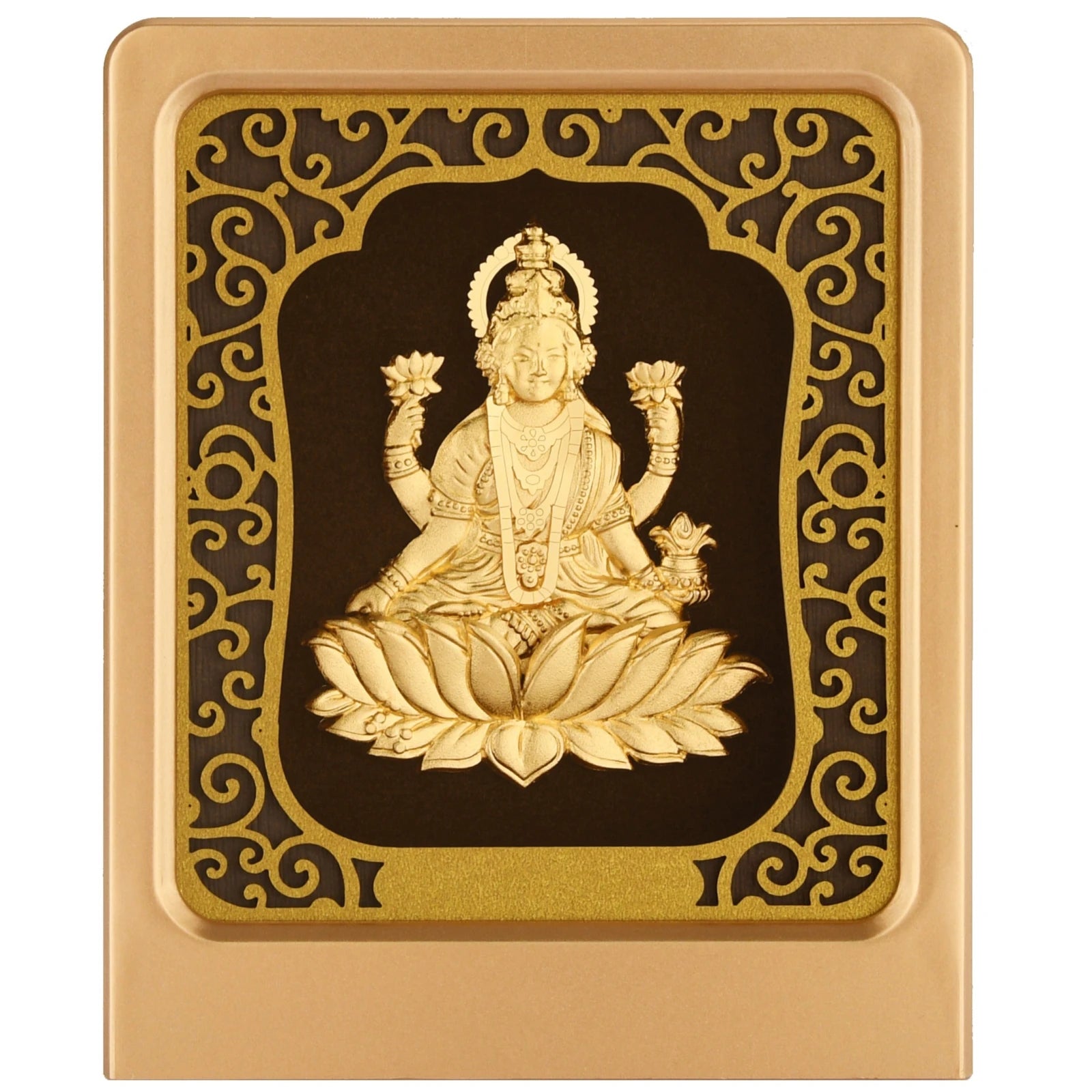
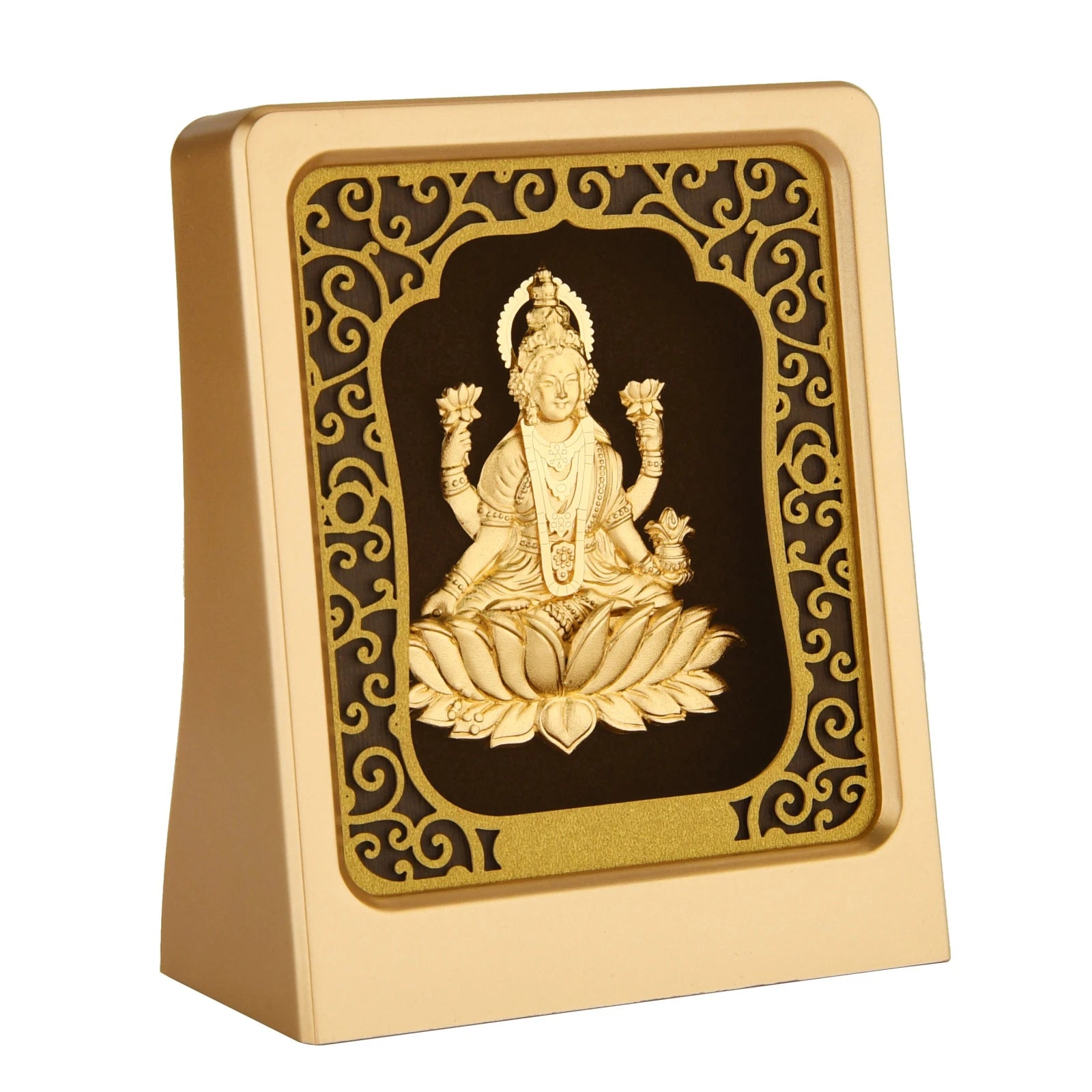
While flowers wilt and sweets are consumed, sacred art endures. Placing a beautifully rendered image of Lakshmi at the center of your mandir is itself a form of offering — one that continues to hold divine presence long after the festival ends.
In Hindu sacred art tradition, the quality and intention behind an image matters deeply. A hand-crafted 24K gold foil painting of Lakshmi, rendered with correct iconographic detail — the lotus, the gold coins, the four arms — is considered far more auspicious than a generic print. The gold itself carries symbolic resonance: it is the metal of the sun, of prosperity, of incorruptibility.
When choosing Lakshmi imagery for your mandir, consider:
- Iconographic accuracy: Lakshmi should hold or shower gold coins (varada mudra), stand or sit on a lotus, and be flanked by elephants in the most complete representations
- Material quality: Hand-applied gold foil and hand-finished statues carry the energy of craft and intention that mass-produced prints do not
- Size: The primary deity image should be prominent — visible and central, not crowded
- Frame: Gold or warm-toned frames complement the deity without competing with it

Explore our collection of 24K gold foil Lakshmi paintings and sacred statues — each piece is crafted to bring enduring beauty and divine presence to your home mandir.
After Diwali: Maintaining Your Lakshmi Practice
The most vibrant relationship with Lakshmi is not a single annual event but a daily practice. After Diwali, maintain your mandir with:
- A fresh flower or petal offered each morning
- A lit diya at dawn and dusk
- Friday puja — Friday is Lakshmi’s sacred day; a brief weekly ritual deepens the connection
- Keeping the mandir space clean and uncluttered throughout the year
May Goddess Lakshmi bless your home with abundance, grace, and enduring prosperity — this Diwali and every day that follows.