In this series
Diwali Decor Ideas: Gold Foil Art That Elevates Every Room

Diwali decoration is an art form in itself — the annual invitation to transform your home into a space of light, beauty, and divine presence. Beyond the diyas, rangoli, and marigold garlands that mark the season, the most enduring element of a beautifully decorated Diwali home is its sacred art: the deity images and sacred motifs that anchor the space with meaning and presence that outlasts the festival season.
This guide explores how to use 24K gold foil sacred art to elevate every room in your home for Diwali — with attention to Vastu principles, room function, aesthetic harmony, and the lasting value of choosing art that transcends seasonal decoration.
The Philosophy of Diwali Decor
Before considering specific rooms and placements, it helps to understand the underlying philosophy of Diwali decoration. The Sanskrit concept of Shringara — adornment, beautification, making beautiful — is not merely aesthetic. In the Diwali context, it is a devotional act: the home is adorned to welcome Goddess Lakshmi, who is said to visit only homes that are clean, illuminated, and beautifully prepared.
This means that Diwali decor is not simply about appearance. It is about creating an environment worthy of divine presence — one that reflects care, reverence, and beauty. Sacred art, in this context, is not decoration. It is an invitation.
The Entrance: First Impressions and Divine Welcome
The entrance to your home is the threshold — the point at which the outside world gives way to the sacred interior. Vastu Shastra gives special attention to this space, and Diwali tradition layers multiple elements of welcome here.
Sacred art for the entrance:
- Ganesha: The most traditional choice for the entrance — Vighnaharta at the threshold, facing inward to bless all who enter. A tabletop Ganesha statue on an entry console, or a Ganesha painting near the door, serves this function beautifully
- Lakshmi ke Charan: The traditional footprint motifs drawn from the entrance toward the mandir, guiding the goddess in
- Rangoli: The geometric or floral patterns at the doorstep are themselves a form of sacred art — an offering of beauty to whoever crosses the threshold

The Living Room: The Sacred Feature Wall
The living room is the heart of the home’s social life — and Diwali is above all a festival of community and togetherness. The sacred art you place here will be seen by every guest who visits during the festival season, making it both a personal devotional statement and a reflection of your aesthetic sensibility.
Vastu guidance: The north or east wall of the living room is most auspicious for deity art. North activates financial abundance (Lakshmi’s domain); east brings vitality and positive energy.
Sacred art choices for the living room:
- Lakshmi: A large-format Lakshmi gold foil painting (8x10" or larger) on the north wall creates a powerful prosperity anchor for the entire room
- Lakshmi Ganesh pairing: Two paintings displayed symmetrically — Lakshmi on the left, Ganesha on the right from the viewer’s perspective — create a balanced, complete sacred composition
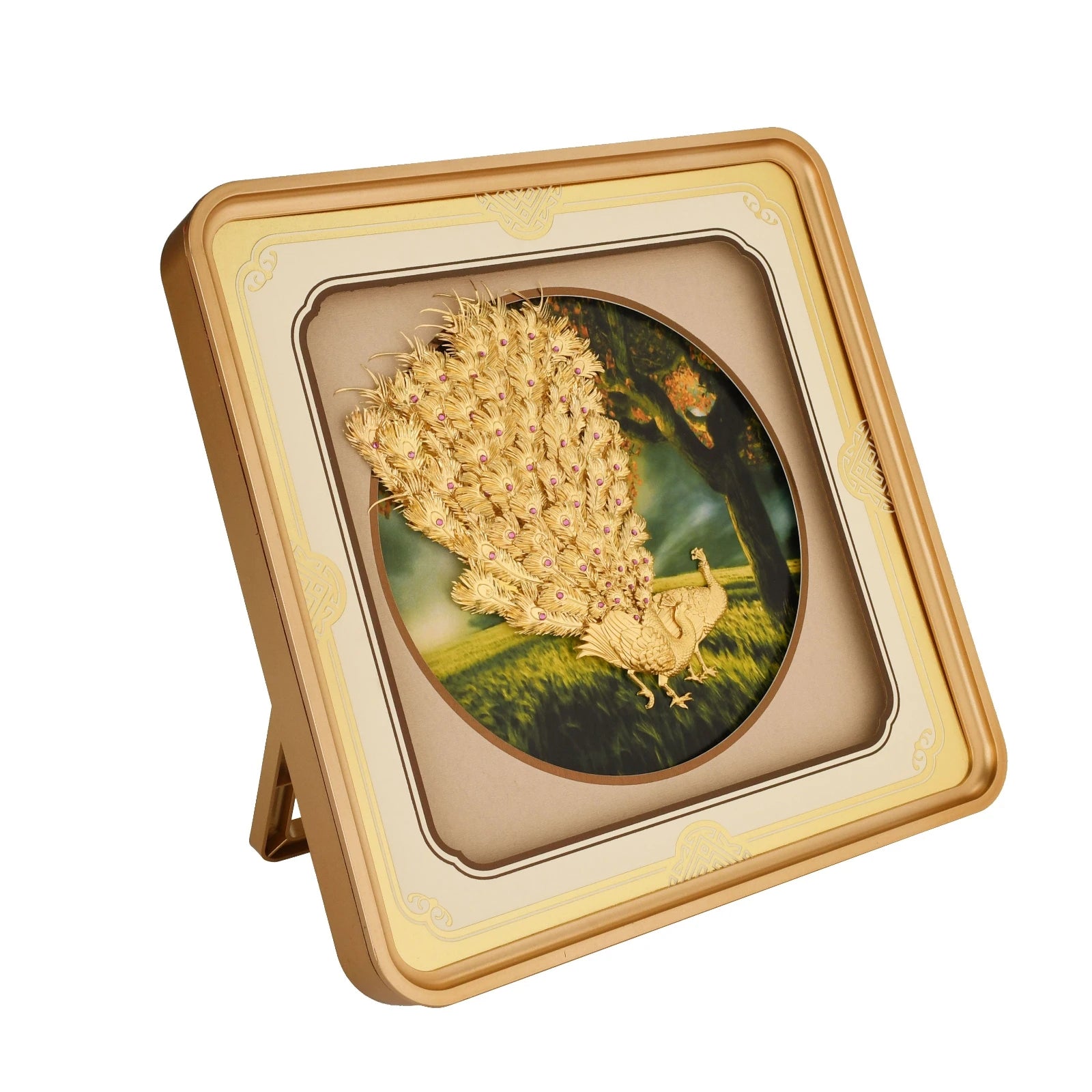
- Peacock: For living rooms with a more contemporary aesthetic, a large Peacock gold foil painting (11x11") bridges the sacred and the decorative — universally beautiful, symbolically rich, appropriate for any guest regardless of faith background
Styling tip: Flank your sacred art with symmetrical elements — matching diyas, small flower vases, or votives. Sacred art responds well to symmetry; it signals intentionality and care.
The Home Mandir: The Sacred Center
The mandir is the devotional heart of the home — and Diwali is its highest moment. For the mandir, sacred art choices should prioritize iconographic accuracy, material quality, and the ability to anchor the full Diwali puja ritual.
The complete Diwali mandir setup:
- Center: Lakshmi — the presiding deity of Diwali; gold foil painting or statue at the center of the altar
- Right of Lakshmi (viewer’s right): Ganesha — always present, always honored first
- Additional deities: Krishna, Saraswati, or the family’s ishta devata flanking the central pair
- Kalash: Sacred pot with mango leaves and coconut, placed before the deity images
- Puja items: Diyas, incense, flowers, kumkum, chandan — all arranged with care and intentionality

The Bedroom: Personal Devotion and Sacred Rest
The bedroom mandir or sacred corner is the most intimate devotional space in the home — a place for personal prayer, morning and evening rituals, and the quiet beginning and end of each day.
Vastu guidance: Place the bedroom’s sacred corner in the northeast or east of the room. Avoid placing deity images directly opposite the bed or above the headboard.
Sacred art for the bedroom:
- Smaller format: A 3x4" or 5x7" tabletop painting is ideal — intimate in scale, present without dominating the space
- Lakshmi or Saraswati: For prosperity and wisdom in the personal domain
- Radha Krishna: For a bedroom shared by a couple, Radha Krishna’s imagery brings a particularly auspicious and beautiful energy — the divine couple as the model of devoted love
The Home Office or Study: Sacred Art for Focus and Prosperity
The home office benefits greatly from intentional sacred art placement.
- Saraswati: Goddess of knowledge and creativity — the most appropriate deity for a workspace
- Ganesha: For removing obstacles from professional endeavors; a small Ganesha statue or painting on the desk
- Lakshmi: For those whose work is directly connected to business or finance, a Lakshmi painting on the north wall aligns with Vastu principles for prosperity activation
The Dining Room: Abundance and Gratitude
In Indian tradition, the act of eating is itself considered sacred — food is prasad. The dining room, where family gathers during the festival season, is an appropriate space for art that evokes abundance and gratitude.
- Lakshmi: A Lakshmi painting on the north or east wall activates the Vastu sector of prosperity and sustenance
- Peacock: For a more secular household, the Peacock painting’s associations with grace and divine protection make it a beautiful dining room piece that all guests will appreciate

Beyond Diwali: Art That Lives Year-Round
The most important principle of Diwali sacred art selection: choose pieces that you will want to live with every day of the year, not just during the festival season.
Seasonal decor — paper lanterns, plastic figurines, mass-printed posters — serves its purpose during the festival and then gets packed away. Sacred art in 24K gold foil is different. It is not decoration. It is presence. The luminosity of genuine gold foil, the iconographic integrity of a well-crafted painting, the weight and beauty of a hand-finished statue — these qualities make sacred art a living part of your home throughout the year.
Choose for Diwali, but choose for life. The piece you bring home for this festival season may well become the anchor of your family’s sacred space for a generation.
Explore our complete collection of 24K gold foil deity paintings and sacred statues — each crafted to bring enduring beauty and divine presence to every room of your home.
May your home be radiant with sacred light this Diwali — and every day that follows.