In this series
24K Gold Foil Art vs. Printed Posters: What's the Real Difference?

When you’re looking for sacred art for your home mandir or as a Diwali gift, you’ll encounter a wide range of options at a wide range of prices — from mass-printed posters for a few dollars to hand-crafted 24K gold foil paintings priced as investment pieces. The difference in price is obvious. But what is the actual difference in the object?
This guide answers that question directly and honestly — so you can make an informed choice that you’ll be glad about for years to come.
What Is a Printed Poster?
A printed poster of a Hindu deity is, at its core, a digital image reproduced on paper or canvas using inkjet or offset printing technology. The process is entirely mechanical: a digital file is sent to a printer, ink is applied to a surface, and the result is a flat, two-dimensional reproduction.
Even the best printed poster shares certain fundamental characteristics:
- Ink, not metal: The gold areas are created with metallic inks or gold-colored pigments — not actual gold. They approximate the appearance of gold but do not share its material properties
- Flat surface: Printed posters are entirely two-dimensional — there is no texture, no depth, no variation in surface quality
- Fading over time: Even archival inks fade. Exposure to light, humidity, and air causes gradual but inevitable deterioration
- Identical reproduction: Every copy is identical. There is no individual variation, no craftsperson’s touch, no uniqueness
What Is a 24K Gold Foil Painting?
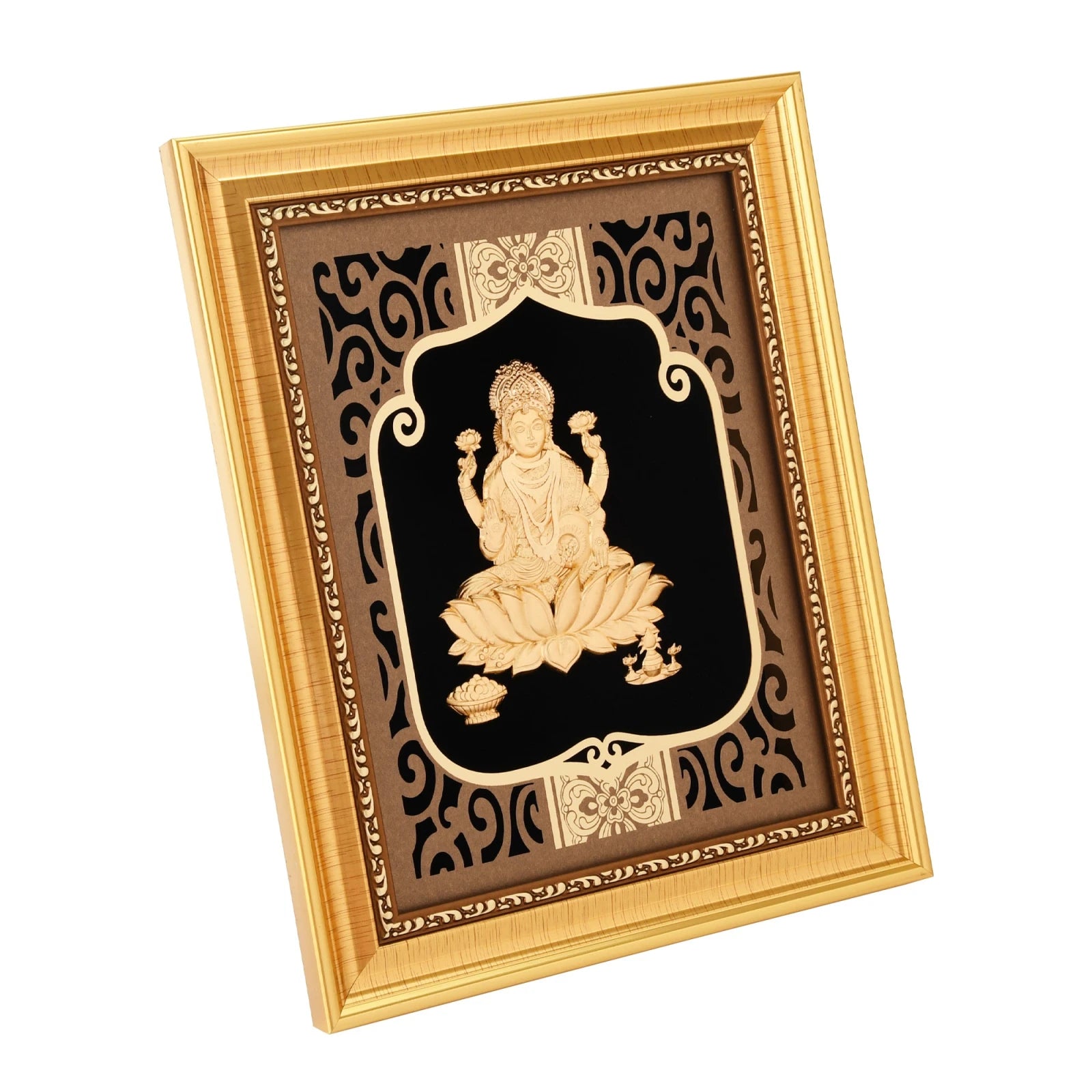
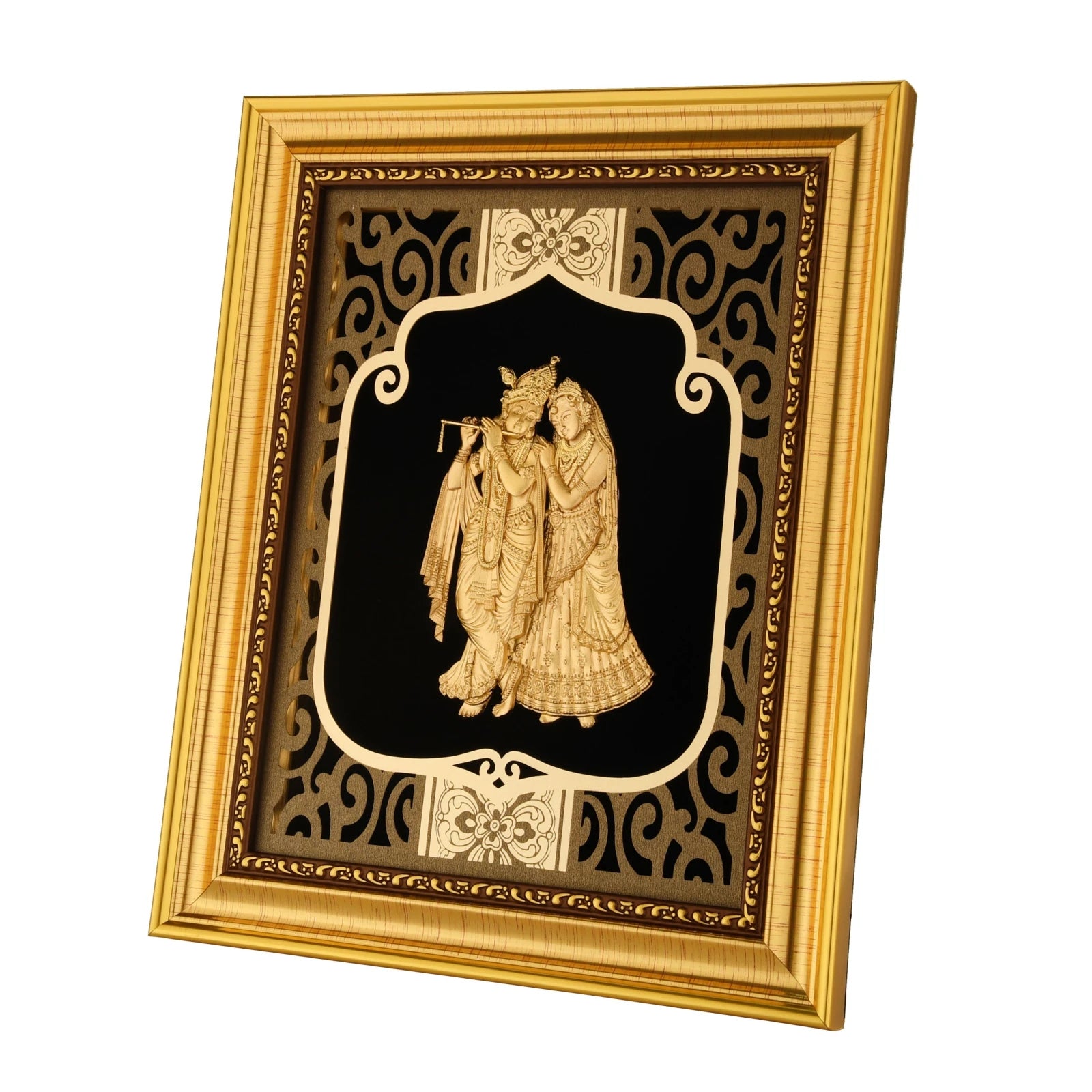
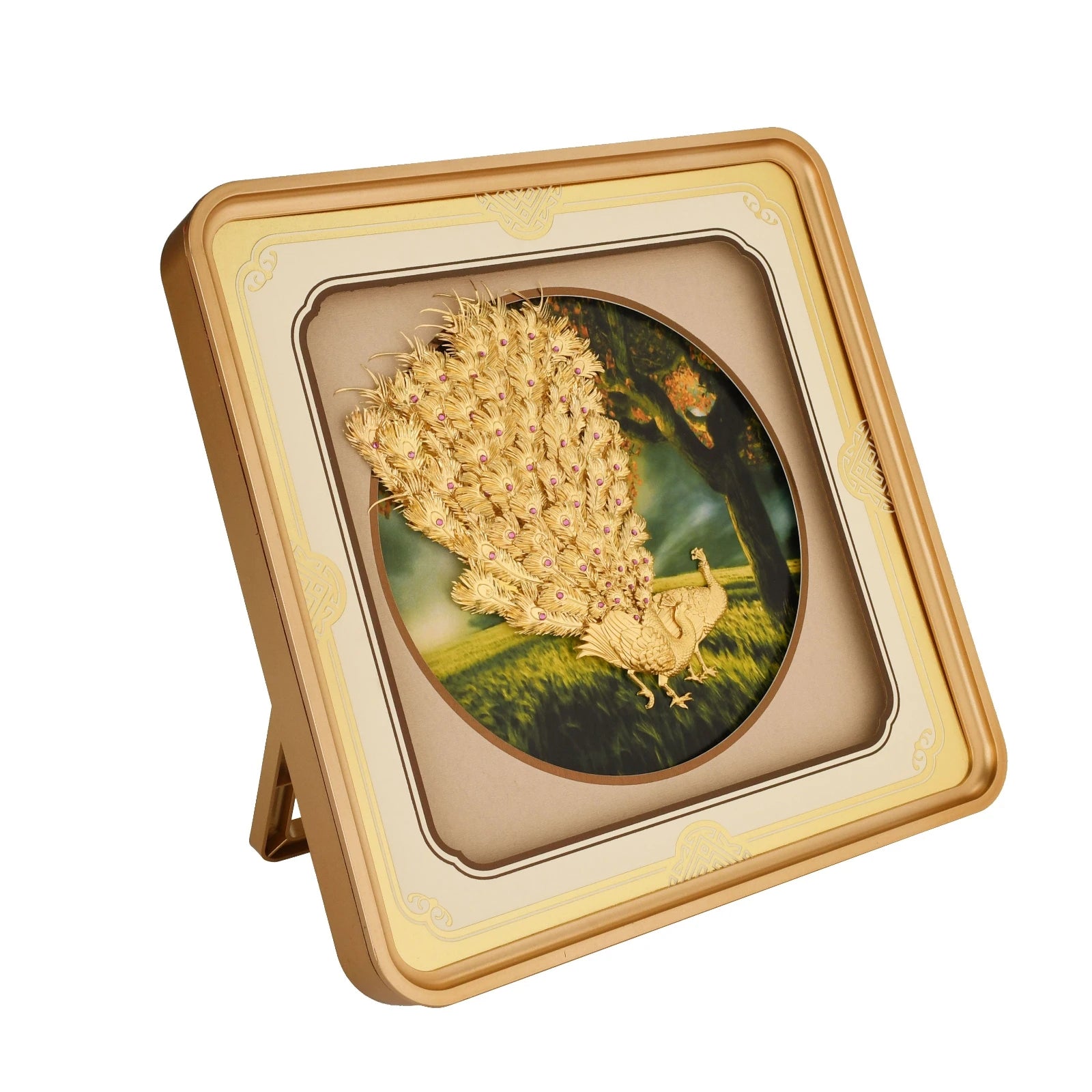
A 24K gold foil painting is a fundamentally different category of object. It is not a reproduction — it is a crafted artifact, made by hand, using real gold.
The process at Moksha Craft:
- Archival base: The painting begins with a high-quality archival surface prepared to hold gold foil for decades
- Sacred imagery: The deity image is rendered with iconographic precision — correct attributes, mudras, posture, and expression based on established sacred art traditions
- Hand-applied 24K gold foil: Genuine 24K gold leaf is applied by hand, section by section. This is skilled, time-intensive craft work. No two pieces are identical
- Finishing and framing: The completed painting is finished and framed in a frame chosen to complement the deity and the intended display context

The Five Real Differences
1. The Material: Real Gold vs. Gold-Colored Ink
24K gold foil is genuine gold — the same metal used in sacred art, temple decoration, and royal jewelry across human history. Gold catches light differently than ink. As the light in a room changes throughout the day — morning sun, afternoon diffusion, evening lamplight — a gold foil painting responds dynamically, its surface shifting from warm amber to brilliant yellow to deep ochre. A printed poster looks the same regardless of the light.

2. The Surface: Depth vs. Flatness
Gold foil applied to a surface creates subtle texture and depth. The foil has the organic variation of a hand-applied material — visual complexity that rewards close examination and changes with viewing angle. A printed poster, however fine, is simply flat.
3. The Longevity: Centuries vs. Decades
Gold does not tarnish, fade, or oxidize under normal conditions. 24K gold foil paintings from centuries ago — in museum collections worldwide — look today essentially as they did when they were made. Printed posters, even with archival inks and UV-protective glass, will show color shift within 10–25 years under normal conditions.
4. The Craft: Made vs. Manufactured
A 24K gold foil painting is made by a human being, with skill, time, and attention. The craftsperson’s decisions shape the finished object in ways that make no two pieces entirely alike. There is intention and presence in the making. A printed poster is manufactured — a machine executes a digital file. There is no craftsperson, no decision, no variation.
5. The Presence: Object vs. Image
A 24K gold foil painting is an object — a physical thing with weight, texture, material value, and craft history. A printed poster is an image — a two-dimensional representation with no material significance beyond the ink and paper it is printed on.
In Hindu sacred art tradition, the material from which a devotional image is made carries spiritual significance. Gold is considered the most auspicious material for sacred imagery — incorruptible, luminous, and associated with the divine. The tradition of using gold in sacred art is not decorative preference; it is theological statement.
When Does the Difference Matter Most?
- Home mandir: The deity image at the center of your puja altar deserves the same quality of attention as any other offering you make. Gold foil painting brings a sacred object to the altar; a print brings an image
- Gifting: A 24K gold foil painting communicates care, discernment, and understanding of what is being given. The recipient understands that something real has been given
- Heirloom intention: If you want sacred art that can be passed down — as beautiful and meaningful to your grandchildren as it is to you today — only gold foil has the permanence to support that intention

The Honest Bottom Line
A printed poster costs less because it is less — less material, less craft, less permanence, less presence. A 24K gold foil painting costs more because it is more — real gold, skilled craft, centuries of longevity, and genuine sacred presence.
If you want a beautiful image for a room, a quality print may serve you well. If you want a sacred object for your mandir, a meaningful gift, or an heirloom — there is no substitute for the real thing.
Explore our complete collection of 24K gold foil deity paintings — and see the difference for yourself.