In this series
Vastu Shastra and Sacred Art: Where to Place Deity Images in Your Home

One of the most common questions we receive from customers who have purchased a 24K gold foil painting or a deity statue is: where should I place this in my home? For a Hindu household, the placement of a sacred image is a matter of intention, reverence, and the ancient science of Vastu Shastra.
What Is Vastu Shastra?
Vastu Shastra — literally “the science of dwelling” — is the ancient Indian system of architecture and spatial arrangement that aligns the built environment with the forces of nature and the cosmos. Codified in texts like the Manasara and the Mayamata, Vastu Shastra maps the eight directions to specific cosmic energies, deities, and qualities, providing guidance on which activities, rooms, and sacred images belong in which part of the home.
The Eight Directions and Their Deities

- Northeast (Ishanya) — The Zone of the Divine: The most sacred corner of the home — ideal for the home mandir. Receives the first light of the rising sun plus the energies of both North (Kubera’s wealth) and East (solar energy) simultaneously. Best for all deity images and the puja altar
- East — The Zone of the Sun (Surya): Direction of the rising sun, new beginnings, health, and light. Placing the mandir on the East wall so the devotee faces East during worship is highly auspicious. Best for morning puja and general deity placement
- North — The Zone of Kubera: Direction of wealth and abundance. Lakshmi images placed facing North are particularly auspicious for attracting prosperity. Energy flows from North to South — sacred images here allow this energy to flow through the space
- West — The Zone of Varuna: A neutral direction, acceptable when Northeast or East placement is not possible
- South — The Zone of Yama: Generally avoided for mandirs and sacred images. The specific exception is Hanuman, whose protective energy is directed toward the South
Deity-Specific Placement Guidelines

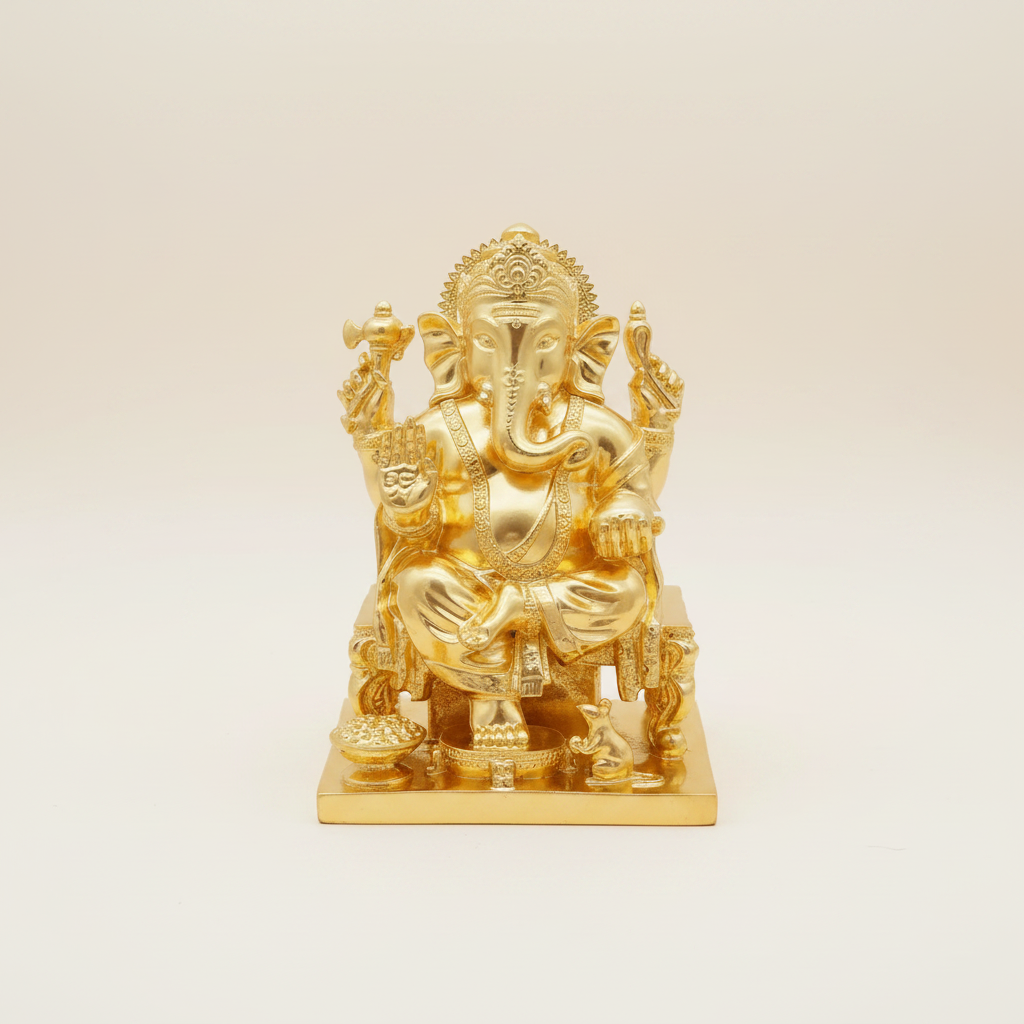
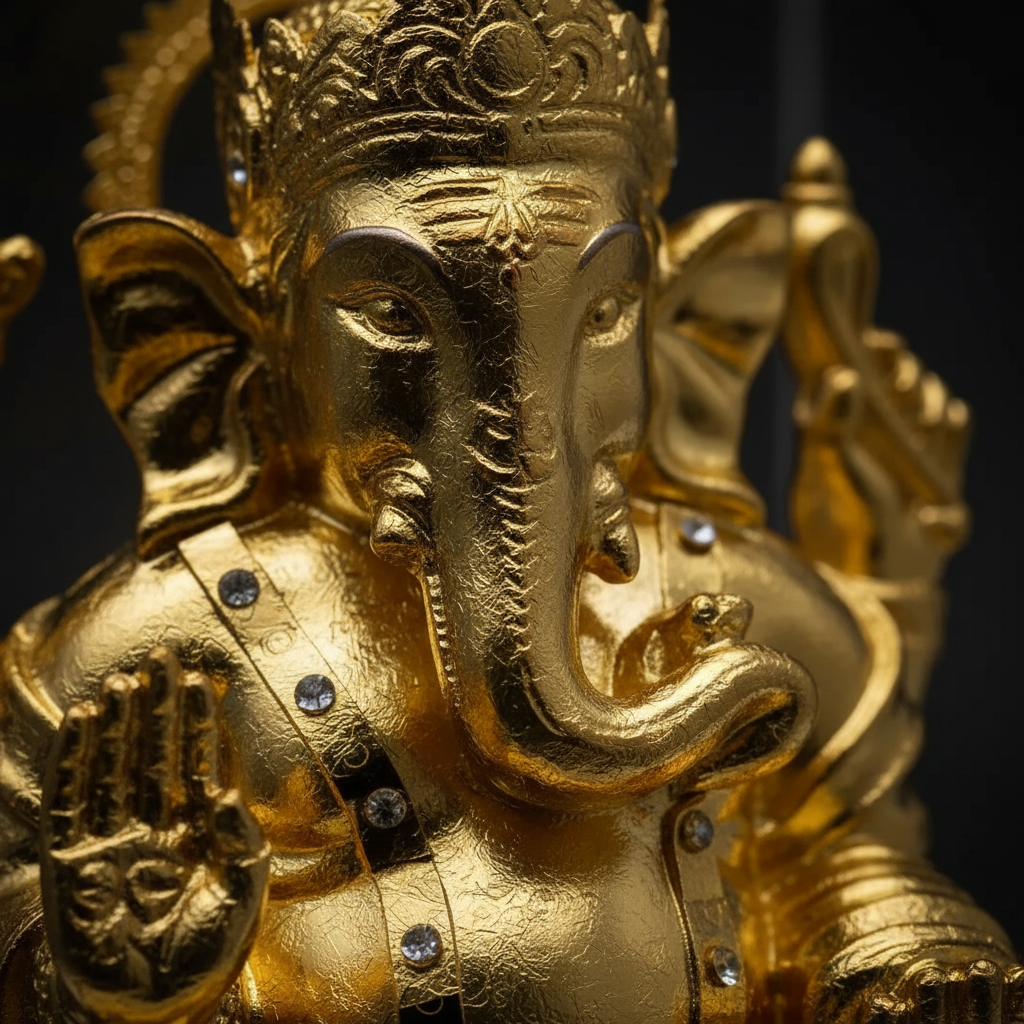
Ganesha
Placed at the threshold: the main entrance of the home (facing inward), the entrance of the puja room, and always the first position on the altar. He guards the threshold, removing obstacles for all who enter. The image should face inward — never outward.
Lakshmi
Most auspiciously placed in the North or Northeast, facing East or North. She belongs in the living room, entrance area, or puja room — never the bedroom, bathroom, or South of the home.
Durga / Devi
Northeast mandir placement (facing East or North) is most common. In some traditions, placed on the South or West wall as a protective energy facing the inauspicious direction. Avoid the bedroom.
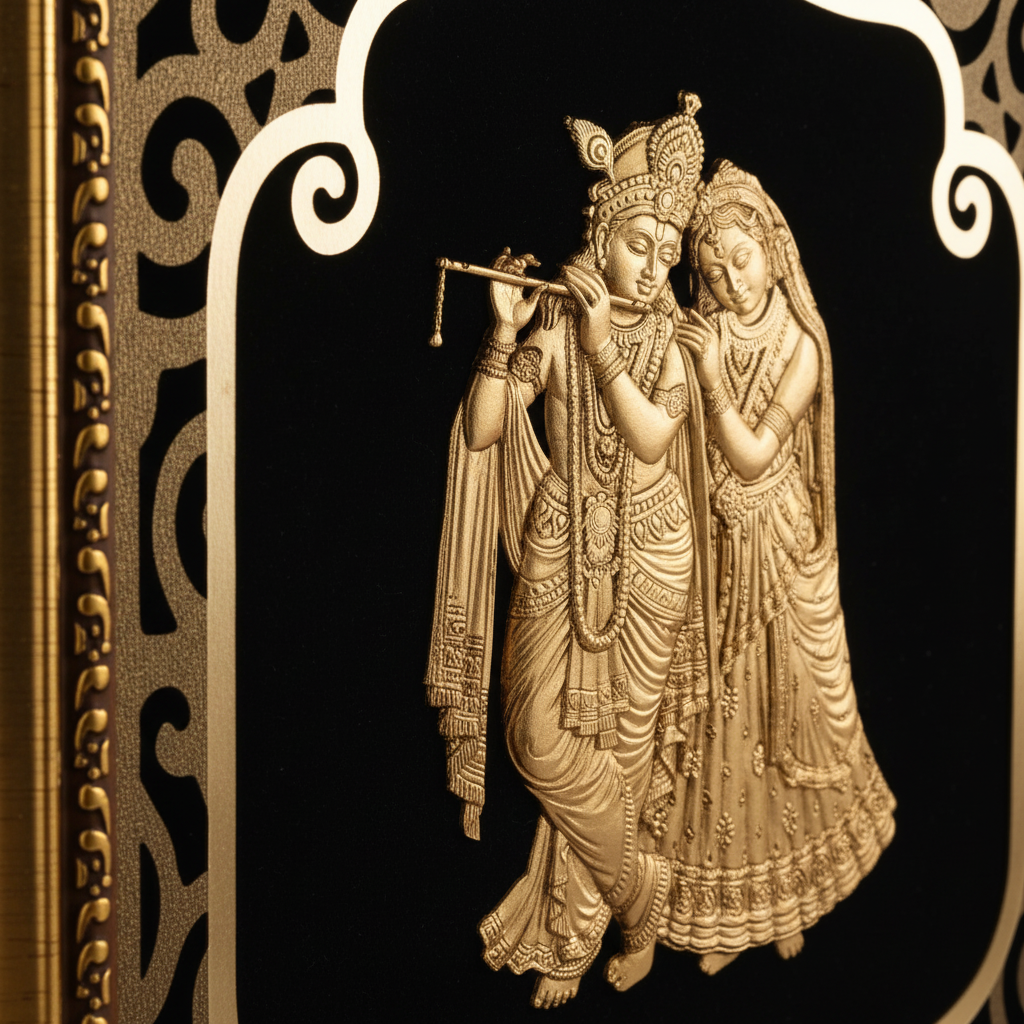
Krishna and Radha-Krishna
Northeast or East, facing East or North. Puja room or living room. His flute-playing form radiates peaceful, joyful energy throughout the home. Avoid placing formal worship images in the bedroom.
Saraswati
East or Northeast, facing East. Most appropriate in the study room, home office, or library. Excellent for students and creative professionals.
Hanuman
The specific Vastu exception: South wall, facing South. His fierce protective energy is directed toward Yama’s direction to guard the household. Also appropriate at the main entrance, facing inward.
General Vastu Rules for Sacred Art
- Height: At eye level or slightly above during worship — never on the floor
- Facing: All images on an altar should ideally face the same direction (East or North). Two deity images should not directly face each other on opposite walls
- Avoid: Walls shared with a bathroom, positions directly above or below a toilet, and facing a bedroom door
- Cleanliness: Keep the area around sacred images clean at all times — dust and clutter are considered inauspicious
- Light: Sacred images benefit from natural light and the light of diyas. A well-lit sacred image — by sunlight or lamp flame — is most auspicious
Sacred Art in the Modern Home
The principles of Vastu Shastra apply to any home, in any country, in any architectural style. The fundamental logic is universal: place the sacred image where it receives light, where it is treated with reverence, and where it can be approached with ease for daily worship. A 24K gold foil deity painting — luminous with genuine gold — is naturally suited to the most honored position in any room. Wherever it is placed with intention and reverence, it creates the sacred space that Vastu Shastra seeks to establish.
Explore our full collection of Ganesha, Lakshmi, Durga, Krishna, Saraswati, and Hanuman gold foil paintings — and use this guide to find the perfect placement for each in your home.