In this series
The Best Direction for Your Home Mandir: A Complete Vastu Guide

Setting up a home mandir is one of the most meaningful things a Hindu family can do for the spiritual life of the household. But where should it go? Which wall, which room, which direction? The answer comes from Vastu Shastra — the ancient science of spatial arrangement — and from the practical wisdom accumulated over centuries of household worship.
The Ideal Direction: Northeast First, East Second

Northeast (Ishanya) — First Choice
The Northeast corner is the most sacred zone of any home in Vastu Shastra — the zone of Shiva, water, and spiritual energy. It sits at the confluence of North (Kubera’s wealth energy) and East (solar energy), receiving both in their most favorable combination. A Northeast mandir receives the first light of the morning sun, sits in the zone of highest spiritual energy, and allows the devotee to face East or North during worship.
East — Second Choice
A mandir on the East wall means the devotee faces East — the direction of the rising sun, new beginnings, and Surya. Morning puja facing East aligns the devotee with the most auspicious direction for prayer and the most energetically active moment of the day.
North — Third Choice
The North is the direction of Kubera, god of wealth. North-facing mandirs are particularly auspicious for Lakshmi worship. The earth’s magnetic energy flows from North to South — a North-facing mandir allows this energy to support the worship space.
West — Acceptable
A neutral direction, acceptable when Northeast, East, or North placement is not available.
South — Avoid
The South is the direction of Yama and is consistently avoided for mandir placement. The specific exception is Hanuman, whose protective energy is directed toward the South.
Which Room Should the Mandir Be In?
- Dedicated puja room: The ideal — in the Northeast of the home if possible, with the mandir on the East or North wall
- Living room: The most common modern choice — Northeast corner of the room, visible to all who enter
- Study room: Particularly appropriate for Saraswati — excellent for students and creative professionals
- Kitchen: Acceptable in the Northeast corner, never above the stove or sink
- Bedroom: Generally avoided; if unavoidable, Northeast or East of the room, covered with a curtain at night
- Avoid: Any wall shared with a bathroom, space below a staircase, basement, storage room
Height and Orientation

The mandir should be placed so sacred images are at eye level or slightly above when the devotee is seated for worship:
- Floor-seated worship → shelf base approximately 2 to 2.5 feet above the floor
- Chair-seated or standing worship → shelf base approximately 4 to 4.5 feet above the floor
The devotee’s ideal facing directions during puja:
- Mandir on East wall → Devotee faces East ✔
- Mandir on North wall → Devotee faces North ✔
- Mandir in Northeast corner → Devotee faces East or Northeast ✔
- Mandir on West wall → Devotee faces West – (acceptable)
- Mandir facing South → Avoid ✗
When the Ideal Direction Is Not Available
Many apartments simply do not have a usable Northeast corner or East wall. The most important principle: intention and reverence matter more than direction. A mandir in the “wrong” direction, approached daily with genuine devotion, is infinitely more auspicious than no mandir at all.
Practical adjustments: use a compass to find the most auspicious available wall, ensure the mandir receives good natural light, keep the space immaculately clean, and maintain a daily lamp — the continuous light matters more than the precise direction.
The Sacred Image at the Center
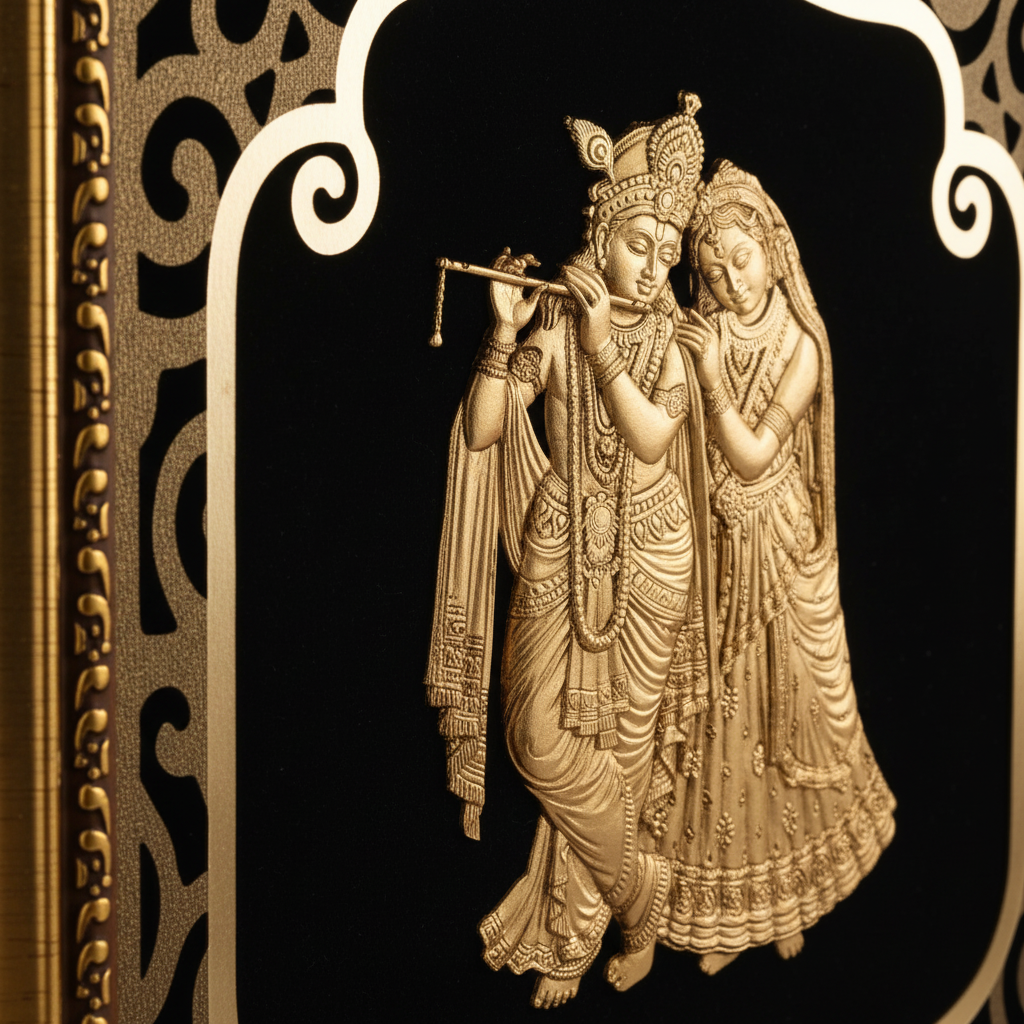
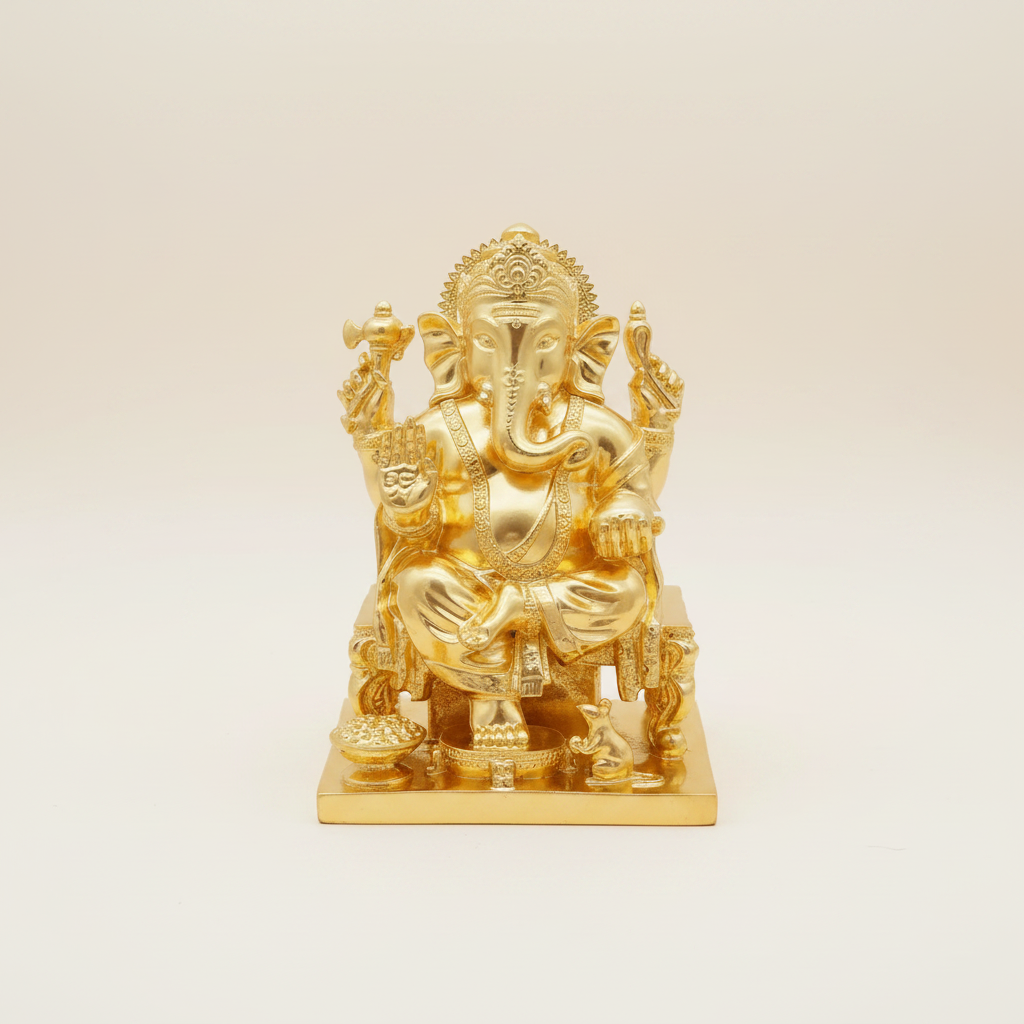
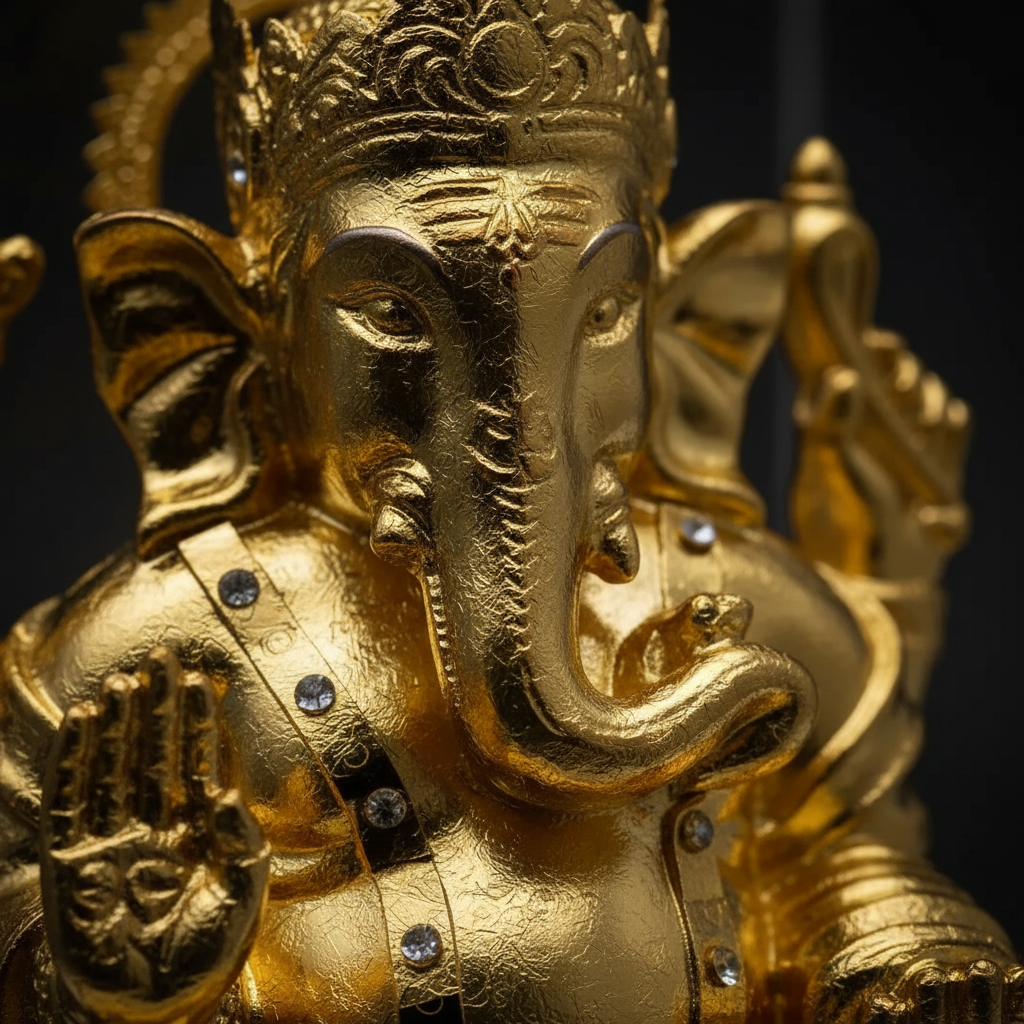
Once direction and location are established, the sacred image at the center makes the deepest difference. A 24K gold foil deity painting — luminous with genuine gold, reflecting the morning sun and the evening diya flame — transforms any shelf into a true sacred space. Explore our collection of Ganesha, Lakshmi, Durga, Krishna, Saraswati, and Hanuman gold foil paintings and find the image that will anchor your home’s sacred space for years to come.