In this series
The Complete Guide to Janmashtami: Celebrating the Birth of Lord Krishna

Janmashtami — the celebration of Lord Krishna’s birth — is one of the most joyful, devotionally intense, and widely observed festivals in the Hindu calendar. On the eighth day (Ashtami) of the dark fortnight of Bhadrapada month — typically August or September — hundreds of millions of Hindus stay awake through the night, fasting, singing, dancing, and celebrating the arrival of the most beloved of all deities.
The Story of Krishna’s Birth
Kamsa, king of Mathura and Krishna’s maternal uncle, had imprisoned his sister Devaki and her husband Vasudeva after a divine voice warned that their eighth child would be his destroyer. When Krishna was born at midnight on Ashtami, the prison doors opened of their own accord, the guards fell asleep, and Vasudeva carried the infant across the flooded Yamuna river — which parted at Krishna’s touch — to the village of Gokul, where he was raised by the cowherd chief Nanda and his wife Yashoda.
When Kamsa tried to kill the girl child left behind, she revealed herself as the goddess Yogamaya and declared: “The one who will destroy you has already been born and is safe.”
Krishna grew up in Gokul and Vrindavan surrounded by the cowherd community — and these years of childhood and youth are the most beloved in the entire Hindu devotional tradition.
The Significance of the Midnight Birth
Krishna was born at midnight — on the darkest night of the dark fortnight. The most luminous, most joyful expression of the divine chose to appear in the deepest darkness. The devotee’s all-night vigil re-enacts this original waiting: fasting and singing in the darkness, longing for the arrival of the divine. The midnight moment — when the fast is broken and celebrations peak — is pure joy: the divine has arrived. Darkness has given birth to light.
Janmashtami Rituals
Fasting (Vrat)
Fasting from sunrise until midnight — complete (nirjala), partial (fruits and milk), or sattvic — is one of the most widely observed practices. The fast is broken at midnight with panchamrit (milk, yogurt, honey, ghee, and sugar) and prasad, after the birth of Krishna has been celebrated.
Setting Up the Altar
The Janmashtami altar centers on Bal Gopal — baby Krishna. A small decorated cradle (jhula) is prepared and adorned with flower garlands, ready to receive the infant Krishna at midnight. The altar is decorated with tulsi (holy basil), marigolds, and lotus. A Kalash with mango leaves and coconut represents the sacred presence.
Abhishek: The Ritual Bath
The murti of Krishna is bathed in panchamrit — milk, yogurt, honey, ghee, and sugar — then in rose water or pure water, while mantras and devotional songs are sung. The panchamrit used in the abhishek becomes sacred prasad distributed to all who participate.
The Midnight Celebration
At midnight, bells ring, conch shells blow, diyas are waved in aarti, and jubilant cries of “Jai Shri Krishna!” fill the air. The image of Bal Gopal is placed in the decorated cradle, devotees rock it gently, singing lullabies to the divine child. The fast is broken with panchamrit and prasad.
Bhajan, Kirtan, and the Bhagavata Purana
The night is filled with bhajan and kirtan — Govind Bolo Hari Gopal Bolo, Hare Krishna Hare Rama, Madhurashtakam — sung with full devotion through the night. The Tenth Canto of the Bhagavata Purana, narrating Krishna’s birth, is traditionally read aloud precisely at midnight.
Dahi Handi: The Community Celebration

The day after Janmashtami — Nandotsav — a clay pot (handi) filled with curd, butter, and sweets is hung high above the ground. Teams of young men (Govindas) form human pyramids to reach and break it, re-enacting young Krishna’s legendary butter-stealing. The celebration is particularly spectacular in Mumbai, drawing enormous crowds and community spirit.
Janmashtami Foods

- Makhan (fresh butter): The most iconic offering — Krishna’s legendary love for fresh butter earned him the title Makhan Chor (butter thief)
- Panchamrit: Ritual bath liquid (milk, yogurt, honey, ghee, sugar) consumed as prasad after abhishek
- Aval / Poha (flattened rice): Associated with Krishna accepting the humble offering of beaten rice from his poor friend Sudama with more joy than any royal feast
- Gopalkala: A Maharashtra specialty — poha mixed with curd, cucumber, and coconut, distributed on Nandotsav day
- Charnamrit: Water used to bathe the deity’s feet, mixed with tulsi leaves and distributed as prasad
Janmashtami Across India
- Mathura and Vrindavan: The birthplace celebrations draw hundreds of thousands of pilgrims. The Krishna Janmabhoomi temple and Vrindavan’s major temples (Banke Bihari, ISKCON, Radha Raman) reach a peak of intensity at midnight unlike anywhere else
- ISKCON Worldwide: Full-night kirtan, dramatic presentations, elaborate abhishek, and massive prasad distribution — making Janmashtami globally recognized
- South India: Kolam (floor designs) and footprint patterns leading from the doorway symbolize Krishna’s arrival; aval and traditional sweets are prepared
- Maharashtra: Dahi Handi is the defining community spectacle, with elaborate prizes and massive crowds in Mumbai
Bal Gopal in the Home Mandir
Janmashtami is the most natural occasion to establish the sacred presence of Bal Gopal in the home. The tradition of caring for Krishna’s image with the love of a parent — waking him, bathing him, offering food, singing him to sleep — is vatsalya bhava, one of the highest forms of devotional practice.
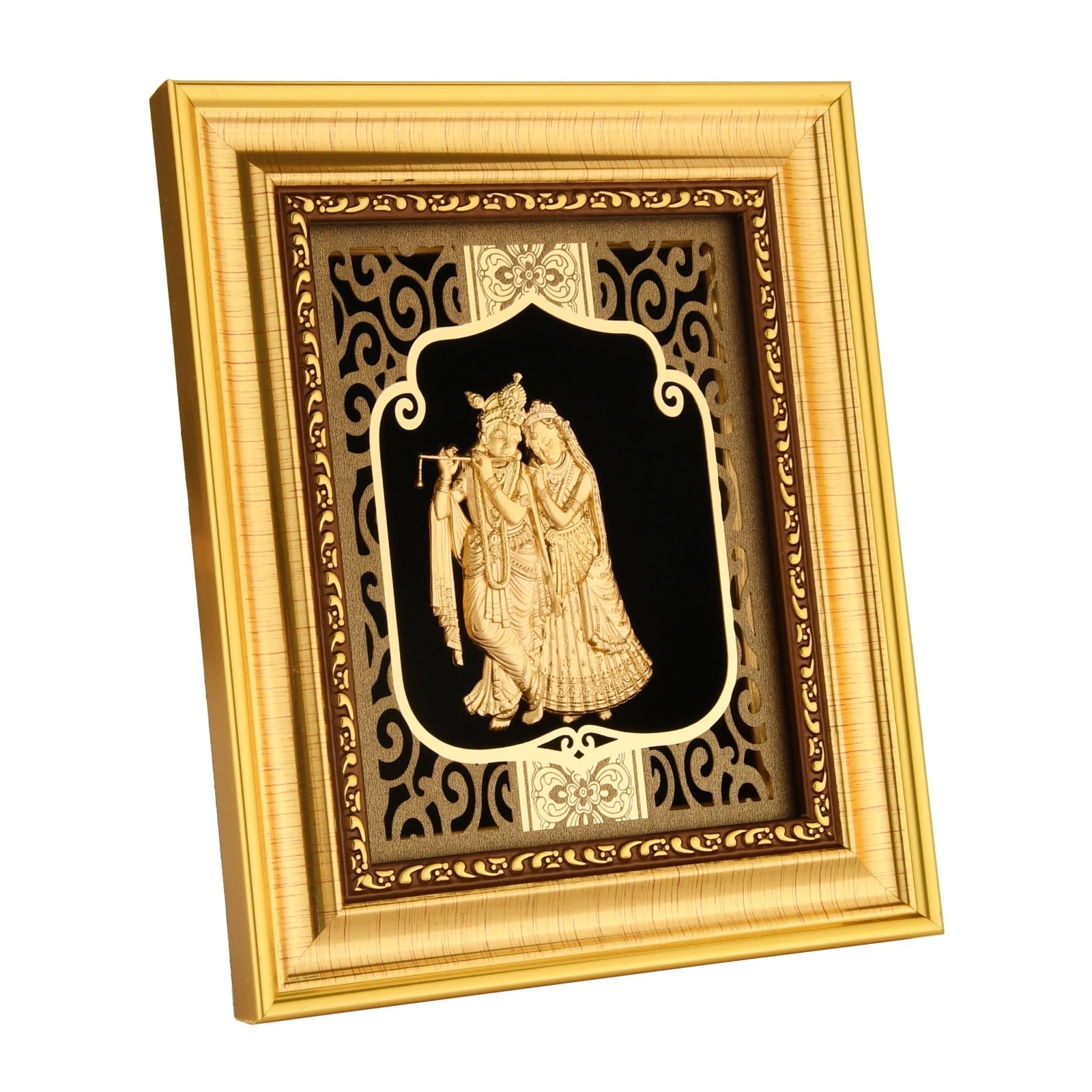
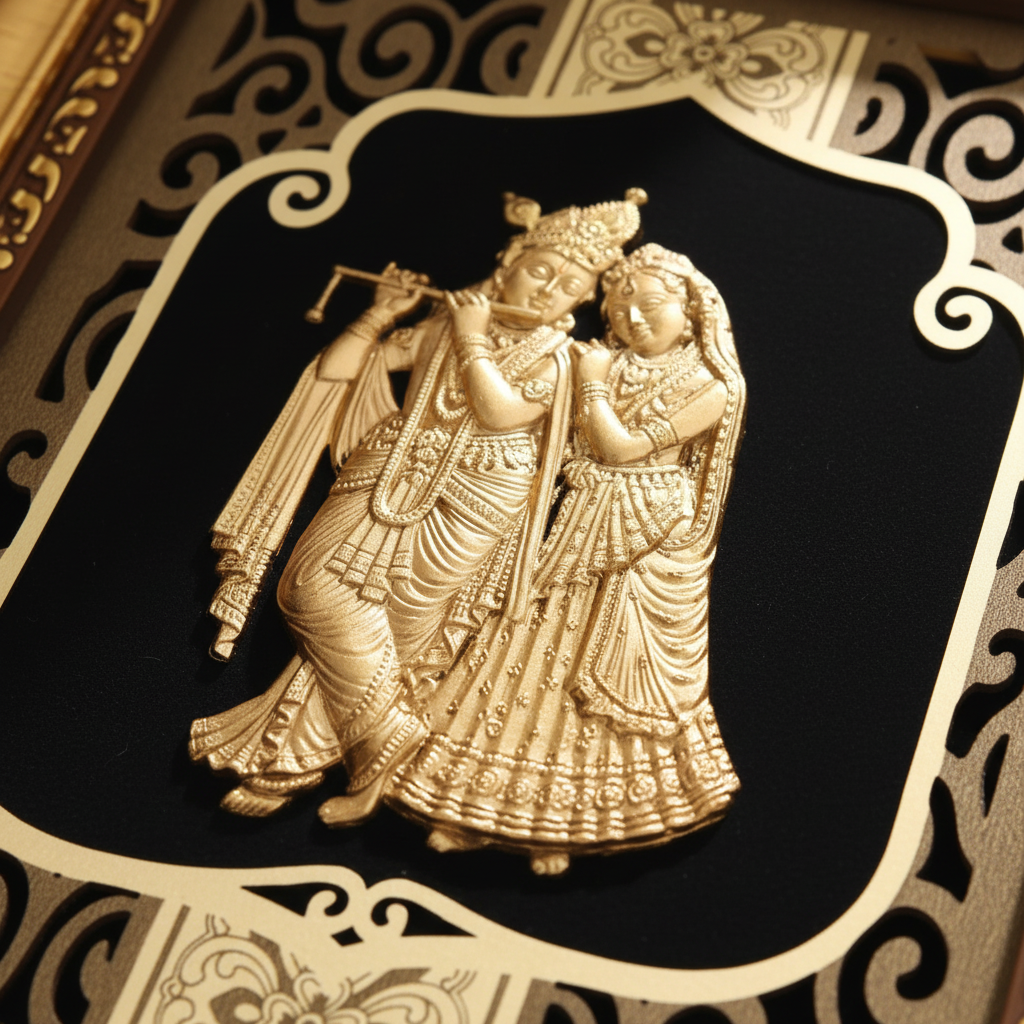
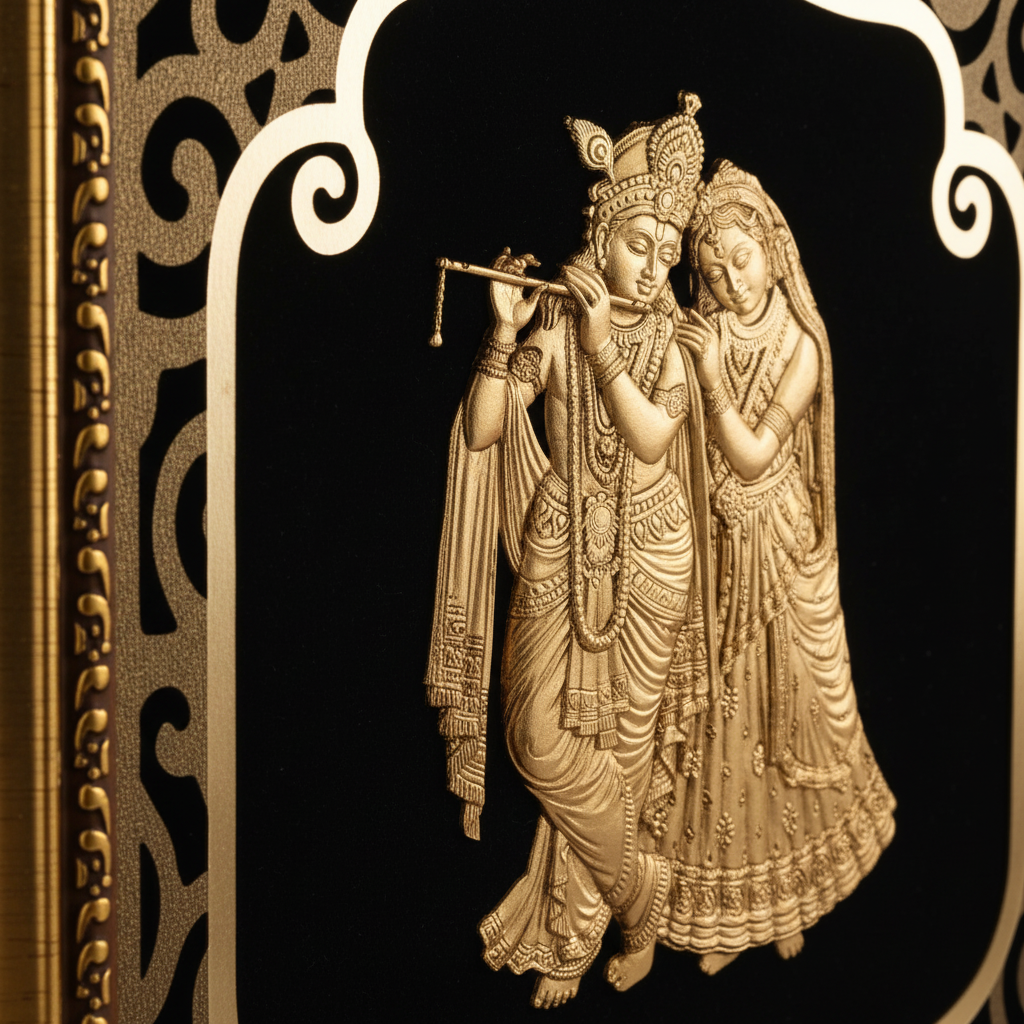
A 24K gold foil Krishna painting — Bal Gopal, Muralidhara, or Radha-Krishna — remains a living sacred presence in the home long after the festival night has passed. Explore our collection and find the image of the most beloved that will make your home his permanent Vrindavan.
Hare Krishna, Hare Krishna, Krishna Krishna, Hare Hare. Hare Rama, Hare Rama, Rama Rama, Hare Hare. May the birth of the most beloved bring joy, light, and divine grace into your home — on Janmashtami and every day of the year.