In this series
What is the Best Wood for a Sculpture? Cedar, Teak, Camphor & More — A Complete Guide
Summary
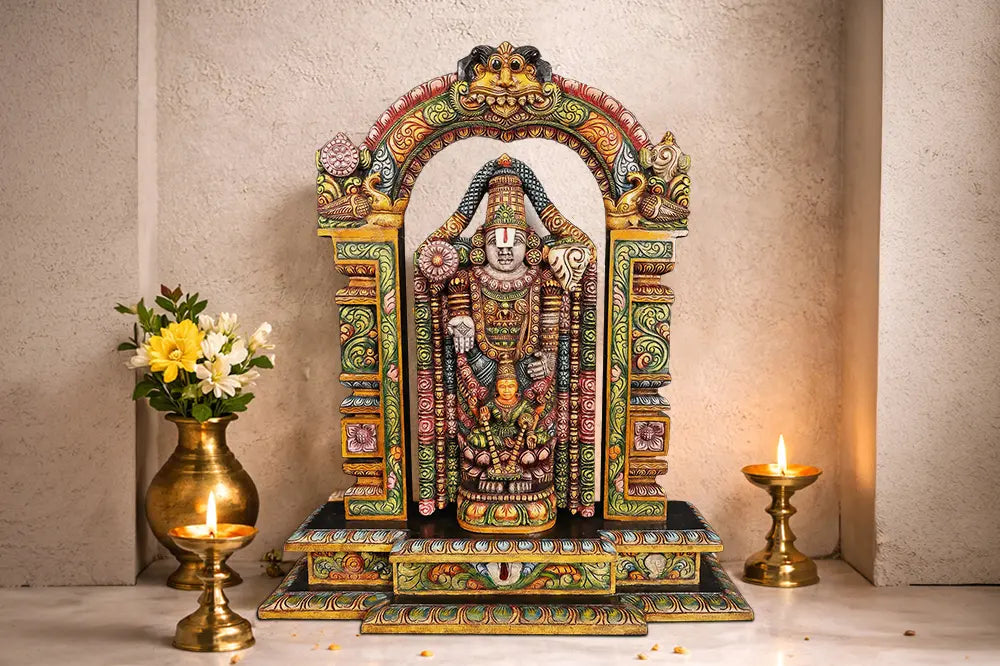
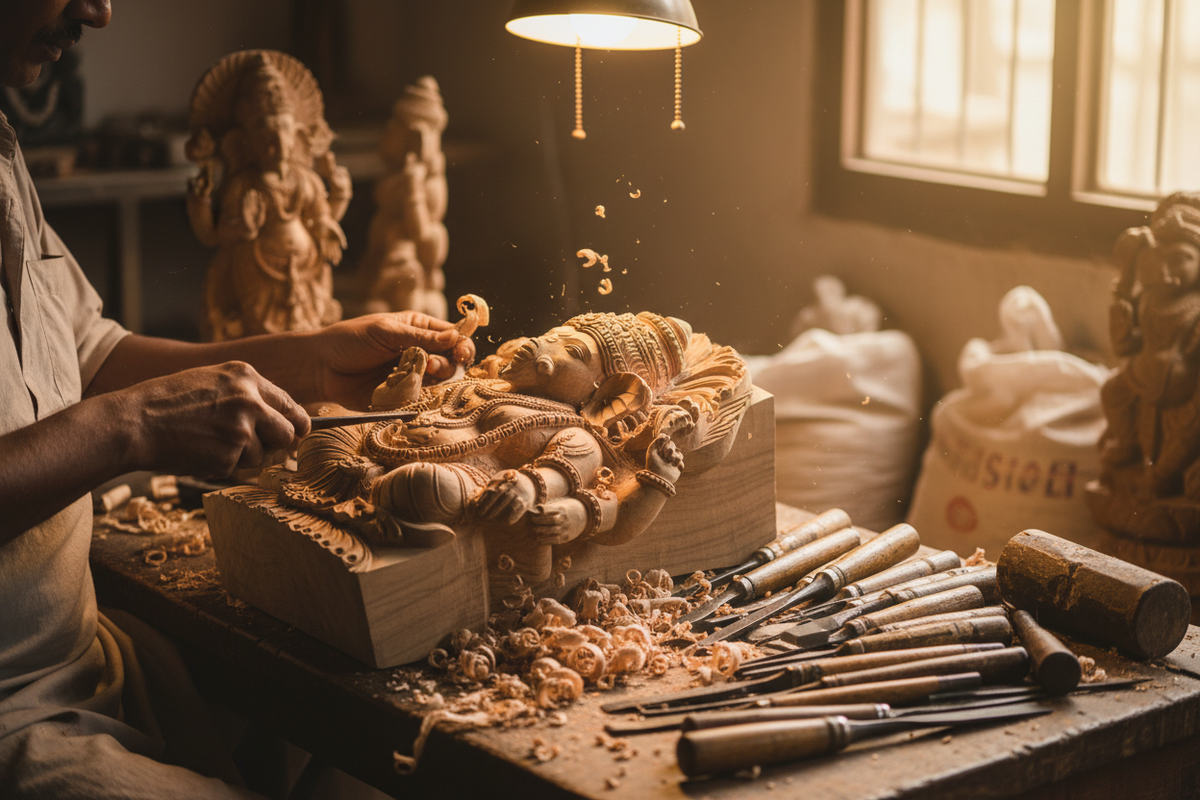
Wood has been used to create sacred sculptures in India for thousands of years — and the choice of wood is never arbitrary. According to the ancient Shilpashastra (the Indian treatise on sacred art and architecture), different woods carry different spiritual qualities, and the right wood must be chosen for each deity and purpose. This guide explores the best woods for Hindu deity sculptures, their spiritual significance, and how to care for your wooden sacred art.
The Best Woods for Hindu Deity Sculptures

| Wood | Sanskrit Name | Qualities | Best For |
|---|---|---|---|
| Cedar | Devadaru ("Wood of the Gods") | Aromatic, insect-resistant, fine grain, spiritually pure | Divine idols: Rama, Ganesha, Krishna, Dashavatar |
| Teak | Sagaun | Extremely durable, insect-resistant, beautiful grain, ages well | Dashavatara, Rama Darbar, Buddha, Saraswati |
| Camphor | Karpoora | Aromatic, pest-resistant, used in Aarti rituals, purifying | Buddhist figures: Buddha, Maitreya, Green Tara |
| Kadamba | Kadamba | Sacred to Krishna, affordable, workable, traditional Karnataka wood | Buddha, Durga, Lakshmi, Ganesha |
| Vengai | Vengai ("God's Tree") | Hard, durable, fine grain, traditional South Indian sacred wood | Dakshinamurti Shiva, Ganesha, temple pillars |
Cedar (Devadaru): The Wood of the Gods

Cedar — known in Sanskrit as Devadaru ("wood of the gods") — is the most sacred wood in the Hindu tradition for carving divine idols. Its natural aromatic oils make it naturally insect-resistant and long-lasting, while its fine, even grain allows sculptors to achieve extraordinary detail. Cedar sculptures carry a subtle, pleasant fragrance that enhances the devotional atmosphere of any sacred space.
How to Clean and Maintain Wood Sculptures
| Care Step | Method | Frequency |
|---|---|---|
| Dusting | Use a soft, dry cloth or soft brush; never use abrasive materials | Weekly |
| Cleaning | Wipe with a slightly damp cloth; dry immediately; avoid soaking | Monthly |
| Moisture protection | Keep away from direct sunlight and humidity; use a dehumidifier in monsoon season | Ongoing |
| Polish/lacquer | Apply natural wood oil or lacquer to preserve the finish and prevent cracking | Annually |
| Storage | Wrap in soft cloth; store in a cool, dry place; avoid plastic wrapping | When not displayed |
Conclusion
Wood is one of the oldest and most sacred materials for Hindu deity sculpture — a living material that carries the energy of the sacred tree from which it came. When you choose a wooden deity sculpture, you are not merely choosing an aesthetic object — you are choosing a living sacred presence, crafted by skilled hands from a material that the tradition has considered divine for thousands of years. Care for it with love, and it will serve as a sacred companion for generations.
Explore Moksha Craft's collection of handcrafted wooden deity sculptures — made in India, delivered worldwide.