In this series
Who Is Lord Ganesha? The Complete Guide to the Elephant-Headed God
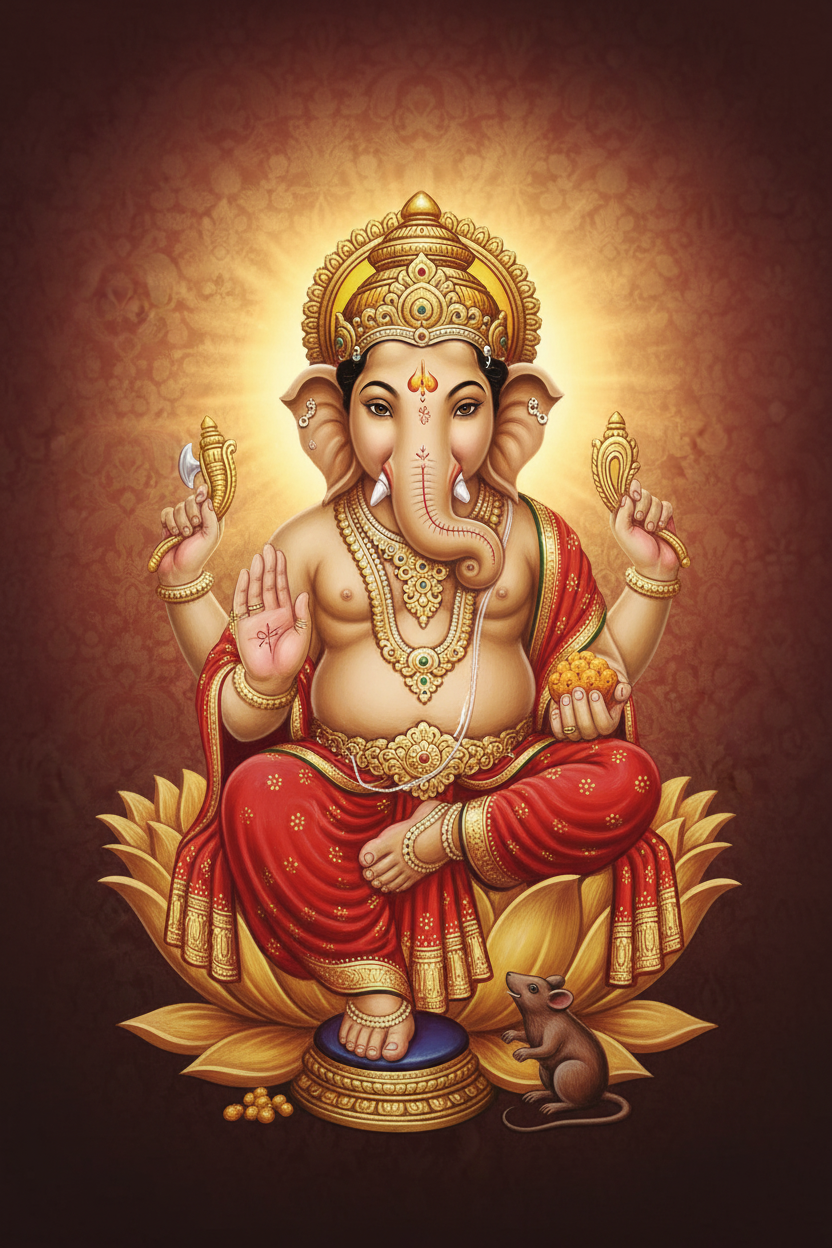
Lord Ganesha is perhaps the most universally recognized deity in the Hindu tradition — the elephant-headed god whose image appears at the entrance of temples, the beginning of sacred texts, the start of businesses, the threshold of homes, and the opening of every Hindu ritual. He is beloved across sectarian lines and venerated in traditions as far afield as Tibetan Buddhism, Jainism, and parts of Southeast Asia.
Ganesha’s Origins: The Stories of His Birth
Created by Parvati
The most widely known account comes from the Shiva Purana. Goddess Parvati created a boy from the turmeric paste she used to cleanse her body, breathing life into him and stationing him at the door as her guardian. When Shiva returned and was barred from entering his own home, a conflict ensued — and in the battle, the boy’s head was severed. Parvati’s grief was so profound that Shiva promised to restore her son, commanding his attendants to bring the head of the first living being they found pointing north. They returned with the head of an elephant. Shiva placed it on the boy’s neck, restored him, and declared him elevated — the lord of all ganas, the one who must be worshipped first in every ritual.
The elephant head is not a deformity but a mark of divine origin: Ganesha’s consciousness operates at a cosmic level that human consciousness does not reach.
His Names and Their Meanings
- Ganesha / Ganapati — “Lord of the ganas”; leader of all groups and assemblies
- Vighnaharta / Vighnaraja — “Remover of obstacles”; also “Creator of obstacles” — he both clears the path and places tests upon it
- Ekadanta — “One-tusked”
- Lambodara — “Pot-bellied”; the large belly containing all the universes
- Siddhivinayaka — “Granter of success and achievement”
- Buddhinatha — “Lord of Buddhi (intellect)”
- Mangalamurti — “Auspicious form”; the deity whose very image brings blessing
Ganesha’s Iconography: What the Symbols Mean

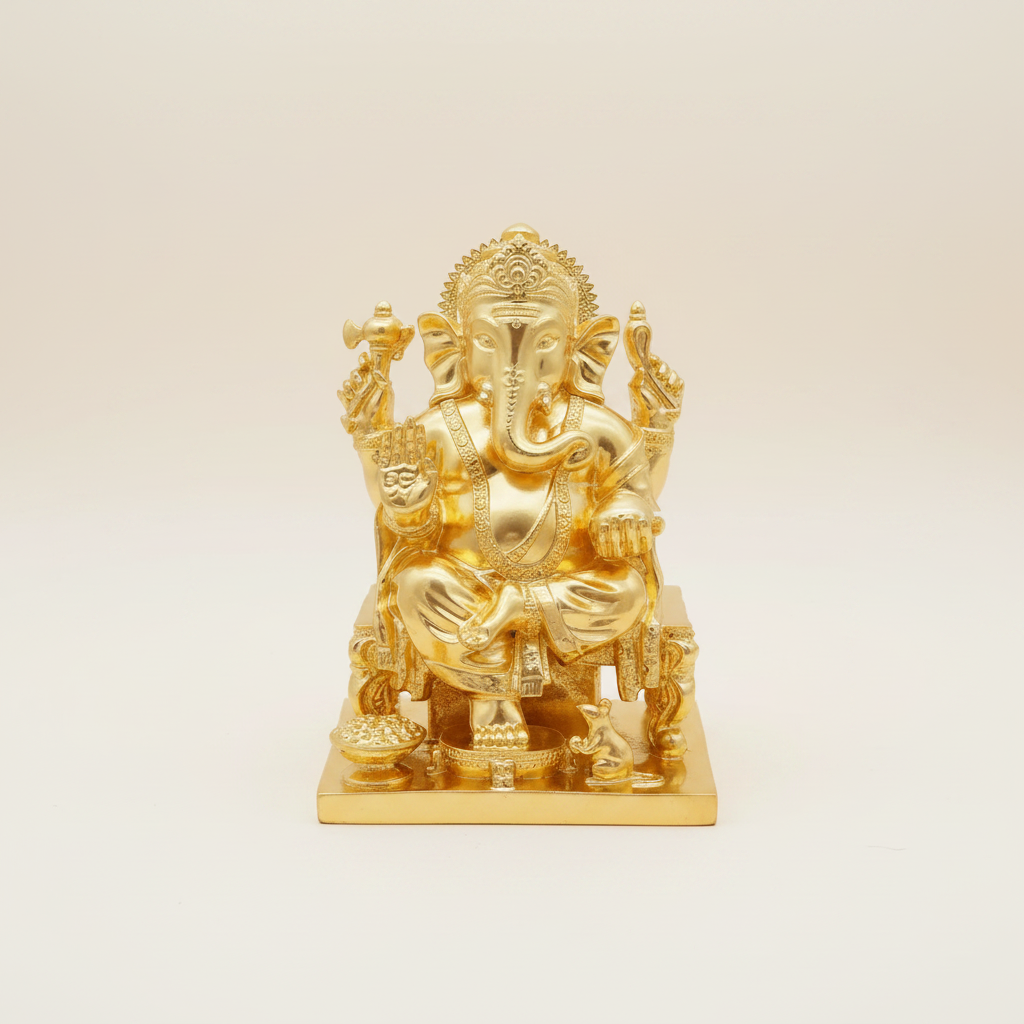
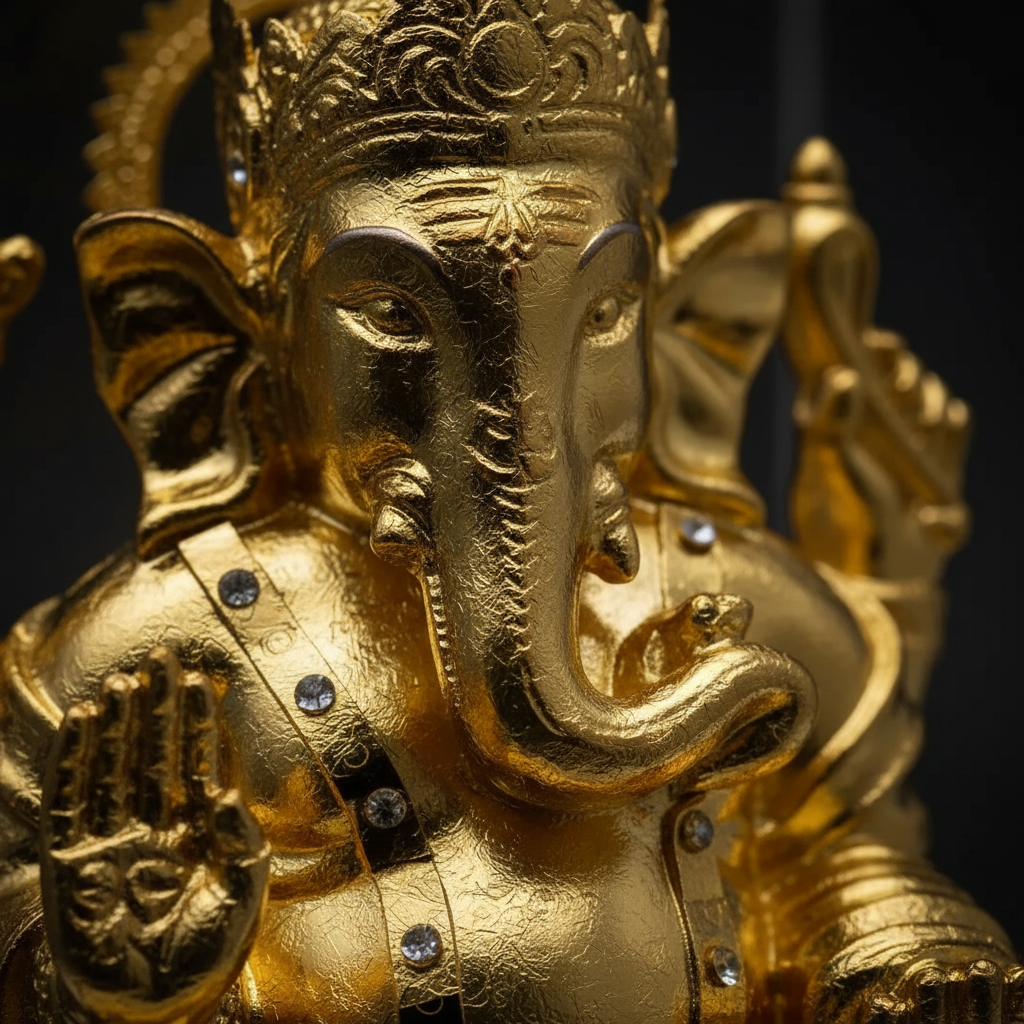
- The Elephant Head: The most intelligent of animals in Indian tradition — the union of cosmic intelligence (elephant) with human capacity for action (body). Large ears hear everything; the trunk discriminates between the beneficial and the harmful; small eyes see with focused clarity
- The Broken Tusk: When Ganesha’s writing pen broke as he transcribed the Mahabharata, he broke off his own tusk rather than stop the flow of the epic. A symbol of sacrifice in the service of knowledge and dharma
- The Modak: His favorite food — a sweet dumpling whose outer covering must be broken to reach the sweetness within. A perfect symbol of the spiritual journey toward the bliss of liberation
- The Mouse (Mushika): His vahana — representing desire, endlessly gnawing, capable of penetrating any barrier. When Ganesha rides the mouse, wisdom governs desire rather than being controlled by it
- The Pot Belly (Lambodara): Contains all the universes within it; a symbol of abundance and the capacity to receive everything without being overwhelmed
- The Multiple Arms: Each holding specific objects — ankusha (goad for guiding), pasha (noose for binding obstacles), modak (sweetness), tusk (sacrifice) — constituting a precise theological statement about his functions
Why Ganesha Is Worshipped First
Ganesha is invoked first in every ritual, every prayer, every new beginning — before any other deity, including Shiva and Vishnu. Shiva himself declared that Ganesha must always be honored first. In the practical devotional tradition: beginning any endeavor without honoring Ganesha invites the obstacles he governs; beginning with his blessing ensures the path is clear.
The Eight Sacred Shrines: Ashtavinayaka
Maharashtra is home to the eight sacred Ganesha shrines — the Ashtavinayaka — each a specific form with its own name and area of blessing: Mayureshwar (Morgaon), Siddhivinayaka (Siddhatek), Ballaleshwar (Pali), Varadavinayaka (Mahad), Chintamani (Theur), Girijatmaja (Lenyadri), Vighnahar (Ozar), and Mahaganapati (Ranjangaon).
Ganesh Chaturthi: The Great Festival
Ganesh Chaturthi — celebrated on the fourth day of Bhadrapada month (August–September) — marks Ganesha’s birthday with ten days of elaborate puja, the installation of Ganesha murtis in homes and public pandals, and the procession and immersion of the murti on Ananta Chaturdashi. The festival was elevated to public celebration by Bal Gangadhar Tilak in 1893 as a unifying force during the independence movement — Ganesha’s universal appeal across caste and sectarian lines making him the perfect symbol.

Ganesha in Your Home
A Ganesha image at the entrance of the home is the most traditional and theologically precise placement — he guards the threshold, blesses all who enter and leave, and ensures that the household’s activities begin under auspicious protection. A Ganesha image in the mandir ensures that every act of daily puja begins with the proper invocation of the first deity.
Explore our collection of Ganesha gold foil paintings and sacred statues — and find the image that will bring his auspicious presence into your home from the very first day.
Om Gam Ganapataye Namaha. May the remover of obstacles clear your path, and may every new beginning in your home and life be blessed with his grace.