In this series
Kesari (Saffron) Ganesha: Significance, Benefits & Vastu Meaning for Home
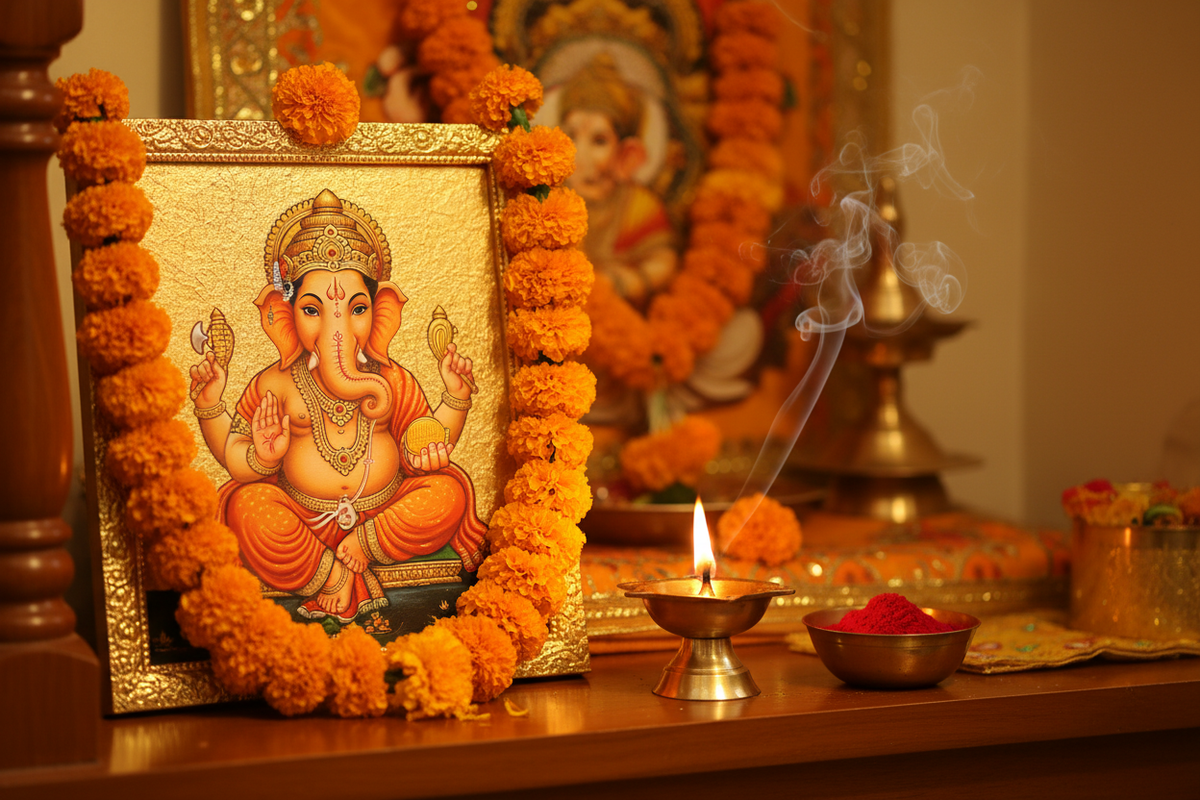
Among the many forms and color manifestations of Lord Ganesha, the Kesari Ganesha — the saffron or orange-hued form of the elephant god — holds a place of special power and significance in the Hindu devotional tradition. Kesari means saffron, turmeric-orange, or the deep ochre color associated with renunciation, auspiciousness, and divine energy. When Ganesha appears in this vibrant orange-gold hue, he embodies a specific constellation of blessings: spiritual power, worldly prosperity, protection, and the fierce energy of successful obstacle removal.
What Is Kesari Ganesha?
Kesari Ganesha refers to any form of Lord Ganesha depicted in the saffron, orange, or ochre color spectrum. This is distinct from other color forms:
- White (Shweta Ganesha): Purity, peace, and sattvic energy — associated with learning
- Red (Rakta Ganesha): Power and desire fulfillment — associated with Tantric traditions
- Black (Krishna Ganesha): Protection and warding off negative forces
- Green (Harita Ganesha): Nature, fertility, and new growth
Kesari — the saffron-orange spectrum — is the color most strongly associated with Ganesha in mainstream Hindu tradition. When most Hindus picture Ganesha, they picture him in this warm orange-gold hue: it is the color of his sindoor, the color of his preferred flowers (marigold, red hibiscus), and the color most associated with his vibrant, joyful, abundantly auspicious energy.
The Spiritual Significance of the Saffron Color
In Hindu tradition, saffron (kesari/bhagwa) is not merely a color — it is a spiritual statement:
- Renunciation and transcendence: Saffron is the color of the sannyasi — one free from attachment cannot be moved by fear. This makes it a color of ultimate power
- Agni (fire): Saffron is the color of sacred fire — the transformative, purifying energy that burns away impurity. Ganesha in saffron carries this fire energy
- Auspiciousness: Saffron and turmeric are among the most auspicious substances in Hindu ritual — used in weddings, puja, tilak. A saffron-hued deity image radiates this energy continuously
- The sunrise: Saffron is the color of the dawn sky — of new beginnings. Ganesha, as the lord of new beginnings, is perfectly represented in this color
Benefits of Worshipping Kesari Ganesha at Home
Obstacle Removal with Maximum Power
All forms of Ganesha remove obstacles — but Kesari Ganesha carries the energy of Agni — fire that burns away obstacles rather than merely moves them. Devotees seeking to break through long-standing obstacles in career, relationships, health, or spiritual practice find Kesari Ganesha particularly potent.
Business Prosperity and Financial Success
The orange-gold color is strongly associated with wealth and abundance. Many businesses install a Kesari Ganesha image at the entrance or cash register — invoking his blessing on all commercial activity. For home-based businesses, a Kesari Ganesha in the home office combines obstacle-removing energy with prosperity-drawing power.
Protection of the Household
Ganesha is the guardian of thresholds — most commonly placed at entrances to protect the household from negative energies. In his Kesari form, this protective energy is amplified by the fierce, fire-like quality of the orange color.
Auspicious Beginnings and Spiritual Wisdom
Ganesha is always invoked first before any puja, ritual, or important undertaking. In his Kesari form — glowing with the color of the auspicious dawn — he is the supreme deity for new beginnings. He is also Buddhipriya (the one who bestows intellect), connecting the worldly prosperity he grants with deeper wisdom and clarity.
Kesari Ganesha vs. Other Color Forms: Which Is Right for You?
- Kesari/Saffron: Obstacle removal, business prosperity, new beginnings, protection — the most universally appropriate form for household use
- White: Students, artists, those seeking peace and sattvic clarity
- Red: Specific desires or intense energy — more appropriate for dedicated puja rooms
- Black: Protection from specific negative influences — requires consistent worship
For most Hindu households — particularly NRI families seeking a Ganesha image that is beautiful, auspicious, universally appropriate, and powerful — Kesari Ganesha is the ideal choice.
Vastu Placement for Kesari Ganesha

- Main entrance: The most traditional placement — Ganesha guards the threshold. A Kesari Ganesha above or beside the main door protects the household and blesses all who enter
- Northeast corner of the puja room: The Ishanya corner — direction of divine energy. Ideal for dedicated worship
- East wall: Ganesha facing West (devotee faces East) — direction of the rising sun, auspicious for all new beginnings
- Home office (North wall): Facing South — direction of Kubera, the lord of wealth. Particularly appropriate for business prosperity
- Avoid: South wall, bathroom-facing walls, and placement below waist level
Why 24K Gold Foil Is the Supreme Medium for Kesari Ganesha
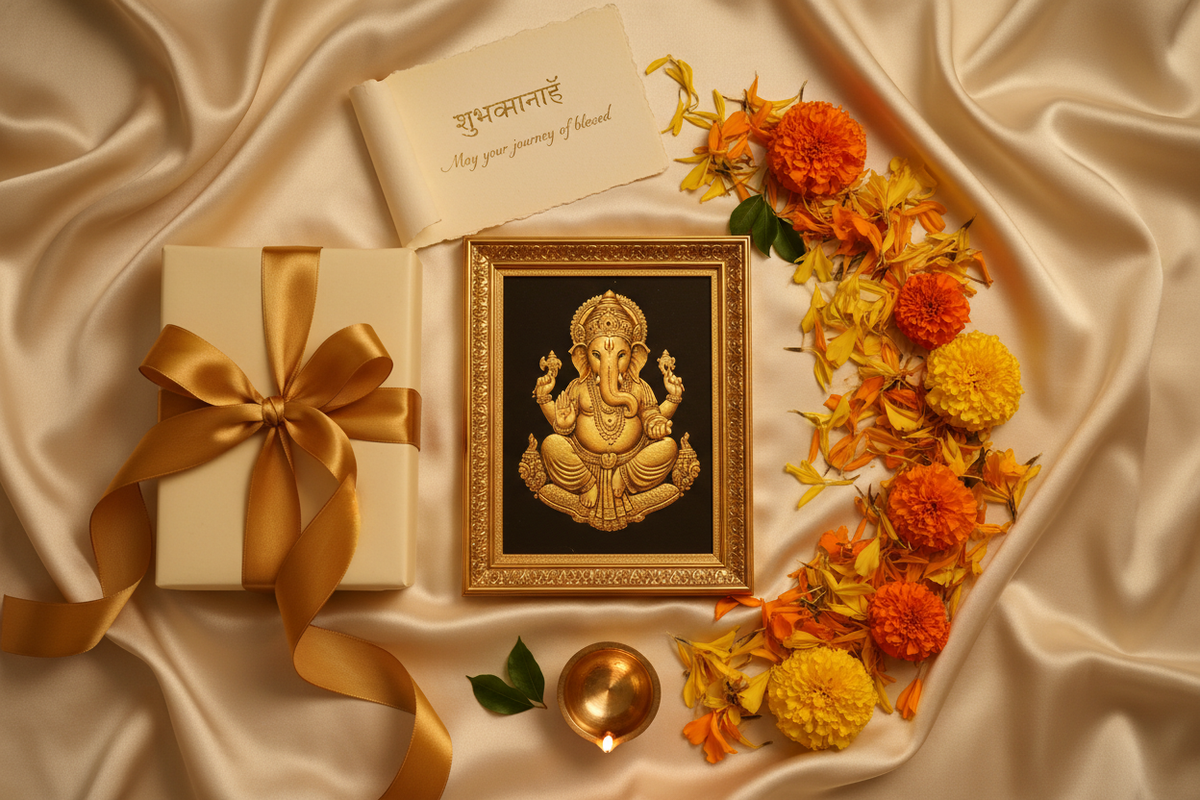
When genuine 24K gold leaf surrounds and highlights a Kesari Ganesha image, the warmth of the gold and the warmth of the saffron create a unified field of luminous, auspicious energy. Gold foil catches and responds to light in a way flat prints cannot — at different times of day, the image seems to glow from within. Unlike painted or printed images that fade, 24K gold foil is permanent — as vibrant in fifty years as today. Gold has been used in Indian sacred art for thousands of years: in Tanjore paintings, temple gilding, manuscript illumination. A 24K gold foil Kesari Ganesha carries this entire tradition.
Explore our collection of Kesari Ganesha 24K gold foil paintings — and bring the vibrant, auspicious, obstacle-removing energy of Ganesha into your home, your mandir, and your daily practice.