In this series
Is Black Ganesha Good or Bad for Home? Significance, Placement & Benefits

Among the many questions about Ganesha worship in the home, one comes up with surprising frequency: is a black Ganesha good or bad for the home? The answer depends on the specific form, tradition, and devotional intention — but the short answer is: black Ganesha is not bad. He is a recognized, powerful, and specifically beneficial form with deep roots in the tradition.
What Black Means in Hindu Iconography
Color in Hindu sacred art is never arbitrary. Black (Krishna varna) carries these associations:
- Protection: Black absorbs all light and energy — it is the color most associated with absorbing and neutralizing negative energies and evil eye (nazar)
- Power and authority: Associated with Shani (Saturn) and forms of power that operate decisively
- Swift action: In tantric contexts, the black form of a deity is considered the most rapidly effective — acting quickly to remove obstacles
- The formless absolute: Black represents the primordial darkness from which creation emerges — a deity form close to the primordial source
Black Ganesha in Temple Tradition
The black Ganesha (Kala Vinayaka) is a recognized and powerful form worshipped at major temples across India:
- Ucchi Pillayar in Tiruchirapalli, Tamil Nadu — one of the most visited Ganesha temples in South India, enshrining a black Ganesha on a rock fortress
- Kala Vinayaka temples across Maharashtra, Karnataka, and Tamil Nadu — major pilgrimage sites with thousands of devotees
- Several temples in the Ashtavinayaka pilgrimage circuit of Maharashtra — the eight most sacred self-manifested Ganesha shrines — enshrine naturally dark or black murtis
That black Ganesha is enshrined in some of the most powerful and venerated temples in India is the clearest indication that this form is deeply auspicious.
What Black Ganesha Is Particularly Good For
- Protection from negative energies: His absorptive quality makes him the most powerfully protective form of Ganesha — warding off evil eye and neutralizing negative influences
- Removing stubborn obstacles: Particularly effective for obstacles that are long-standing or intense in nature
- Swift results: Prayers to Kala Vinayaka are understood to produce results more rapidly than to other forms
- Shani mitigation: Because black is associated with Shani (Saturn), a black Ganesha is sometimes specifically worshipped to mitigate challenging Saturn periods in the birth chart — particularly common in South India
The Three Ganesha Colors Compared

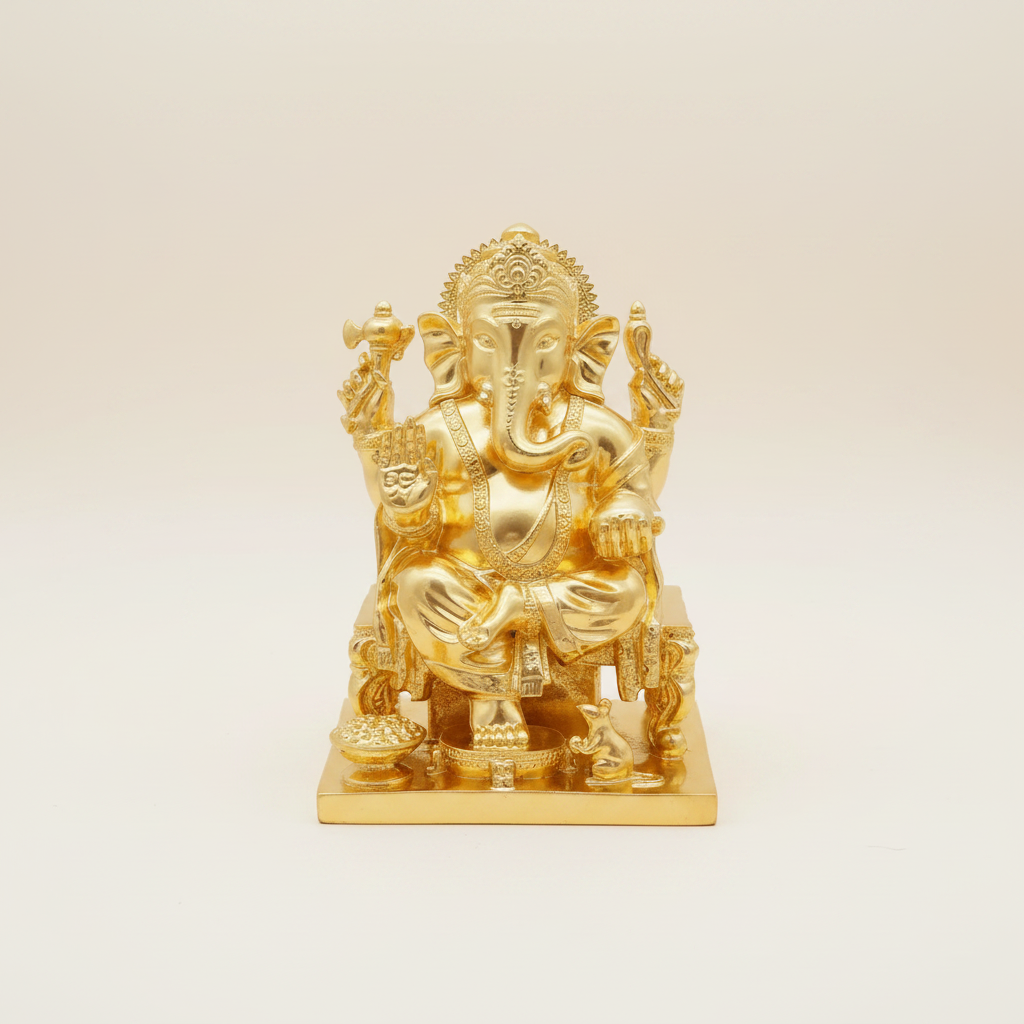
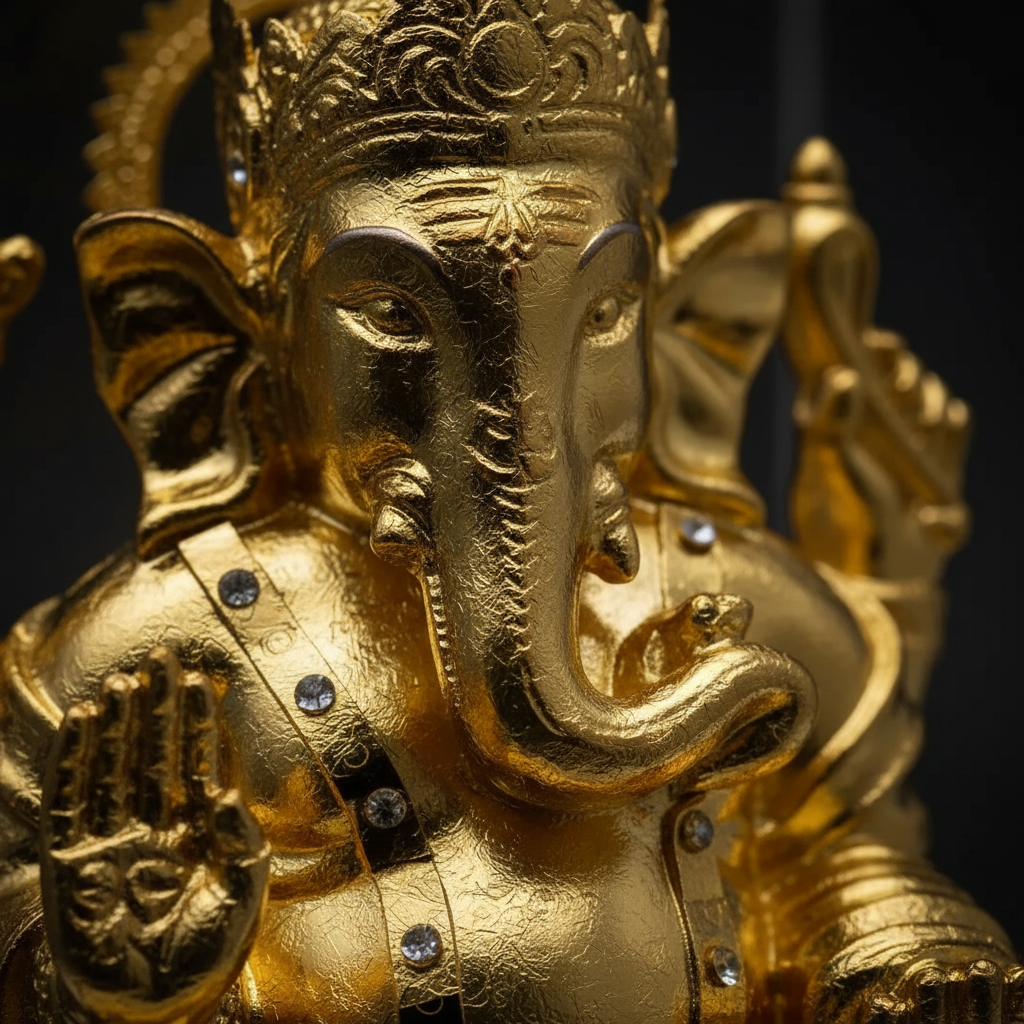
Golden / 24K Gold Ganesha
Primary associations: prosperity, abundance, auspiciousness, new beginnings, business success. Gold is associated with Lakshmi and the sun — the most universally auspicious form for household worship. Energy quality: warm, expansive, joyful, prosperous. Best for: most households seeking abundance and auspicious new beginnings.
Orange / Saffron (Kesari) Ganesha
Primary associations: courage, vitality, spiritual energy. Saffron is the color of the sacred fire and of spiritual renunciation. Energy quality: energizing, courageous, spiritually active. Best for: families with a strong focus on spiritual practice or going through challenges requiring courage.
Black (Kala) Ganesha
Primary associations: protection, absorption of negative energies, removal of stubborn obstacles, swift action, Shani mitigation. Energy quality: protective, absorptive, powerful, decisive. Best for: households facing strong obstacles, negative energy, evil eye, or a challenging Saturn period.
Placement Guidelines for Black Ganesha
- Main entrance: The most powerful placement — facing inward, beside the main door, protecting the threshold. Black Ganesha’s absorptive energy is especially effective here, neutralizing negative influences before they enter the home
- Northeast corner: Ideal position for any deity image in Vastu Shastra
- First on the altar: Ganesha always occupies the first position, worshipped before any other deity
- Facing direction: East or North — never South
- Height: Eye level or slightly above in the worship posture
For Most Households: The 24K Gold Ganesha
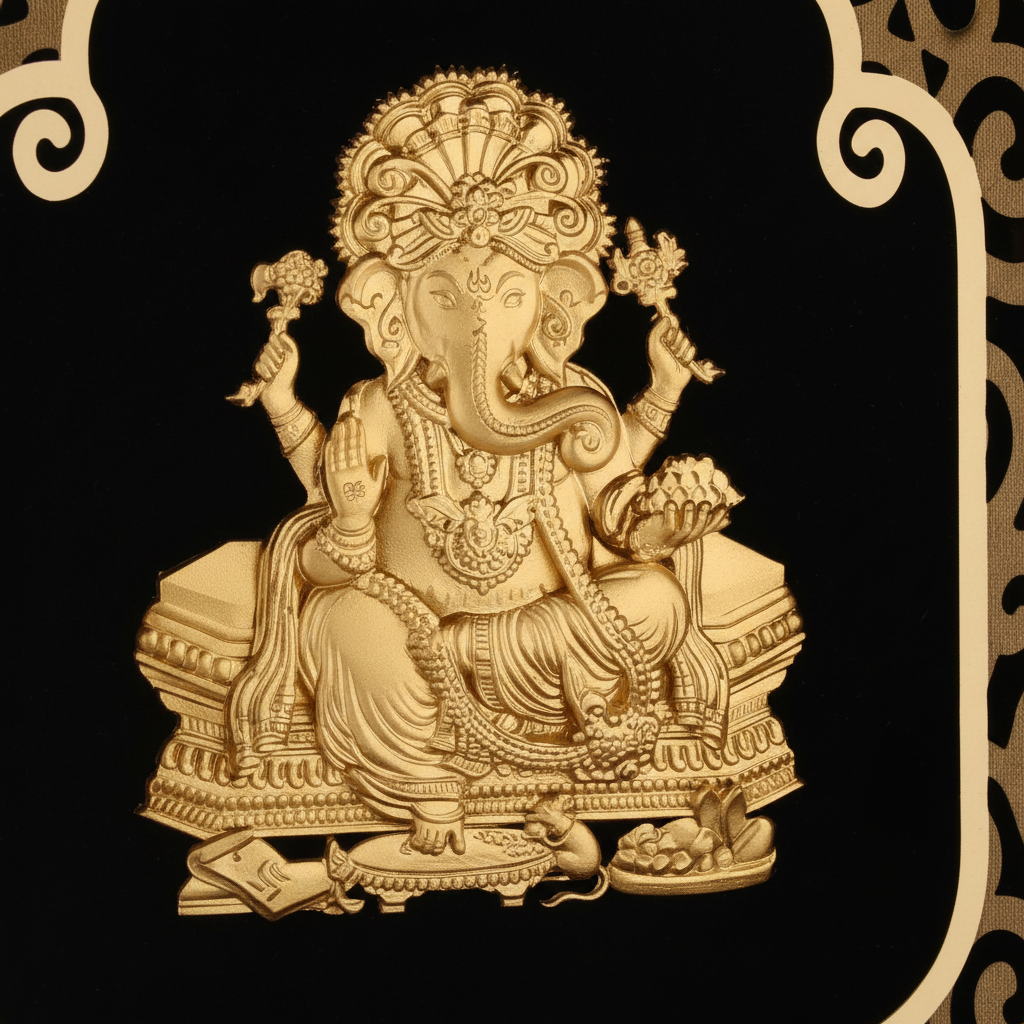
For households without a specific need for the protective qualities of the black form, the golden Ganesha — and specifically the 24K gold foil Ganesha — remains the most universally auspicious choice. A painting made with genuine 24K gold foil is not merely golden in color: it is made from the actual substance associated with divine abundance, carrying a quality of sacred intention that painted or printed gold cannot replicate.
Explore our collection of 24K gold foil Ganesha paintings in multiple sizes and frame colors — and find the form of the beloved elephant-headed deity that is most beautifully suited to your home and devotion.