
In this series
How Overseas Indian Families Use Spiritual Wall Decor at Home
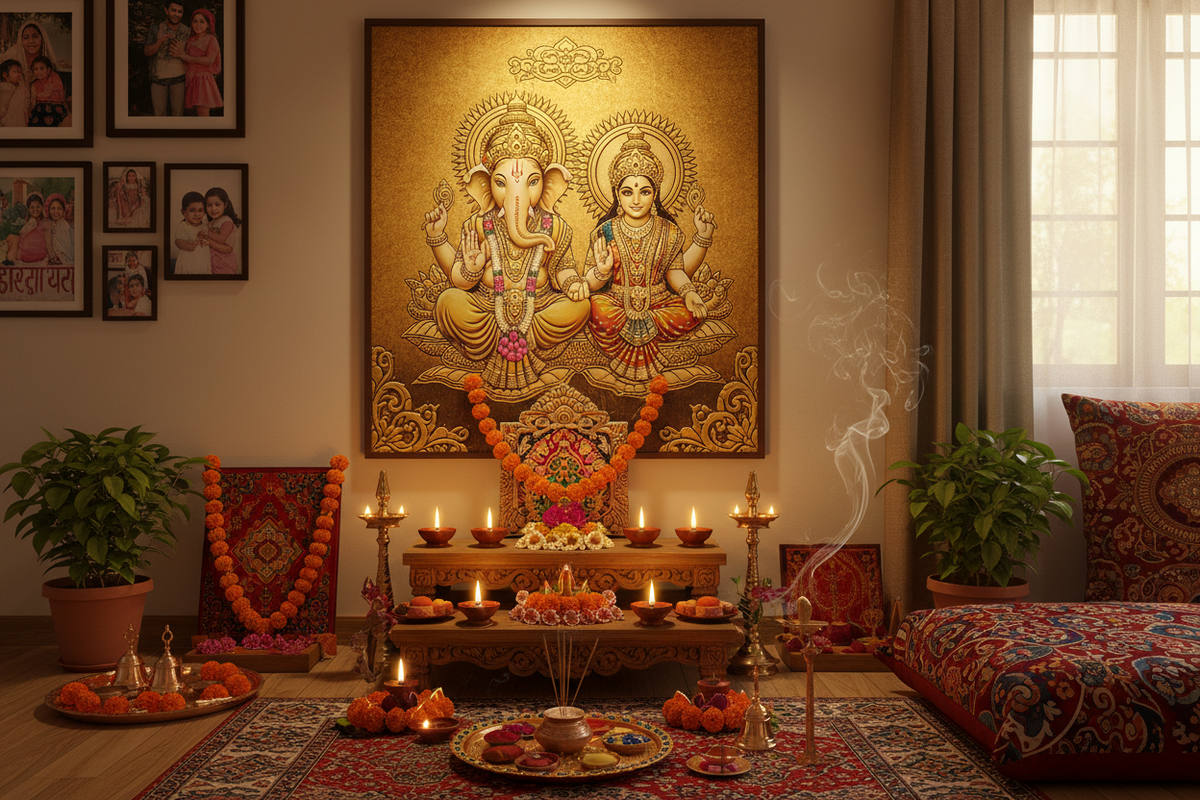
For the estimated 32 million members of the Indian diaspora living across the USA, UK, Canada, Australia, UAE, and beyond, the home carries a weight that goes far beyond shelter. It is a cultural sanctuary — a space where Indian identity, spiritual practice, and family memory are preserved and passed on to the next generation.
At the heart of this sanctuary, in virtually every overseas Indian home, is spiritual wall decor. This guide explores how NRI families use sacred art to create homes that are simultaneously modern and deeply rooted — and why this practice matters more than ever.
The Unique Challenge of the Overseas Indian Home
Living abroad presents a particular tension for Indian families: the desire to integrate into the local culture while preserving the depth and richness of Indian heritage. This tension plays out most visibly in the home.
Many NRI families navigate this by creating homes that are bicultural — modern in architecture and furnishing, but unmistakably Indian in spirit. Sacred wall art is one of the most powerful tools for achieving this balance, because it:
- Integrates naturally into contemporary interiors without looking out of place
- Carries unmistakable cultural and spiritual identity
- Creates a daily connection to tradition that requires no explanation
- Serves as a visual anchor for children growing up between two cultures
Where Spiritual Wall Decor Appears in Overseas Indian Homes
1. The Home Mandir — The Sacred Heart
The home mandir (puja room or sacred corner) is the most important space in any traditional Indian home — and this holds true even more powerfully for families living abroad. When the nearest temple may be an hour's drive away, the home mandir becomes the primary space for daily devotion, festival celebration, and spiritual grounding.
Sacred wall art in the mandir typically features:
- The family's ishta devata (personal deity) as the central piece
- Lakshmi and Ganesha for Diwali and general auspiciousness
- Regional deities that connect the family to their specific Indian heritage (Tirupati Balaji, Vaishno Devi, Shirdi Sai Baba)
- Sacred symbols — Om, Swastika, Shubh Labh — as supporting elements
2. The Main Entrance — The First Blessing
The entrance of an overseas Indian home is often the most deliberate space in the house. Families place Ganesha art at or near the front door — facing inward — as both a spiritual practice and a cultural statement. It says, clearly and beautifully: this is an Indian home, and the divine is welcome here.
3. The Living Room — Where Heritage Meets Hospitality
The living room is where overseas Indian families most consciously navigate the bicultural balance. Sacred art in the living room must work on two levels simultaneously:
- As a spiritual presence — meaningful to the family's devotional life
- As a design statement — beautiful and sophisticated enough to hold its own in a contemporary interior
This is why premium sacred art — particularly 24K gold foil paintings with their gallery-quality presence — has become the preferred choice for NRI living rooms. These pieces are sacred in spirit and contemporary in presentation.
4. The Children's Room — Passing the Tradition On
For many NRI parents, one of the deepest concerns is ensuring that their children — growing up in a Western environment — maintain a connection to Indian culture and spirituality. Sacred art in children's rooms serves this purpose quietly and powerfully.
Popular choices for children's spaces:
- Ganesha — the patron of students and new beginnings
- Saraswati — the goddess of knowledge and learning
- Krishna as a child (Bal Krishna) — joyful, accessible, and beloved
The Festivals That Sacred Art Makes Possible
For overseas Indian families, sacred wall art transforms the home into a festival space. When Diwali, Navratri, Ganesh Chaturthi, or Janmashtami arrives, the art already on the walls becomes the backdrop for celebration — no elaborate decoration required.
| Festival | Sacred Art That Anchors It |
|---|---|
| Diwali | Lakshmi Ganesh — the central deities of the festival |
| Ganesh Chaturthi | Ganesha in any form — the festival's presiding deity |
| Navratri / Durga Puja | Durga, Lakshmi, or Saraswati |
| Janmashtami | Radha Krishna or Bal Krishna |
| Maha Shivaratri | Shiva or Shiva Parivar |
| Ram Navami | Ram Darbar or Sita Ram |
What NRI Families Look for in Sacred Art
Based on the preferences of Indian families living abroad, the most valued qualities in sacred wall art are:
- Premium craftsmanship — Quality that commands respect in any setting, Indian or Western
- Authentic iconography — Accurate, respectful depictions of deities that honor the tradition
- Contemporary presentation — Framing and finish that works in modern interiors
- Appropriate scale — Sized for Western-style rooms, which tend to have larger walls than traditional Indian homes
- Safe international shipping — Packaging that ensures the piece arrives intact after a long journey
- Cultural context — Information about the deity, the tradition, and the significance of the piece
Sacred Art as Cultural Transmission
Perhaps the most profound function of spiritual wall decor in overseas Indian homes is cultural transmission — the passing of heritage from one generation to the next.
When a child grows up seeing Ganesha at the entrance, Lakshmi in the living room, and Saraswati in their study, they absorb a worldview — one that values the sacred, honors the divine, and sees beauty as inseparable from meaning. This is not indoctrination; it is cultural inheritance. And it happens quietly, daily, through the art on the walls.
Frequently Asked Questions
Q: How do I choose sacred art that works in a Western-style interior?
Look for pieces with clean composition, premium framing, and a color palette that complements your existing decor. 24K gold foil paintings work particularly well in contemporary interiors because the gold reads as luxury art in any cultural context.
Q: Is it appropriate to display deity art in a non-dedicated space (living room, hallway)?
Yes. While the mandir is the most sacred space, deity art in living rooms, entrances, and hallways is a common and respected practice. The key is to place the art at eye level or above, in a clean and respectful setting.
Q: How do I explain the art to non-Indian guests?
Most guests are genuinely curious and respectful. A simple explanation — "This is Ganesha, the Hindu deity of new beginnings and the remover of obstacles" — is usually met with interest and appreciation. Premium sacred art often sparks meaningful conversations about culture and spirituality.
Q: Can I order from India and have it shipped internationally?
Yes. Moksha Craft ships to the USA, UK, Canada, Australia, UAE, and many other countries, with premium protective packaging designed for international transit.
Conclusion: Home Is Where the Sacred Lives
For overseas Indian families, the home is not just a place to live. It is a place to be Indian — fully, proudly, and beautifully. Sacred wall art makes this possible in a way that no other element of home design can match.
It is the deity at the entrance that greets you every morning. The Lakshmi in the living room that reminds you of abundance. The Ganesha in the study that blesses your work. The mandir that anchors your festivals, your prayers, and your sense of who you are.
"Wherever an Indian family makes their home, the sacred travels with them. Art is how they make it visible."
Explore our Spiritual Wall Decor and Hindu Deity Wall Art collections — crafted for Indian homes everywhere in the world.
This article is part of Moksha Craft's Sacred Knowledge Series — handcrafted in India, delivered worldwide.

