
In this series
Lord Shiva Brass Wall Hangings: Sacred Decor, Vastu Benefits & Placement Guide
Summary
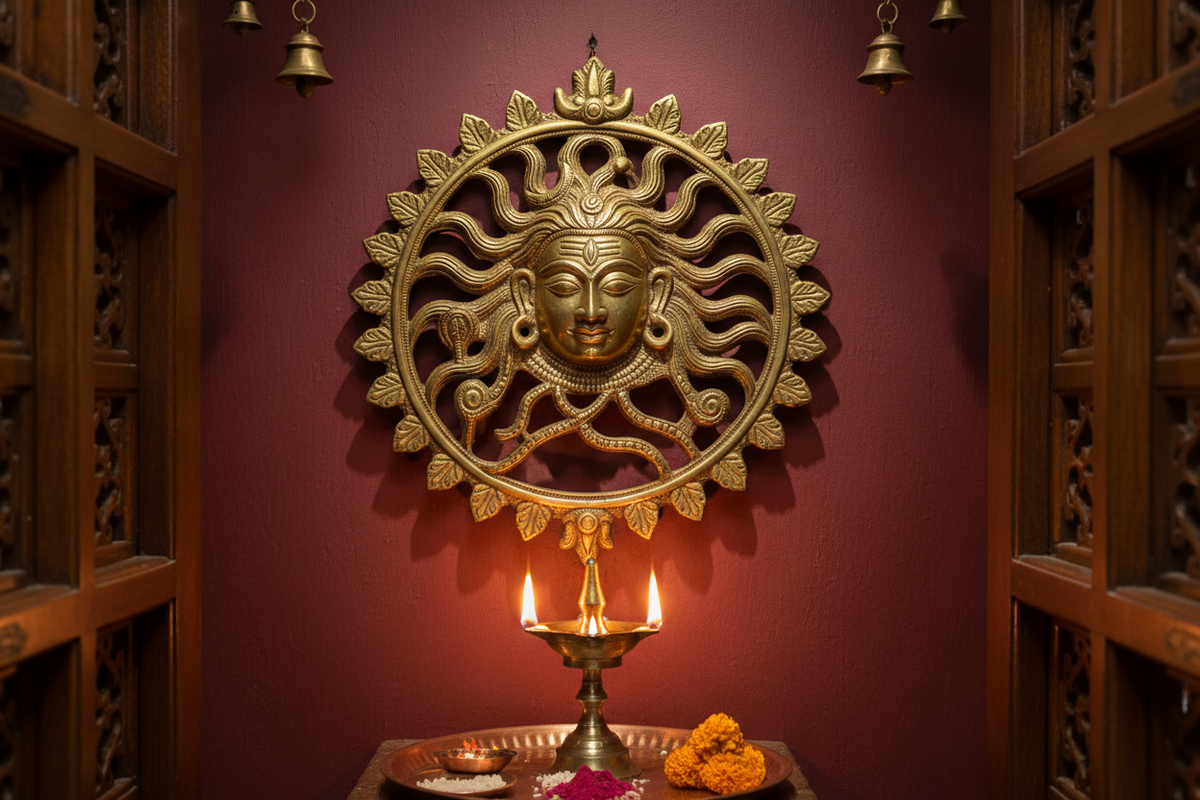
Lord Shiva brass wall hangings are among the most powerful and auspicious sacred decor choices for Hindu homes. Whether it is the cosmic dancer Nataraja, the serene Shiva Mukha (face), or the protective Trishul, a Shiva brass wall hanging brings divine energy, Vastu protection, and spiritual depth to any space. This guide covers the most popular forms, ideal placement directions, and how to choose the right piece for your home.
Why Choose a Shiva Brass Wall Hanging?

Lord Shiva — the Destroyer and Transformer, the supreme ascetic and cosmic dancer — is one of the most widely worshipped deities in Hinduism. A brass wall hanging of Shiva brings His divine energy into your home in a form that is both visually powerful and spiritually active.
Brass is considered one of the most auspicious metals for sacred decor in Hindu tradition — it conducts divine energy, resists tarnishing, and develops a beautiful patina over time that deepens its sacred character.
Popular Forms of Shiva Brass Wall Hangings
| Form | Symbolism | Best Placement |
|---|---|---|
| Nataraja (Dancing Shiva) | Cosmic dance of creation and destruction; the rhythm of the universe | Living room, meditation space, entrance |
| Shiva Mukha (Face of Shiva) | Divine presence and protection; the gaze of the cosmic consciousness | Entrance, puja room, north wall |
| Trishul (Trident) | Destroyer of the three types of suffering; protection and power | Entrance, south wall for protection |
| Om Namah Shivaya | The five-syllable mantra; invocation of Shiva's five elements | Meditation room, puja room |
| Shiva Lingam with Nandi | The formless divine with his devoted guardian | Puja room, north or east wall |
Vastu Placement Guide for Shiva Wall Hangings
| Location | Direction | Effect |
|---|---|---|
| Main entrance | Above the door, facing inward | Divine protection at the threshold; wards off negative energy |
| Living room | North or east wall | Positive energy flow; spiritual presence in the family space |
| Puja room | Northeast corner | Amplifies spiritual energy; ideal for daily darshan |
| Meditation space | East-facing wall | Aligns with sunrise energy; deepens meditation practice |
Avoid: South wall for deity images (except Trishul for protection), near bathrooms, bedrooms, or kitchen.
How to Care for Brass Wall Hangings
- Dust weekly with a soft dry cloth
- Polish monthly with tamarind water or brass polish to maintain the golden glow
- Light incense or a ghee lamp nearby to activate the sacred energy
- Avoid placing in humid areas — brass develops patina in moisture
Frequently Asked Questions
Q: Is a Shiva wall hanging auspicious for home?
Yes — Lord Shiva's presence in any form is considered highly auspicious and protective for the home.
Q: Which Shiva wall hanging is best for the entrance?
Shiva Mukha (face) or Nataraja above the entrance is most auspicious — the divine gaze protects all who enter and leave.
Q: Can I place a Nataraja in the living room?
Yes — Nataraja in the living room or meditation space brings the energy of cosmic rhythm, creativity, and transformation.
Q: Which direction should a Shiva wall hanging face?
North or east wall is most auspicious. The northeast corner is ideal for puja rooms.
Conclusion
A Lord Shiva brass wall hanging is not merely decorative — it is a living sacred presence that transforms your home into a space of divine protection, spiritual depth, and cosmic awareness. Choose the form that resonates with your devotion, place it with Vastu awareness, and let the energy of Mahadeva permeate every corner of your sacred space.
"Where Shiva's image is honored, the cosmic order is maintained. Where Nataraja dances, creation and dissolution flow in perfect harmony."
This article is part of Moksha Craft's Sacred Knowledge Series — handcrafted in India, delivered worldwide.

