
In this series
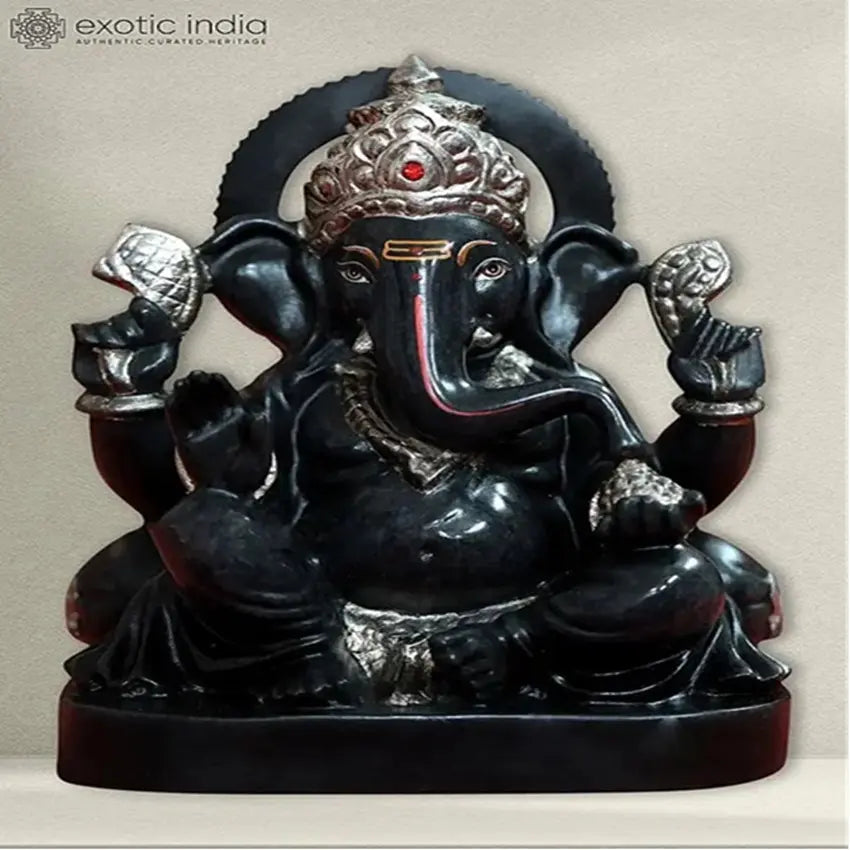
Black Ganesha: Meaning, Vastu Significance & Spiritual Benefits of the Dark Form
Summary
Black Ganesha statues are considered auspicious in many Hindu traditions and Vastu beliefs. Black symbolizes protection, absorption of negative energy, and cosmic power. A black Ganesha idol — crafted from granite, black marble, or dark-patinated brass — is believed to help remove obstacles and promote inner strength. When placed correctly according to Vastu principles and maintained with cleanliness and respect, a black Ganesha statue is both spiritually meaningful and energetically protective for homes and workplaces.
Is a Black Ganesha Statue Auspicious?
Many people hesitate to bring black-colored idols into their living space due to myths around the color. Yet in Hindu tradition, black is also the color of Krishna, Kali, and deep cosmic protection. The short answer is: yes. The most auspicious Lord, who removes all obstacles and brings the light of wisdom, can be sculpted in all materials — including black stone or metal.
The Color Black in Hindu Tradition: Symbolism of Shyama
Connected with power and mystical energies, black is the color of transformation and transcendence. In the Brahmasutras, black is associated with earth — one of the basic elemental aspects of nature. Black is also the color of the all-embracing cosmic being, which is why it is linked with the most powerful deities such as Kali.
In Indian ritual, black — black sesame seed, black beads in Mangalasutra, black kohl — is an integral symbol of protection, making it auspicious for idols of gods and goddesses, including Ganapati.
There is also a natural connection: black or dark grey is the color of the elephant, the animal whose head was placed on Ganesha's body by Lord Shiva. A dark-colored Ganesha statue is thus a natural and logical representation of the deity.
Spiritual Benefits of a Black Ganesha Statue

A black Ganesha idol in your space is associated with:
- Absorbing Negativity — Just as black absorbs all colors, a black Ganesha is believed to absorb negativity from the surroundings
- Protection — A representation of supreme divinity, a black Ganesha keeps obstacles away and guards all who reside in the space
- Inner Strength and Transformation — Worshipping a black Ganesha invokes internal power, breaks through deep-seated fears, and supports personal transformation
Black Ganesha: Materials and Regional Traditions
Black Ganesha statues are crafted in stone such as granite, black marble, or basalt, or made with brass and iron layered with a black patina. Black stone commonly occurs in Rajasthan, Andhra Pradesh, Tamil Nadu, Karnataka, and Kerala, where temples and homes house dark-hued Ganesha idols worshipped with deep devotion.
Notable styles include:
- Mahabalipuram granite — Temple-quality sculpting, perfect for home mandirs and sacred alcoves
- Rajasthan black marble — Refined and contemporary, ideal for luxury interiors
- Kadappa stone (Andhra Pradesh) — Smooth texture, blends tradition with modern interiors
- Dark-patinated brass — Antique aura, suitable for offices and formal prayer spaces
- Labradorite gemstone — Stone of wisdom and transformation, ideal for gifting
Vastu Placement Guide for Black Ganesha
| Direction | Significance | Best For |
|---|---|---|
| Northeast (Ishanya) | Most sacred; spiritual growth and clarity | Home temples, meditation rooms |
| North | Wealth, career growth, stability | Living rooms, offices |
| East | New beginnings, knowledge, positive energy | Study rooms, entrances |
The idol should ideally face north or west, allowing devotees to face east or north while praying. Place at eye or chest level — never directly on the floor. Avoid placement near washrooms, staircases, or shoe racks.
Frequently Asked Questions
Q: Is black Ganesha good or bad for home?
Black Ganesha is traditionally considered auspicious when placed correctly and maintained with respect.
Q: What does a black Ganesha statue symbolize?
Protection, absorption of negative energy, inner strength, and cosmic power.
Q: Is black Ganesha better than white or brass Ganesha?
No color is inherently better — placement, devotion, and intention matter more than the statue's color.
Q: Can we keep a black stone Ganesha in the bedroom?
Traditionally, Ganesha idols are better placed in prayer areas or living spaces rather than bedrooms.
Q: Is a black Ganesha statue suitable for office or business?
Yes — many people keep black Ganesha in offices as a symbol of obstacle removal, protection, and success.
Conclusion
Krishna shila (black stone) is mentioned in the Shastras as one of the materials used in making idols of gods — it is ritually pure material. According to Vastu experts, a black Ganesha statue balances energies and acts as a protector by absorbing and neutralizing negativity. More than the material or color, what matters most is the placement, maintenance, and devotion with which you welcome the sacred statue into your home.
This article is part of Moksha Craft's Sacred Knowledge Series — handcrafted in India, delivered worldwide.
