
In this series
Surya Bhagwan: The Hindu Sun God — Temples, Legends, Iconography & Worship
Summary
Surya Bhagwan is the radiant Hindu Sun God — the embodiment of life, strength, and cosmic order. One of the Navagrahas (nine planetary deities) and a principal deity of the Vedic tradition, Surya is worshipped across India through magnificent temples, ancient festivals, and daily rituals. This guide explores his divine origins, sacred iconography, the greatest Surya temples, and the festivals that celebrate his cosmic power.
Who is Surya Bhagwan?

Surya Bhagwan is the Hindu Sun God — the visible, tangible form of the divine that sustains all life on earth. Born to the sage Kashyapa and Devi Aditi (mother of the gods), Surya is one of the Adityas — the twelve solar deities who govern the months of the year.
His children include some of the most important figures in Hindu mythology: Yama (god of death), Yamuna (the sacred river), Vaivasvata Manu (progenitor of humanity), and Shani (Saturn). His wife Sanjana, unable to bear his intense radiance, created a shadow-self (Chhaya) to take her place while she performed austerities.
Surya's Iconography
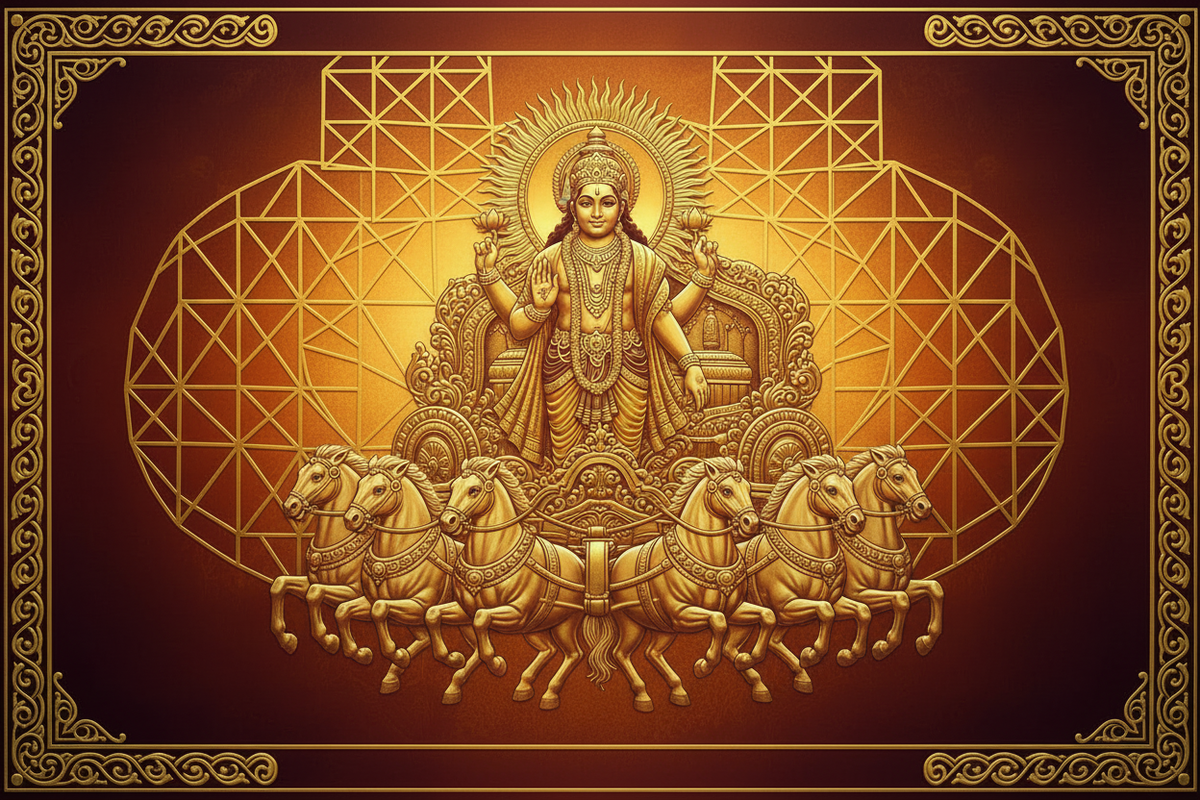
Surya is typically depicted standing or seated on a chariot pulled by seven horses (representing the seven days of the week or the seven colors of light). He holds a lotus flower in each hand, symbolizing purity and the unfolding of consciousness. He is often flanked by his attendants Usha (dawn) and Pratyusha (dusk), and his charioteer is the one-legged Aruna (the rosy dawn).
Sacred Temples of Surya Bhagwan

| Temple | Location | Significance |
|---|---|---|
| Konark Sun Temple | Odisha | 13th-century UNESCO World Heritage Site; 24 carved wheels, 7 galloping horses; Eastern Ganga dynasty |
| Modhera Sun Temple | Mehsana, Gujarat | 11th-century Chaulukya temple; grand stepped tank; Uttarardha Mahotsava festival |
| Martand Sun Temple | Kashmir | 8th-century temple near Anantnag; Gandhara/Gupta/Chinese architecture; panoramic Kashmir valley views |
| Dakshinaarka Temple | Gaya, Bihar | Sacred Vayu Purana site; Dakshina Maanas tank for ancestor rites |
| Surya Pahar | Goalpara, Assam | 7 hills cluster; rare sculptures including 12-armed Vishnu; Sri Surya Mela |
| Suryanar Kovil | Kumbakonam, Tamil Nadu | Surya Deva with his wives; Navagraha cluster; planetary deities |
Festivals Honoring Surya Bhagwan

| Festival | Region | Key Ritual |
|---|---|---|
| Makar Sankranti | All India | Welcoming Uttarayana; holy river baths; offering Arghya; kite flying |
| Pongal | Tamil Nadu | Harvest festival; rice cooked with milk and jaggery; four-day family celebrations |
| Samba Dashami | Odisha | Mothers perform rituals for sons; commemorates Krishna's son Samba being cured of leprosy by Surya |
| Ratha Saptami | All India | Surya Jayanti; early morning bath; drawing chariots; recitation of Aditya Hridayam |
| Chhath Puja | Bihar, UP, Jharkhand | Honoring Surya and Chhathi Maiya; fasting; offering Arghya at sunrise and sunset |
| Kumbh Mela | Prayagraj & others | Massive celebration every 12 years; Ganga-snan; offering arghya to Surya |
Surya Namaskar — The Daily Worship of the Sun

Surya Namaskar (Sun Salutation) is a sequence of 12 yoga poses performed with corresponding mantras, traditionally practiced at sunrise facing the east. Each pose is dedicated to a different aspect of Surya, making it both a physical exercise and a complete act of solar worship. The 12 mantras of Surya Namaskar correspond to the 12 names of the Sun God — Mitra, Ravi, Surya, Bhanu, Khaga, Pushan, Hiranyagarbha, Marichi, Aditya, Savitri, Arka, and Bhaskara.
How to Worship Surya Bhagwan
- Offer water (Arghya) to the rising sun every morning, facing east
- Recite the Aditya Hridayam — the most powerful hymn to Surya from the Ramayana
- Chant the Gayatri Mantra at sunrise, noon, and sunset
- Observe fasting on Sundays and visit a Surya temple
- Practice Surya Namaskar daily at sunrise
- Light a ghee lamp facing east on Sundays
Conclusion
Surya Bhagwan is the most visible and tangible manifestation of the divine — the life-giving force that sustains all existence on earth. From the magnificent Konark Sun Temple to the daily practice of Surya Namaskar, the worship of the Sun God weaves through every aspect of Hindu life and culture. To honor Surya is to honor the source of all light, warmth, and life itself.
"Om Suryaya Namah" — Salutations to the Sun God.
This article is part of Moksha Craft's Sacred Knowledge Series — handcrafted in India, delivered worldwide.

