In this series
Introduction to Tantra: Unveiling the Mystical Path — History, Stages & Traditions

Summary
Tantra is one of the most misunderstood and most profound spiritual traditions in the world. Far from the popular misconception that reduces it to sexuality, Tantra is a vast and sophisticated system of spiritual philosophy and practice — a path that uses the full spectrum of human experience, including the body, the senses, and the emotions, as vehicles for spiritual transformation and liberation. This guide introduces the true meaning of Tantra, its historical origins, and its major traditions.
What is Tantra?

The word Tantra comes from Sanskrit: Tan (to expand) + Tra (to liberate) — "that which expands consciousness and liberates." Tantra is not a single tradition but a family of related spiritual practices that developed in India from approximately the 5th–6th century CE, drawing on both Vedic and non-Vedic sources.
The fundamental insight of Tantra is that the material world is not an obstacle to spiritual liberation but a vehicle for it. Rather than renouncing the body and the senses, Tantra transforms them — using ritual, mantra, yantra, and meditation to transmute ordinary experience into sacred experience.
The 7 Stages of Tantric Practice

| Stage | Sanskrit Name | Practice |
|---|---|---|
| 1 | Shuddhi | Purification — cleansing the body, mind, and energy field through ritual and practice |
| 2 | Pranayama | Harmonizing energies — working with the breath to balance the subtle body |
| 3 | Dharana | Concentration — mantra repetition and visualization to focus the mind |
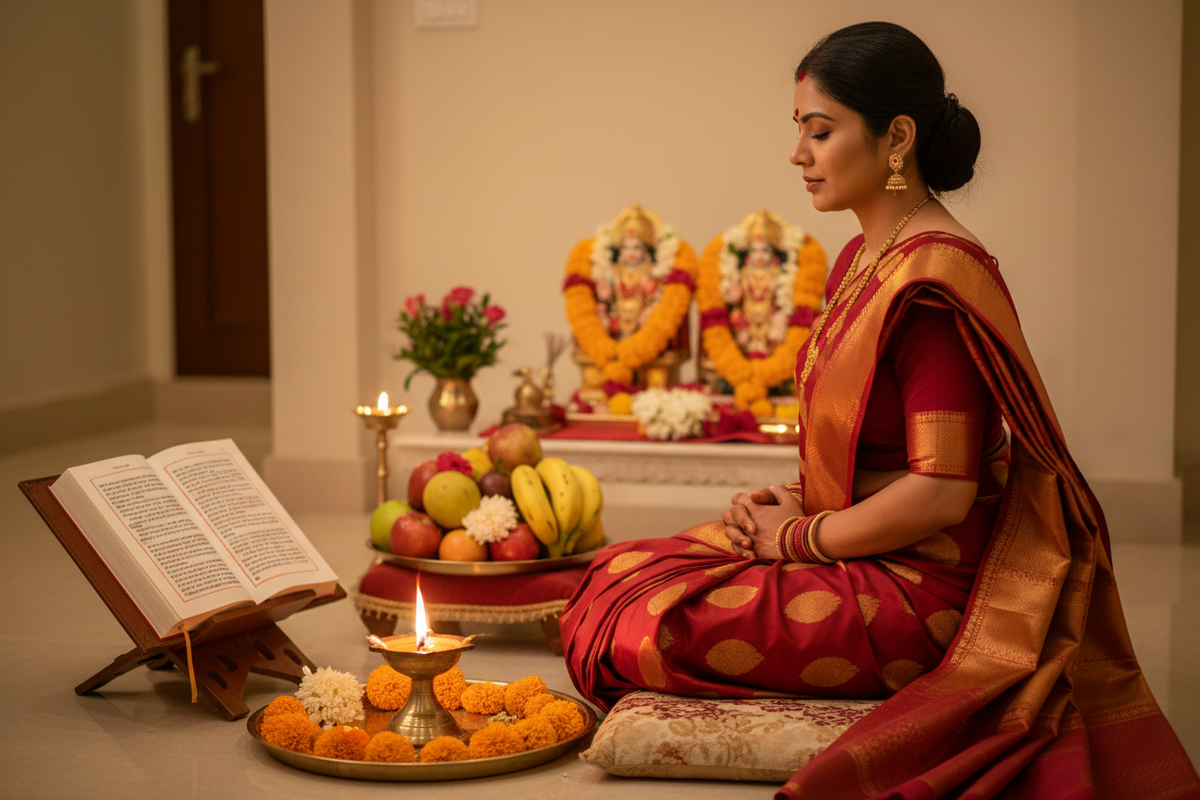
| 4 | Puja | Ritual ceremony — worship of the deity as a living presence |
| 5 | Indriya Nigraha | Sense control — mastery over the senses through disciplined practice |
| 6 | Maithuna | Union — the transmutation of vital energy into spiritual power |
| 7 | Samadhi | Transcendence — the dissolution of the individual self into the divine |
Major Tantric Traditions
| Tradition | Deity | Key Practice |
|---|---|---|
| Kundalini Tantra | Shakti / Kundalini | Awakening the dormant energy at the base of the spine and raising it through the seven chakras |
| Kali Tantra | Goddess Kali | Working with the fierce, transformative energy of Kali to destroy ego and illusion |
| Shiva Tantra | Lord Shiva | Kashmir Shaivism — recognizing all experience as the play of Shiva's consciousness |
| Bhairava Tantra | Bhairava (fierce Shiva) | Advanced practices using intense experiences to pierce through the veil of illusion |
| Vajrayana (Buddhist Tantra) | Various Buddhas and Bodhisattvas | Deity yoga, mandalas, and mantras to achieve enlightenment in a single lifetime |
Conclusion
Tantra is not a shortcut or a scandal — it is one of the most demanding and most rewarding spiritual paths ever developed. It requires a qualified teacher, rigorous preparation, and the courage to transform one's entire relationship with reality. For those who are ready, Tantra offers the possibility of realizing the divine in every moment of experience — the sacred hidden within the ordinary, waiting to be discovered.
This article is part of Moksha Craft's Sacred Knowledge Series — handcrafted in India, delivered worldwide.