
In this series
Dussehra 2026: How It Is Celebrated Across India — Traditions, Ramlila & Regional Customs
Summary
Dussehra (Vijayadashami) is one of India's most celebrated festivals — marking the victory of Lord Rama over the demon king Ravana, and the triumph of good over evil. Celebrated on the tenth day of Navratri (Ashwin Shukla Dashami), Dussehra is observed with remarkable diversity across India — from the grand royal processions of Mysore to the tribal traditions of Bastar, the Ramlila performances of Varanasi, and the Dashain celebrations of Nepal.
The Legend of Dussehra

Dussehra commemorates two great victories of the divine over evil. In the Ramayana tradition, it marks the day Lord Rama defeated and killed the ten-headed demon king Ravana, who had abducted his wife Sita. In the Shakta tradition, it marks the day Goddess Durga defeated the buffalo demon Mahishasura after nine days of battle — celebrated as Navratri.
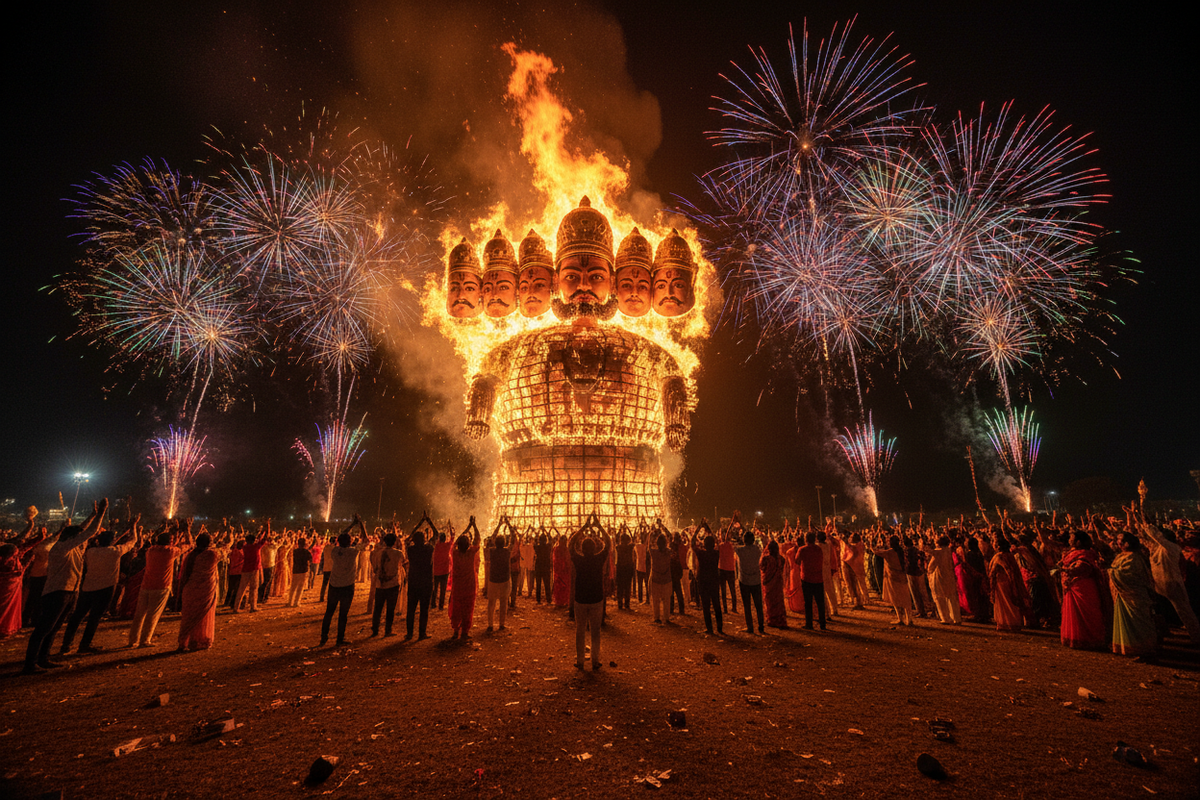
The burning of Ravana's effigy (Putla Dahan) on Dussehra night is one of India's most dramatic and cathartic rituals — a symbolic destruction of the ten heads of Ravana, representing the ten vices: lust, anger, greed, attachment, pride, jealousy, selfishness, injustice, cruelty, and ego.
How Dussehra is Celebrated Across India

| Region | Name | Key Tradition |
|---|---|---|
| Mysore, Karnataka | Mysore Dussehra | Mysore palace illuminated with 100,000 lights; grand procession with decorated elephant carrying the goddess Chamundeshwari |
| Kullu, Himachal Pradesh | Kullu Dussehra | Lord Raghunath (Rama) is the presiding deity; 7-day festival with processions of local deities from surrounding villages |
| Kota, Rajasthan | Kota Dussehra | One of India's largest Ravana effigies; international visitors; grand fair on the banks of the Chambal river |
| Bastar, Chhattisgarh | Bastar Dussehra | 75-day tribal festival honoring Goddess Danteshwari; unique tribal traditions distinct from mainstream Dussehra |
| Varanasi, UP | Varanasi Ramlila | 200-year-old Ramlila tradition; UNESCO Intangible Cultural Heritage; performed over 31 days |
| Delhi | Delhi Ramlila | Grand Ramlila at Ramlila Maidan; attended by millions; celebrity Ram Lila performances |
| Kulasai, Tamil Nadu | Kulasai Dussehra | Mutharamman Devi temple festival; unique South Indian traditions |
| Kerala | Vidyarambha | Children introduced to learning by Goddess Saraswati on Vijayadashami — the most auspicious day to begin education |
| Nepal | Dashain | 15-day festival; Ghatasthapana ritual; royal family worship; the most important festival in Nepal |
The Spiritual Significance of Dussehra
Dussehra is more than a historical commemoration — it is an annual invitation to examine and destroy the "Ravana" within ourselves. The ten heads of Ravana represent the ten vices that prevent human beings from living in alignment with Dharma. On Dussehra, we are called to identify which of these vices holds the most power over us — and to symbolically burn it in the sacred fire of self-awareness and spiritual practice.
Conclusion
Dussehra is India's great festival of victory — the annual celebration of the eternal truth that good ultimately triumphs over evil, light over darkness, and Dharma over Adharma. In its remarkable diversity of regional traditions, Dussehra reveals the extraordinary richness of Indian civilization — a single sacred story expressed in a thousand different voices.
"Asato ma sad gamaya, tamaso ma jyotir gamaya" — Lead me from untruth to truth, from darkness to light. (Brihadaranyaka Upanishad)
This article is part of Moksha Craft's Sacred Knowledge Series — handcrafted in India, delivered worldwide.

