
In this series
Diwali Rituals: Knowing the True Essence — Stories, Traditions & Celebration Guide
Summary
Diwali — the Festival of Lights — is the most celebrated and beloved festival in the Hindu tradition, observed by over a billion people across India and the world. But Diwali is far more than fireworks and sweets: it is a five-day festival of profound spiritual significance, celebrating the victory of light over darkness, knowledge over ignorance, and good over evil. This guide explores the true essence of Diwali — its stories, rituals, and the spiritual meaning behind each tradition.
The Five Days of Diwali

| Day | Name | Significance |
|---|---|---|
| Day 1 | Dhanteras | Worship of Lord Dhanvantari (divine physician) and Goddess Lakshmi; purchase of gold, silver, or new utensils |
| Day 2 | Chhoti Diwali (Naraka Chaturdashi) | Lord Krishna's victory over the demon Narakasura; lighting of diyas before sunrise |
| Day 3 | Diwali (Main Day) | Lord Ram's triumphant return to Ayodhya; Lakshmi Puja; the main celebration |
| Day 4 | Govardhan Puja / Padwa | Lord Krishna lifting Govardhan Hill; celebration of the husband-wife relationship |
| Day 5 | Bhai Dooj | Celebration of the brother-sister bond; sisters pray for their brothers' long life |
The Story of Diwali: Lord Ram's Return
The most widely celebrated story of Diwali is the return of Lord Rama to Ayodhya after 14 years of exile and his victory over the demon king Ravana. The people of Ayodhya lit thousands of clay lamps (diyas) to welcome their beloved king home — and this tradition of lighting diyas on Diwali night has been observed ever since, symbolizing the welcome of the divine into our homes and hearts.
How to Celebrate Diwali at Home

- Clean and decorate your home — Lakshmi is said to visit clean, beautiful homes on Diwali night
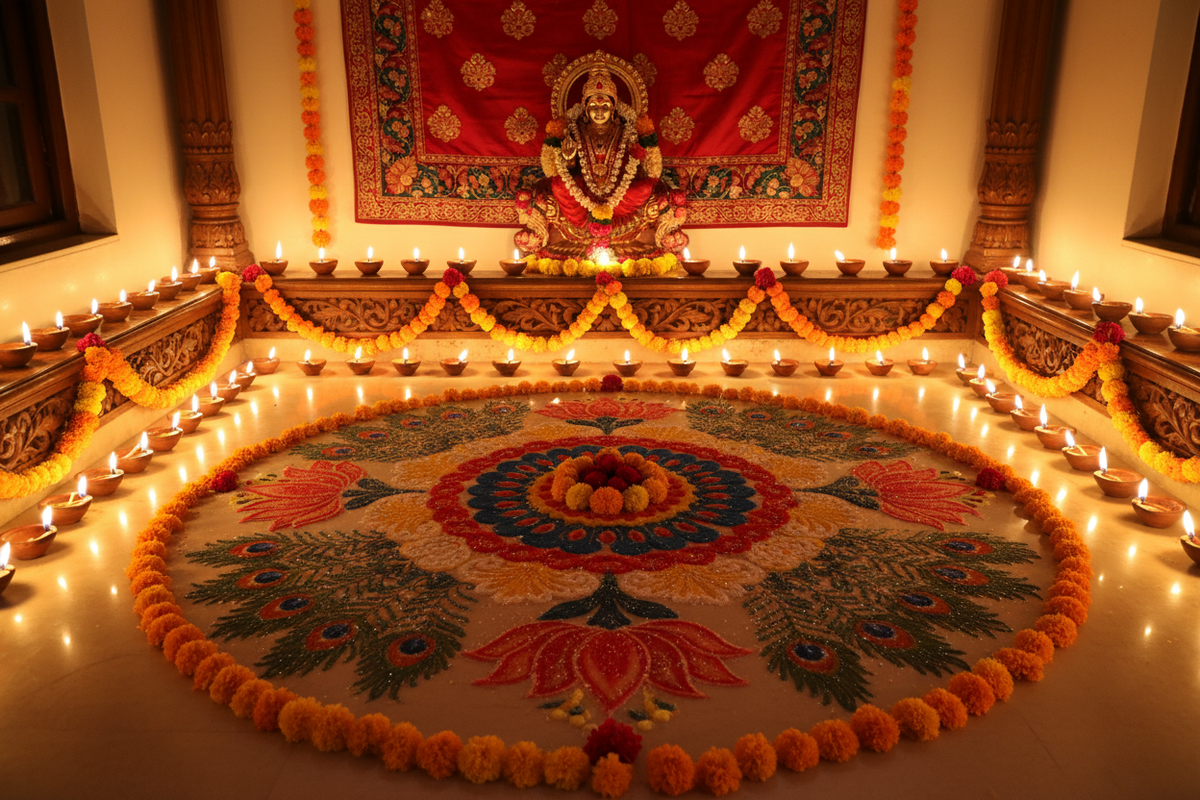
- Light clay diyas with ghee or sesame oil — place them at the entrance, windows, and throughout the home
- Create rangoli at the entrance — beautiful geometric patterns made from colored powder, flowers, or rice
- Perform Lakshmi Puja — worship Goddess Lakshmi with flowers, sweets, and ghee lamps at the auspicious muhurta
- Offer sweets — prepare or purchase traditional Indian sweets (mithai) to share with family and neighbors
- Wear new clothes — dressing in new, festive clothes honors the occasion
The Spiritual Meaning of Diwali
At its deepest level, Diwali is not about external lights but about the inner light of consciousness — the light of awareness that dispels the darkness of ignorance, fear, and delusion. The diya is a symbol of the Atman (individual soul) — a small flame that, when lit, illuminates everything around it. Diwali invites us to light the lamp of wisdom within ourselves and to share that light with everyone around us.
Conclusion
Diwali is the most joyful and luminous festival in the Hindu calendar — a five-day celebration of light, love, prosperity, and the victory of the divine over all that opposes it. Whether you celebrate with a simple diya and a heartfelt prayer or with an elaborate puja and a house full of lights, the essence of Diwali is the same: welcome the divine into your home, share your light with others, and remember that the darkness, however deep, is always dispelled by even a single flame.
"Tamaso ma jyotirgamaya" — Lead me from darkness to light. (Brihadaranyaka Upanishad)
This article is part of Moksha Craft's Sacred Knowledge Series — handcrafted in India, delivered worldwide.

