
In this series
Diwali 2026: Lakshmi-Ganesh Puja — Significance, How to Perform & Why It Matters
Summary
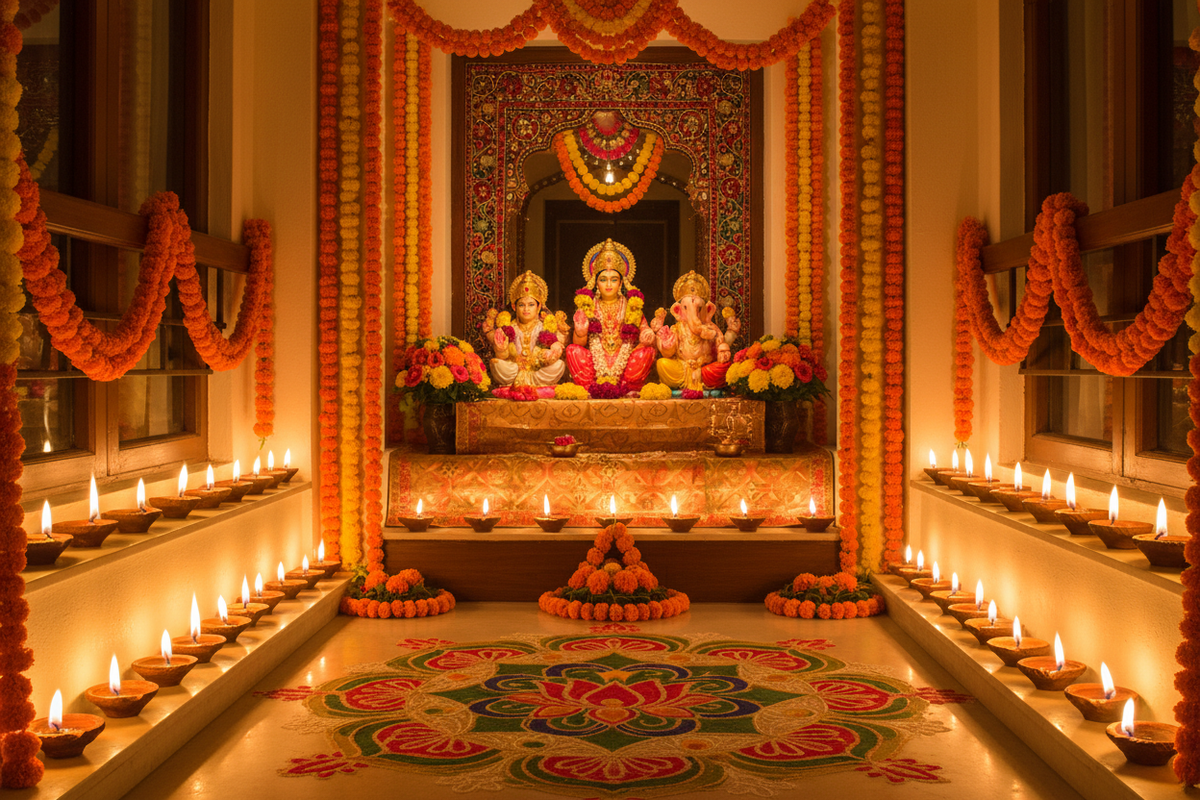
Diwali — the Festival of Lights — is the most celebrated festival in the Hindu calendar, marking the victory of light over darkness, knowledge over ignorance, and good over evil. In 2026, Diwali falls on Friday, 6 November 2026. At the heart of Diwali is the Lakshmi-Ganesh Puja — the worship of Goddess Lakshmi (prosperity) and Lord Ganesha (wisdom and auspiciousness) together, inviting their blessings into the home for the coming year.
Diwali 2026 — Friday, 6 November 2026
Diwali 2026 Festival Calendar
| Day | Date | Festival | Significance |
|---|---|---|---|
| Day 1 | 4 November 2026 | Dhanteras | Worship of Dhanvantari; purchase of gold, silver, and new utensils |
| Day 2 | 5 November 2026 | Kali Chaudas / Narak Chaturdashi | Lord Krishna's victory over Narakasura; early morning oil bath |
| Day 3 | 6 November 2026 | Diwali (Main Day) | Lakshmi-Ganesh Puja; lighting of diyas; fireworks |
| Day 4 | 8 November 2026 | Govardhan Puja / Annakut | Krishna's lifting of Govardhan hill; offering of 56 foods |
| Day 5 | 9 November 2026 | Bhai Dooj | Celebration of the bond between brothers and sisters |
Why Lakshmi and Ganesha Are Worshipped Together on Diwali

The pairing of Lakshmi and Ganesha on Diwali is deeply symbolic. Goddess Lakshmi represents Shubh (auspiciousness) and Lord Ganesha represents Labh (prosperity and gain). Together, they embody the complete blessing of Diwali — that wealth without wisdom leads to ruin, and wisdom without prosperity is incomplete. Ganesha is always worshipped first (as the remover of obstacles) before Lakshmi is invited in.
How to Perform Lakshmi-Ganesh Puja at Home
- Clean and purify the home — Lakshmi enters only clean, welcoming spaces
- Create a rangoli at the entrance — to welcome the Goddess with beauty and color
- Set up the puja altar — place Ganesha on the left and Lakshmi on the right, both seated (never standing)
- Prepare the Kalash — a copper or brass pot filled with water, mango leaves, and a coconut
- Light diyas and incense — the light of the diya is the most fundamental offering to Lakshmi
- Offer flowers, sweets, and fruits — lotus flowers are especially dear to Lakshmi
- Chant the Lakshmi Puja mantra: "Om Shreem Mahalakshmiyei Namah"
- Perform aarti — wave the lamp in a clockwise circle before the deities
- Distribute prasad — share the blessed sweets with family and neighbors
The Significance of Rangoli on Diwali
Rangoli — the colorful geometric patterns drawn at the entrance of homes — is one of the most beautiful traditions of Diwali. It serves as a welcome mat for Goddess Lakshmi, signaling that the home is clean, joyful, and ready to receive her blessings. Traditional Diwali rangoli patterns include lotus flowers, diyas, footprints of Lakshmi, and geometric mandalas.
Conclusion
Diwali is far more than a festival of fireworks and sweets — it is an annual invitation to invite the divine into our homes and hearts, to celebrate the victory of light over darkness, and to renew our commitment to the values of prosperity, wisdom, and generosity. The Lakshmi-Ganesh Puja at the heart of Diwali is a reminder that true prosperity is always a gift of grace — and that the wisest thing we can do is to welcome it with a clean home, a joyful heart, and a lit lamp.
"Asato ma sad gamaya, tamaso ma jyotir gamaya" — Lead me from darkness to light. (Brihadaranyaka Upanishad)
This article is part of Moksha Craft's Sacred Knowledge Series — handcrafted in India, delivered worldwide.
