
In this series
Mata Ni Pachedi: The Sacred Gujarati Folk Art of the Divine Mother — History, Tradition & Meaning
Summary
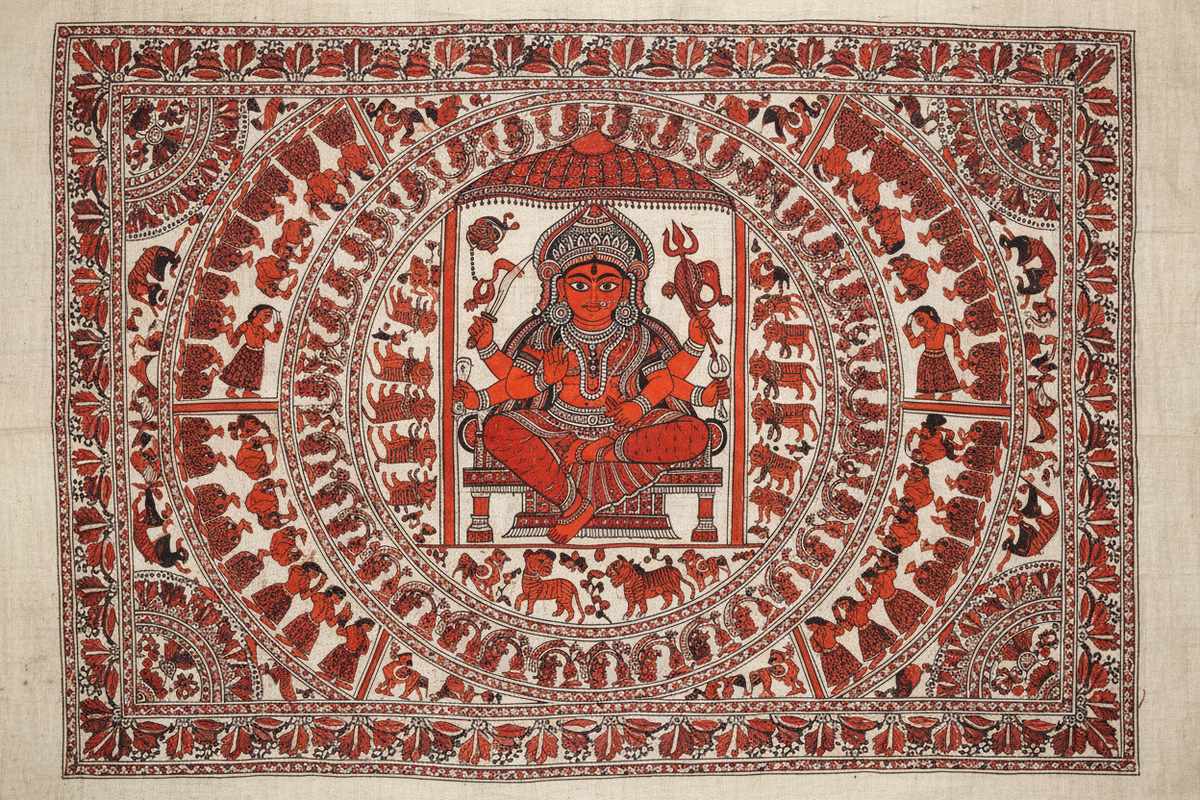
Mata Ni Pachedi is a traditional cloth painting art form from Gujarat, India, created by the nomadic Vaghari community over 3,000 years ago. The name translates to "behind the mother goddess." These hand-painted cotton canvases served as sacred backdrops in temporary shrines where lower-caste communities worshipped mother goddesses like Amba and Durga. Painted with natural pigments on rectangular cotton cloth, each piece narrates mythological stories through intricate iconography, making Mata Ni Pachedi one of India's most spiritually significant and visually rich folk art traditions.
What is Mata Ni Pachedi?
Mata Ni Pachedi is a traditional Gujarati folk art in which sacred images of mother goddesses are painted on cloth. The phrase "Mata Ni Pachedi" means "behind the Mother Goddess," referring to the decorated textile backdrop placed behind an idol or shrine during worship.
Created mainly by the Vaghari community of Gujarat, these paintings served as portable temples for communities that could not enter established temples. Instead of stone walls and carved sanctuaries, devotees created richly painted cotton cloths that became their sacred space.

The art is usually painted on rectangular cotton fabric using natural dyes in red, black, and white. At the center is often a goddess such as Durga, Amba, Meldi Mata, or Visat Mata, surrounded by scenes from mythology, animals, floral motifs, devotees, and symbols of protection and fertility.
Why was Mata Ni Pachedi Created?
Mata Ni Pachedi emerged as both an act of devotion and a form of resilience. Several centuries ago, many members of the Vaghari community were excluded from entering temples. In response, they began creating their own portable shrines on cloth, allowing them to worship the Mother Goddess wherever they lived or traveled.
Rather than being limited by social barriers, the community transformed painted fabric into a sacred temple. These cloth shrines were hung in temporary wooden structures or open spaces during rituals and festivals. Over time, the paintings became more detailed and evolved into a unique artistic tradition passed down through generations.
The Vaghari Community and Temple Restrictions
The Vaghari community, traditionally associated with Gujarat and especially areas near the Sabarmati River, played a central role in preserving this art form. Their paintings were not only expressions of faith but also a way to protect their identity, traditions, and stories.
Many Mata Ni Pachedi artworks include:
🔸 Episodes from the Ramayana and the Mahabharata
🔸 Images of goddesses such as Durga, Amba, and regional deities like Meldi Mata and Visat Mata
🔸 Symbols of nature, including trees, birds, animals, the sun, and the moon
🔸 Folk motifs representing protection, fertility, prosperity, and divine power
What Makes Mata Ni Pachedi Unique?
Mata Ni Pachedi stands apart from other Indian folk paintings because it combines ritual, storytelling, and textile art in a single form. Unlike wall paintings or framed artwork, it was originally designed as a sacred cloth shrine that could be carried from place to place.
Traditional Themes and Mother Goddess Symbolism
The central figure in most Mata Ni Pachedi paintings is a powerful goddess seated beneath a temple-like arch or canopy. Commonly represented goddesses include Durga as the destroyer of evil, Amba as the mother and protector, Visat Mata associated with health and abundance, and Meldi Mata worshipped as a guardian deity in Gujarat.
Natural Colors, Cotton Cloth, and Folk Motifs
Traditional artists paint on handwoven cotton cloth using colors made from plants, flowers, jaggery, iron, and other natural ingredients. The classic color palette includes:
🔸 Red — symbolizing power, devotion, and the goddess
🔸 Black — used for outlines and dramatic contrast
🔸 White — representing purity and sacred space
Why the Nine-Panel Composition Matters
Many traditional Mata Ni Pachedi paintings follow a structured composition divided into nine sections or panels. The central panel usually contains the main goddess, while the surrounding panels show supporting figures, rituals, mythological scenes, and symbolic motifs. This arrangement helps artists organize complex stories in a way that is easy to understand, functioning not only as a work of art but also as a sacred space designed for worship and storytelling.
How Is Mata Ni Pachedi Made?
Creating a Mata Ni Pachedi painting is a slow and highly skilled process that can take days or even weeks. The art is traditionally passed down within families, with each generation learning the techniques of drawing, dye-making, and painting.
Materials and Natural Dyes
Artists begin with a plain cotton cloth that is washed, treated, and prepared for painting. Traditional natural dyes include red from alum and madder, black from iron filings and jaggery, and yellow and brown from turmeric, flowers, bark, and leaves. Because the colors are made from organic materials, every painting has slight variations in tone, making each piece unique.
Block Printing and Hand Painting Process
The outlines of the design are first created using hand-carved wooden blocks or drawn directly by hand. The process generally follows these steps:
1. Prepare and dry the cotton cloth
2. Print or sketch the main outline of the goddess and surrounding motifs
3. Apply black outlines and decorative borders
4. Fill the painting with natural red and other colors
5. Wash and dry the cloth several times to fix the dyes
6. Add final details by hand
How Mata Ni Pachedi Is Used Today
Although Mata Ni Pachedi began as a ritual cloth used in worship, it now has an important place in contemporary art and design. Today, Mata Ni Pachedi is commonly used as wall hangings in homes, offices, and meditation spaces; decorative textiles and framed artwork; inspiration for garments, scarves, and fabric prints; museum exhibits and heritage art collections; and cultural gifts that celebrate Gujarati traditions.
Frequently Asked Questions
Q: What does Mata Ni Pachedi mean?
"Mata Ni Pachedi" translates to "behind the mother goddess" — describing the cloth's original role as a shrine backdrop.
Q: Who makes Mata Ni Pachedi paintings?
Traditionally created by the Vaghari community, a nomadic artisan group from Gujarat. The craft has been passed down through generations within Vaghari families.
Q: How old is the Mata Ni Pachedi tradition?
The tradition is estimated to be over 3,000 years old, originating along the banks of the Sabarmati river in Gujarat.
Q: Can Mata Ni Pachedi paintings be used as home décor?
Yes — authentic hand-painted pieces work beautifully as wall hangings, textile art, and statement décor, bringing both aesthetic richness and cultural depth to any space.
Conclusion
For the Vaghari community, Mata Ni Pachedi is their heritage, their livelihood, and their ongoing relationship with the divine. Supporting authentic works — pieces made by traditional artisans using inherited techniques and natural materials — is a direct contribution to the survival of one of India's most remarkable living craft traditions.
This article is part of Moksha Craft's Sacred Knowledge Series — handcrafted in India, delivered worldwide.

