
In this series
How Tanjore Paintings Are Made: Gold, Gods & the Sacred 8-Step Process
Summary
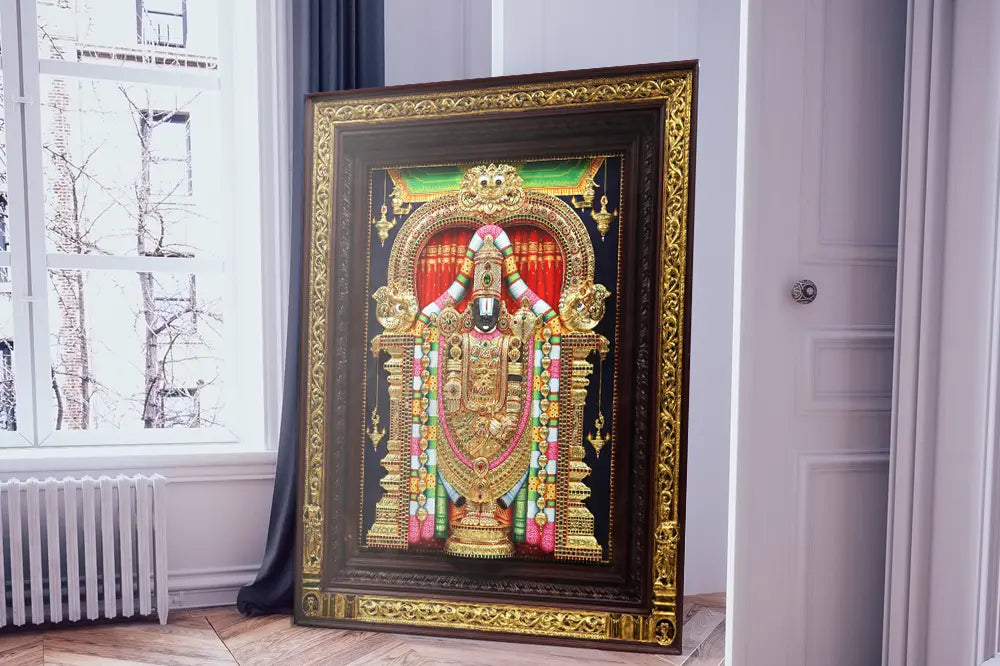
Tanjore painting, or Thanjavur art, is a classical South Indian painting style rooted in temple traditions and royal patronage. Known for its rich colors, raised relief work, and 22-karat gold leaf, it originated in Tamil Nadu. Passed down through generations, this sacred art form blends devotion, mythology, and skilled craftsmanship into radiant works that honor divine presence in homes and temples alike.
What Is Tanjore Painting?
Tanjore painting, also known as Thanjavur art, is a classical South Indian painting tradition that shines with divine symbolism and 22-karat gold. This sacred art form isn't just decorative — it is devotional. Themes are drawn from the Ramayana, Mahabharata, Puranas, and regional Tamil and Telugu literature.
The Indian government awarded Tanjore painting a Geographical Indication (GI) tag in 2007–08, confirming Tanjore as the home of this golden art form. An undeniable connection exists between the murals of Tanjore palaces and temples — especially the paintings on the walls of the Brihadeshwara temple — and the living tradition of Tanjore artists today.
The Sacred 8-Step Process of Making a Tanjore Painting

Step 1 — Creating the Wooden Base
A wooden base is prepared, traditionally from jackfruit wood (Pala Pazham, one of the three divine fruits in Tamil tradition) or teakwood. The wood forms the spiritual foundation — strong, sacred, and chosen with intention.
Step 2 — Preparing the Canvas
White muslin cloth is stretched on the wooden base. A paste of chalk, zinc oxide, and tamarind seed gum is applied in several layers, then rubbed smooth to create an even, sacred surface.
Step 3 — Sketching the Divine Subject
An outline of the selected deity is drawn by hand. This stage requires precision and spiritual focus — it defines the central message of the painting and must follow the iconometric proportions of the Shilpa Shastra.
Step 4 — Gesso Work for Embossed Relief
Limestone and sukkan (binding material) are mixed into a thick paste and applied to areas the artist wants to highlight — usually ornaments, jewelry, and architectural elements. This creates the signature three-dimensional, embossed texture that distinguishes Tanjore paintings from all other Indian art forms.
Step 5 — Applying 22-Karat Gold Leaf & Gemstones
Pure 22-karat gold leaf is gently laid over the gessoed areas. Tiny Jaipur stones or cut-glass pieces are embedded into the gold, adding brilliance and texture. This shimmering gold glow is more than ornamental — it symbolizes the divine light that emanates from the deity.
Step 6 — Coloring with Natural Dyes
Bright vegetable colors and natural dyes prepared from stones are applied to the painting. These colors are bright, long-lasting, and deeply rooted in the Indian artistic tradition — they do not fade or discolor with time.
Step 7 — Opening the Eyes: The Sacred Moment
Known as Kandera Derachina, the "opening of the eyes" is performed last. The deity's eyes are painted with devotion — a step that means the god or goddess has been invited into the art. This is the most spiritually significant moment in the entire creation process.
Step 8 — Framing in Carved Wood
Hand-carved teakwood or rosewood frames — decorated with Dravidian architecture motifs, temple pillars, and floral vines — are assembled using traditional mortise and tenon joinery without nails. The frame is itself a work of art, completing the sacred composition.
What Makes Tanjore Paintings Unique
| Feature | Significance |
|---|---|
| 22K gold leaf | Real gold; symbolizes divine light and ensures centuries of luminosity |
| 3D gesso relief | Creates sculptural depth unique to Tanjore among all Indian painting styles |
| GI-tagged tradition | Government-recognized as originating exclusively from Tanjore, Tamil Nadu |
| Sacred themes | Exclusively devotional — deities, epics, and temple narratives |
| Eye-opening ritual | The deity is spiritually invited into the painting — making it a living sacred object |
Frequently Asked Questions
Q: What is special about Tanjore painting?
Tanjore paintings are known for their raised gold relief work, rich colors, and sacred themes depicting Hindu gods and saints. The 22K gold leaf and gesso embossing are unique to this tradition.
Q: Why is 22-karat gold used in Tanjore paintings?
Gold is considered divine in Indian tradition. It symbolizes purity and the light of the deity, and ensures the painting retains its luminosity for centuries.
Q: How long does it take to make a Tanjore painting?
Depending on size and detail, several weeks to months. Each step is meticulous and sacred.
Q: Can Tanjore paintings be customized?
Yes — many artists offer bespoke paintings where patrons choose the deity, scene, size, and color scheme.
Conclusion: From Royal Courts to Your Home
With a Tanjore painting in your space, you share in a tradition once reserved for kings. Centuries of royal patronage and temple devotion have nourished this art form. But for the artists and devotees of Tanjore, it is not merely grand art — it is their culture that glows in the shine of pure gold.
"Every Tanjore painting is more than a masterpiece — it is a sacred legacy. The gold does not merely decorate; it illuminates."
This article is part of Moksha Craft's Sacred Knowledge Series — handcrafted in India, delivered worldwide.

