In this series
Who Is Lord Krishna? The Complete Guide to the Most Beloved Hindu God

Lord Krishna is the most complex, most beloved, and perhaps the most deeply worshipped deity in the entire Hindu tradition. He is the divine child who steals butter and dances with the gopis. He is the heroic warrior and charioteer of Arjuna on the battlefield of Kurukshetra. He is the supreme teacher who delivers the Bhagavad Gita. He is the lover whose flute call represents the divine’s yearning for the human soul. And in the Vaishnava tradition, he is Svayam Bhagavan — the supreme personal form of God from whom all other forms of divinity emanate.
Krishna’s Life: The Divine Drama in Three Acts
Act One: The Divine Child of Vrindavan
Krishna was born in Mathura at midnight on Ashtami of Bhadrapada — the night celebrated each year as Janmashtami. His uncle Kamsa had imprisoned his parents after a divine warning that the eighth child would be his doom. When Krishna arrived, the prison doors opened miraculously, and Vasudeva carried the infant across the flooded Yamuna — the river parting at his touch — to be raised by the cowherd Nanda and Yashoda in Gokul.
The childhood years in Vrindavan are among the most beloved narratives in Hindu devotion: the infant Krishna destroying the demoness Putana, the butter-stealing Makhan Chor, lifting Govardhan mountain on his little finger for seven days, and taming the serpent Kaliya. The theological significance: the Supreme Being has chosen to be born as a human child — accessible, playful, lovable. This is the deepest expression of divine grace, rooting the devotional tradition of madhurya bhava — relating to God with intimate love.
Act Two: The Lover and the Flute — Krishna in Vrindavan
When Krishna played his flute, everything stopped: rivers reversed, cows stood motionless, and the gopis abandoned their homes and ran toward the sound. In bhakti theology, this is not a story of human sensuality but a metaphor for the soul’s response to the call of the divine — the flute is the voice of God calling each soul home, and the gopis’ surrender is the model of perfect devotion.
Radha is the supreme devotee — the one whose love for Krishna is so complete that she represents the ideal of bhakti itself. In the Gaudiya Vaishnava tradition, Radha is the feminine aspect of the divine itself — the Shakti of Krishna, inseparable from him, the very power of divine love through which he manifests. The Rasa Lila — the circular dance with the gopis on autumn full moon nights — is the highest expression of divine love in the creation: Krishna multiplied himself to be fully present with each gopi. The teaching: the divine is fully present to each devotee, not divided among them.
Act Three: Warrior, King, and Teacher
When the Mahabharata war approached, both the Pandavas and Kauravas sought Krishna’s support. He offered a choice: his entire army, or himself alone — unarmed, as a charioteer. Arjuna chose Krishna. On the battlefield, as Arjuna broke down at the sight of his relatives arrayed against him, Krishna delivered the Bhagavad Gita — 700 verses covering the full range of Hindu philosophical teaching: the nature of the self (atman), karma, the paths of jnana yoga, bhakti yoga, and karma yoga, and Krishna’s self-revelation in the cosmic Vishvarupa form.
Krishna’s Iconography: What the Symbols Mean

- The Blue Complexion: Blue is the color of the infinite sky and deep ocean — that which has no boundaries. Krishna’s blue skin marks him as infinite, boundless, as vast as the sky
- The Peacock Feather: Given by the peacocks of Vrindavan as a token of love — representing his intimate relationship with the natural world, his beauty, and the grace that transforms whatever it touches into something sacred
- The Flute (Murali): The flute is hollow — it can only make music when empty of itself. The teaching: the devotee must empty themselves of ego to become the instrument through which divine music flows
- The Yellow Dhoti (Pitambara): Yellow is associated with knowledge, auspiciousness, and the divine light of consciousness — the color of the sun, illuminating and life-giving
- The Tribhanga Posture: The three-bend stance — neck, torso, knees — communicates divine ease, beauty, and being utterly at home in existence
The Bhagavad Gita: Krishna’s Philosophical Legacy
No other Hindu deity has produced a philosophical text of the depth of the Bhagavad Gita. In eighteen chapters, Krishna addresses the fundamental questions of human existence. The Gita’s three central paths — jnana (knowledge), bhakti (devotion), and karma (selfless action) — represent a complete map of the spiritual life, all leading to the recognition of the self’s identity with the divine. The Gita has influenced thinkers from Adi Shankaracharya to Mahatma Gandhi and is arguably the most universally studied text in the Hindu tradition.
Janmashtami: Krishna’s Birthday
Janmashtami is observed on Ashtami of Bhadrapada (August–September) with fasting, bhajan and kirtan, dramatic re-enactments of Krishna’s birth, and the breaking of the fast at midnight — the hour of his birth. The Dahi Handi celebration — breaking a pot of curd hung high above the ground, reenacting the butter-stealing exploits of young Krishna — is a beloved community event across Maharashtra and Gujarat.

Krishna in Your Home
- Bal Gopal (Baby Krishna): The most tender form — the divine as a child, inviting parental devotion. Deeply appropriate for a child’s room or nursery
- Muralidhara / Venugopala (Flute-playing Krishna): The most commonly worshipped form — the divine lover calling the soul home. Appropriate for the main mandir or living room
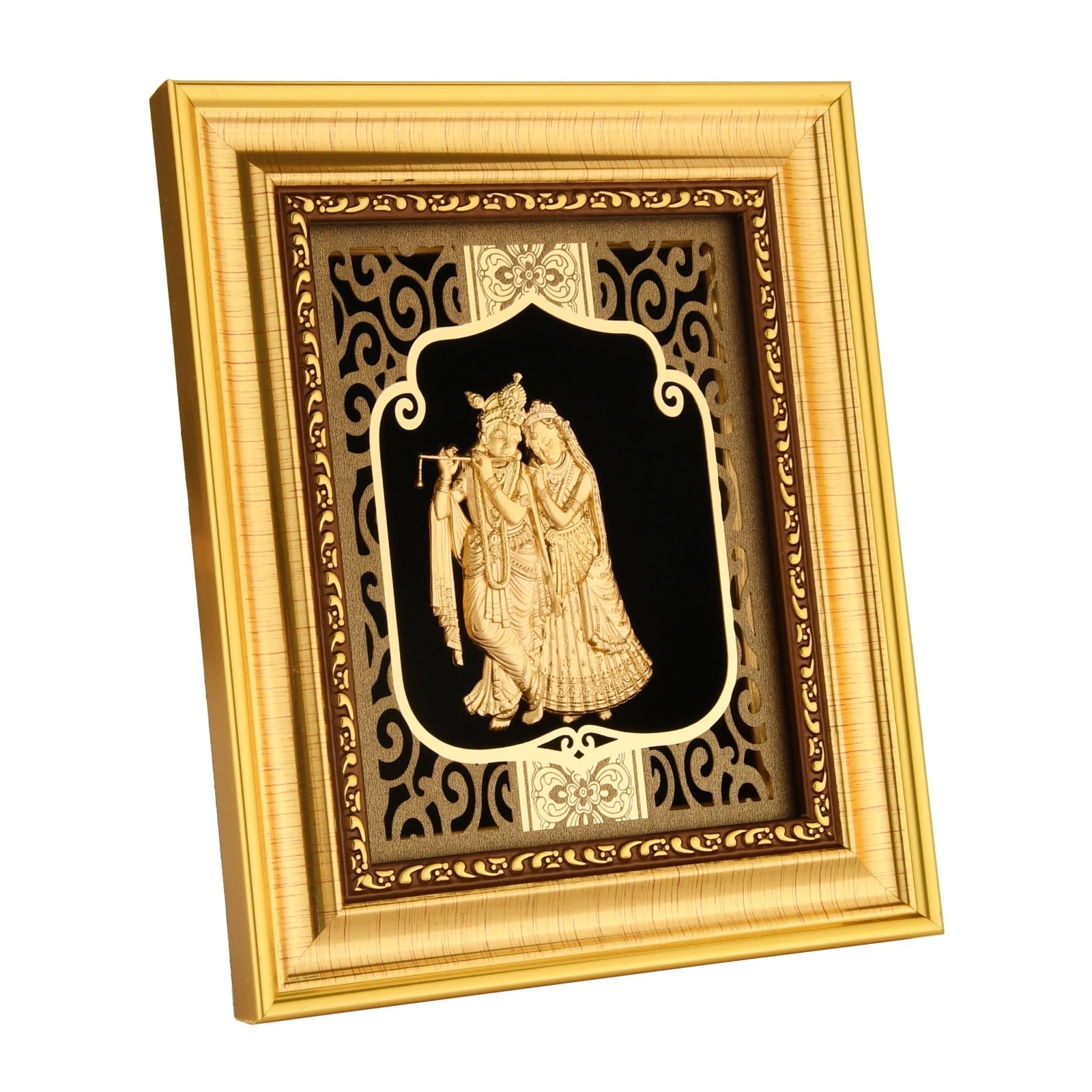
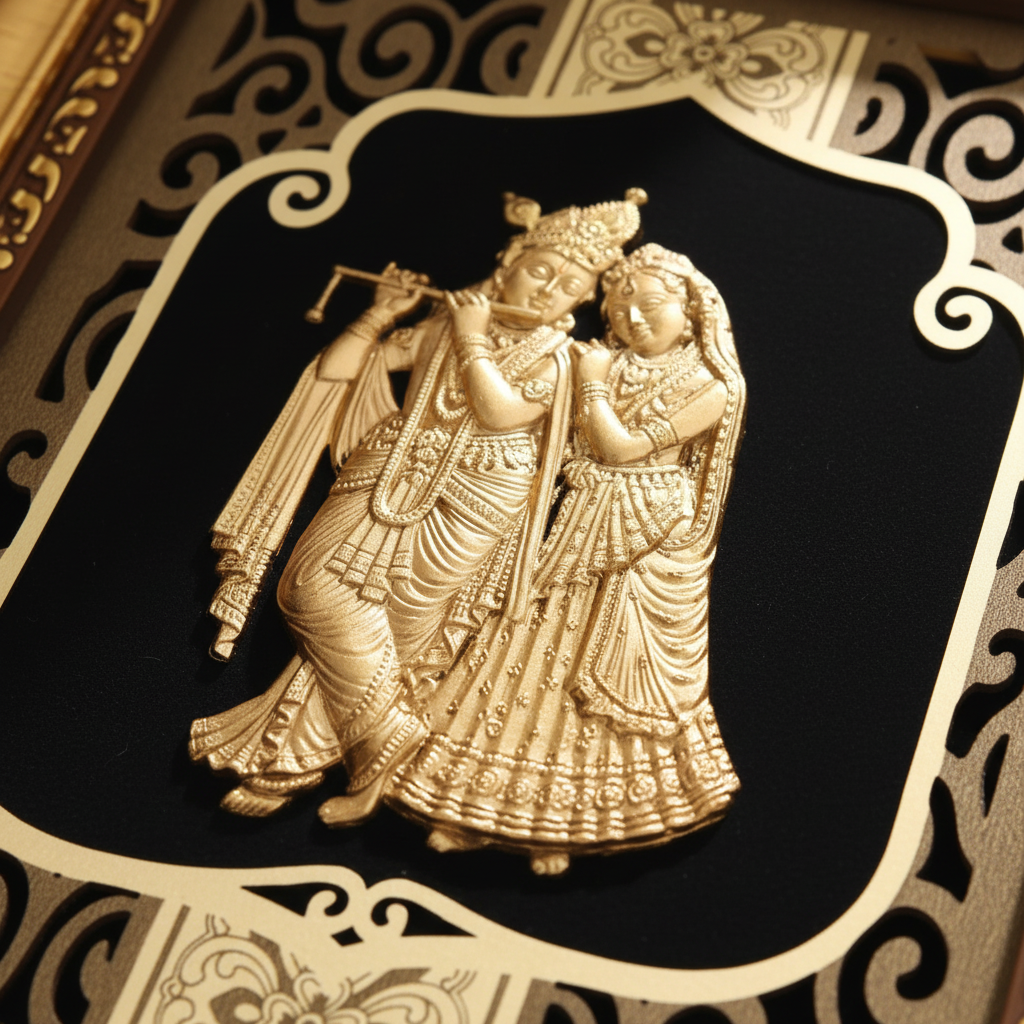
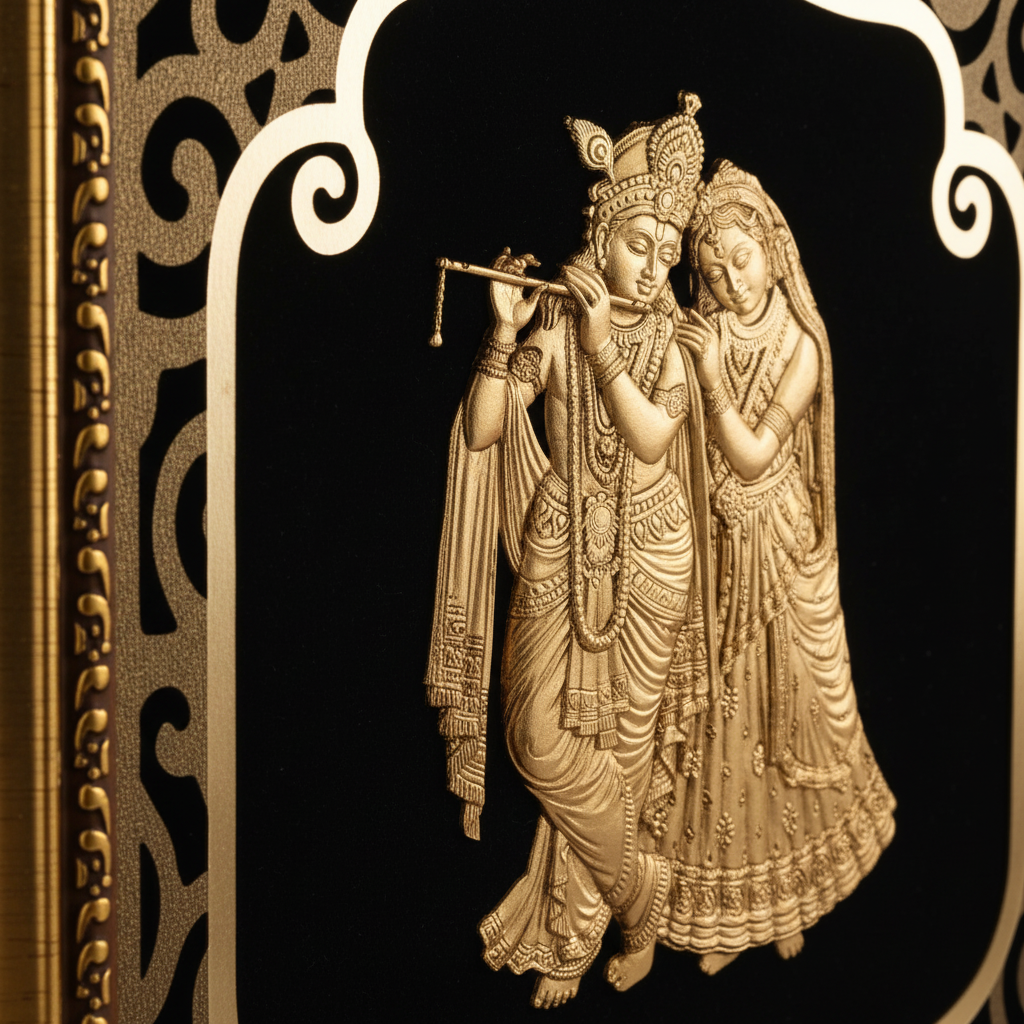
- Radha-Krishna: The divine couple — the complete expression of love between the human soul and the divine. The most beloved form for the bedroom mandir and a treasured wedding or housewarming gift
Explore our collection of Krishna gold foil paintings and Radha-Krishna sacred art — and find the image that will bring the most beloved of all Hindu deities into your home.
Om Namo Bhagavate Vasudevaya. May the flute player of Vrindavan, the teacher of Kurukshetra, the divine child of Gokul — be present in your home and your heart.