In this series
The Complete Guide to Navratri: Nine Nights of the Divine Mother

Navratri — “Nine Nights” — is one of the most sacred and widely celebrated festivals in the Hindu calendar. For nine nights and ten days, the Divine Mother is worshipped in her nine forms, the Navadurga, through prayer, fasting, music, dance, and devotion. The autumn Navratri — Sharad Navratri, falling in September or October — is the most important and most widely observed.
The Meaning of Navratri: Why Nine Nights?
The number nine holds deep significance in the Hindu tradition — the number of completion, transformation, and the Navadurga forms. The nine nights represent a nine-stage journey through different dimensions of the Divine Mother’s power, from the foundational energy of Shailaputri through the ultimate grace of Siddhidatri. At its heart, Navratri is the festival of the victory of Shakti — the divine feminine — over the forces of darkness and inertia, commemorated on the tenth day as Vijayadashami.
The Four Navratris
- Sharad Navratri (September–October) — The most important, observed universally across India
- Chaitra Navratri (March–April) — Culminates in Ram Navami, the birthday of Lord Rama
- Magha Navratri (January–February) — Observed in some regional traditions
- Ashadha Navratri (June–July) — Observed in Shakta traditions in Himachal Pradesh and Rajasthan
The Nine Nights: The Navadurga
- Night 1 — Shailaputri: Parvati as daughter of the Himalaya, riding a bull, representing the grounded foundation of divine power
- Night 2 — Brahmacharini: Parvati performing austerities, walking barefoot with kamandal and rosary — the power of discipline and sustained devotion
- Night 3 — Chandraghanta: The newly married Parvati adorned with a half-moon, riding a tiger — the peace and prosperity that follow spiritual practice
- Night 4 — Kushmanda: The goddess who created the universe with her smile — the primordial creative energy, blessing devotees with health and strength
- Night 5 — Skandamata: The Divine Mother holding infant Skanda, riding a lion — fierce unconditional maternal love and protection
- Night 6 — Katyayani: The most martial form of Durga, born to defeat Mahishasura — one of the most powerful nights for removing deep-seated obstacles
- Night 7 — Kalaratri: The dark, fearsome destroyer of darkness and ignorance — called Shubhankari (the auspicious one) despite her terrifying form
- Night 8 — Mahagauri: The radiant white Parvati restored to luminous purity after her austerities — representing peace and spiritual light after darkness
- Night 9 — Siddhidatri: Seated on a lotus, granting all eight supernatural siddhis, worshipped by Brahma, Vishnu, and Shiva — the fulfillment of all that the nine nights have built toward
Navratri Rituals: How to Observe the Festival
Setting Up the Navratri Altar
A raised platform covered with red or orange cloth is prepared on the first day. A Durga painting or murti is installed at the center. A Kalash (sacred pot) filled with water, topped with mango leaves and a coconut, is placed to represent the goddess. A Jyot (sacred lamp) is lit on day one and maintained throughout the nine nights.
The Akhand Jyot
Many traditional families keep an Akhand Jyot — an uninterrupted flame — burning throughout all nine nights, representing the unbroken presence of the goddess in the home and the devotee’s sustained attention to her worship.
Fasting (Vrat)
Navratri fasting ranges from complete abstention to eating only specific foods: fruits, milk, sabudana (tapioca), sendha namak (rock salt), and singhare ke atte ki puri — excluding grains, regular salt, meat, and alcohol. The fast is a physical expression of the internal purification the nine nights are designed to effect.
Daily Puja and the Devi Mahatmyam
Morning and evening puja is performed each day, culminating in the evening aarti with the full family gathered. The Devi Mahatmyam (Durga Saptashati) — 700 verses narrating Durga’s battles and victories — is recited over the nine nights, with specific portions assigned to each day.
Kanya Puja: Worship of Young Girls
On Ashtami or Navami, nine girls between two and ten years old are invited, worshipped as the nine forms of Durga, fed a meal of puri, halwa, and chana, and given gifts — one of the most beautiful expressions of the tradition’s understanding that the goddess is present in living beings.
Navratri Across India

- Gujarat — Garba and Dandiya Raas: The most spectacular folk dancing in India — circular Garba dance around a central goddess lamp, and Dandiya Raas with decorated sticks. Gujarat’s Navratri was inscribed on UNESCO’s Intangible Cultural Heritage list in 2023
- Bengal — Durga Puja: The last five days of Navratri are the great Durga Puja — elaborately sculpted murtis in community pandals, cultural programs, and immersion on Vijayadashami
- North India — Ram Lila and Dussehra: Nine nights of Ram Lila dramatic performances culminating in the burning of Ravana, Meghanada, and Kumbhakarna effigies on Vijayadashami

- South India — Golu / Bommai Kolu: Elaborate nine-stepped displays of traditional clay dolls, miniature deities, and mythological scenes in the home — a beloved tradition where antique dolls are treasured family heirlooms passed down across generations
Vijayadashami: The Tenth Day of Victory
The most auspicious day of the year for beginning new endeavors: starting a business, beginning new studies, purchasing vehicles or tools. The goddess’s energy of victorious, transformative power is most fully available on this day.
Sacred Art for Navratri
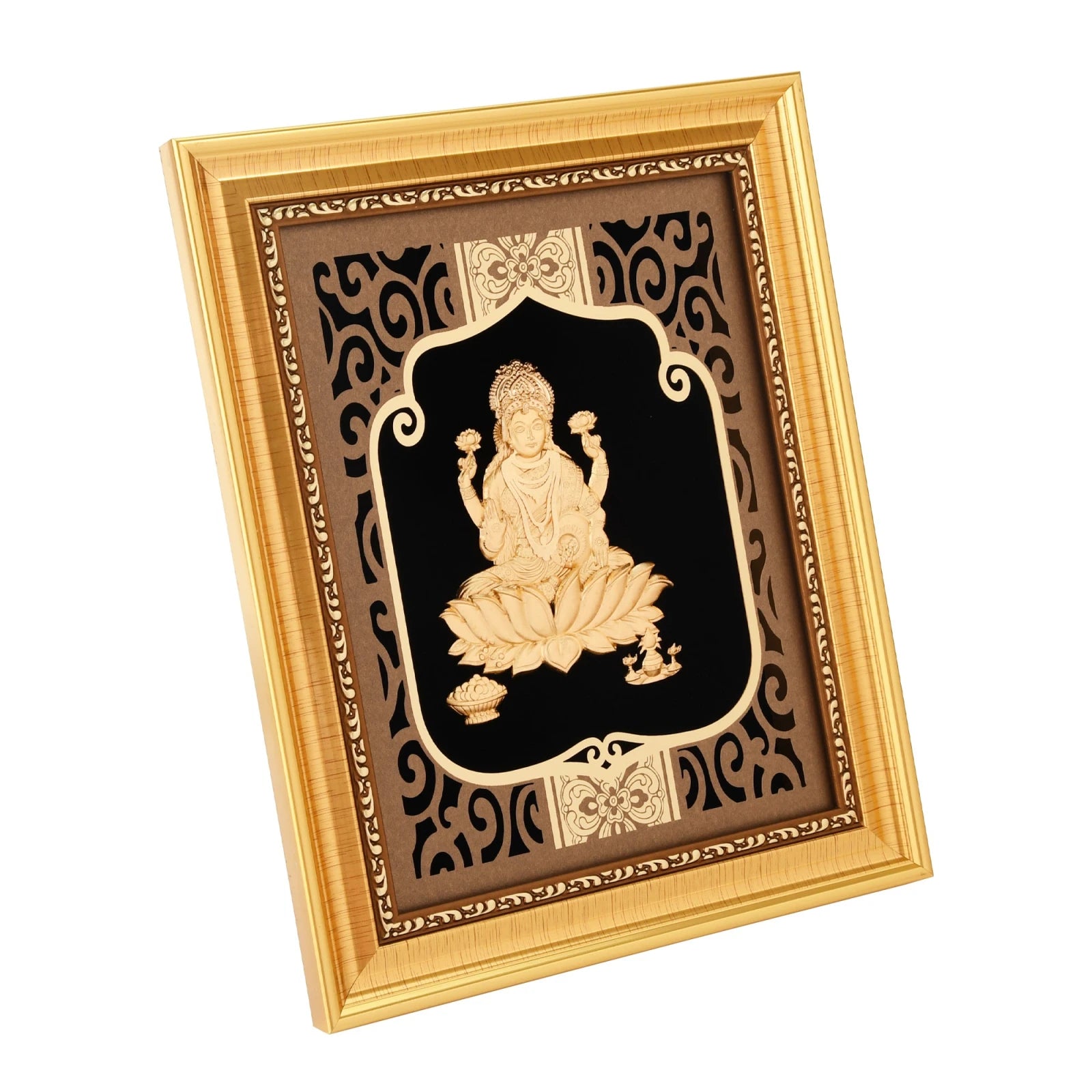
A Durga painting at the center of the home mandir anchors the household’s relationship with the Divine Mother year-round. The devotion kindled during the nine nights should be sustained by the ongoing presence of her sacred image in the home. Explore our collection of Durga, Lakshmi, and Saraswati gold foil paintings — and find the image of the Divine Mother that will make your home her permanent dwelling.
Om Dum Durgayai Namaha. May the nine nights of the Divine Mother’s worship purify your home, strengthen your spirit, and bring the victory of light into every corner of your life.