In this series
Kesari Ganesha: Significance, Benefits & Vastu Meaning for Home
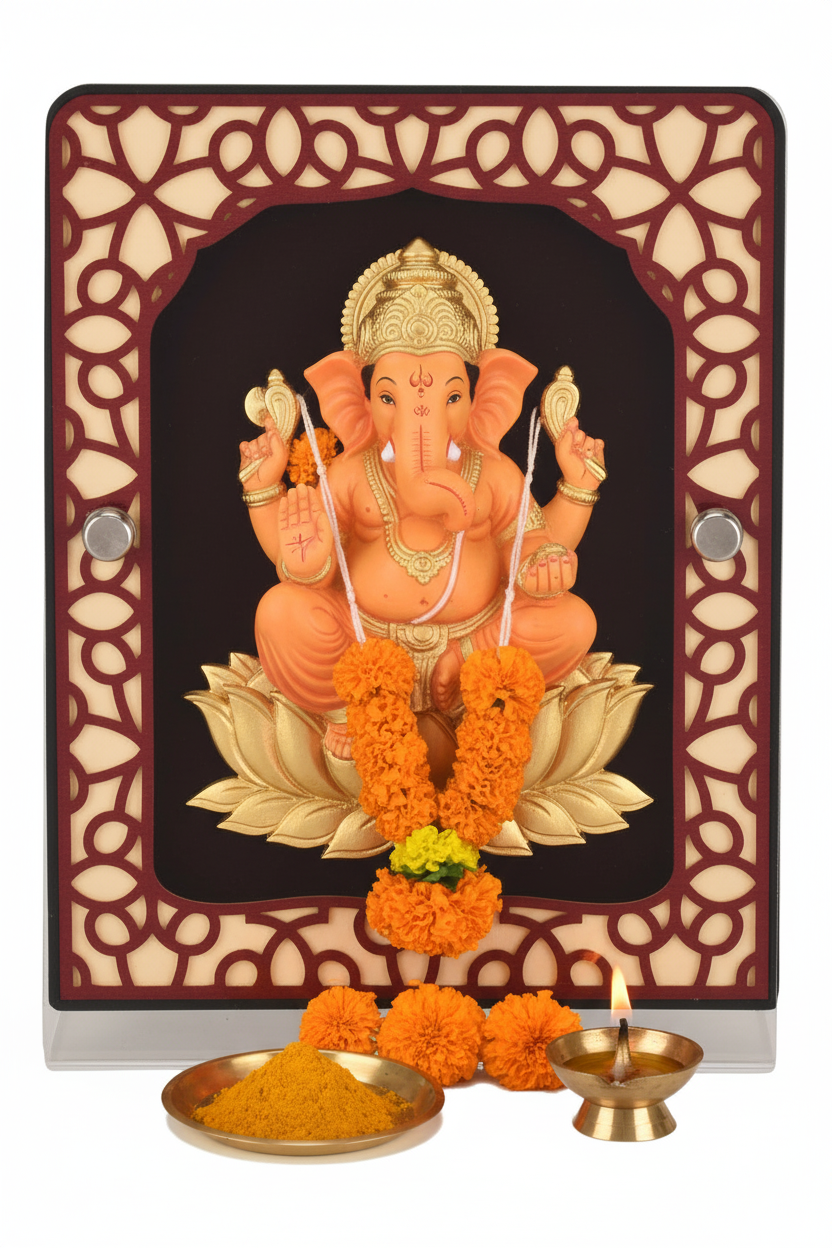
Among the many beloved forms of Ganesha, the Kesari (saffron) Ganesha — depicted in the warm orange-gold color of saffron, turmeric, or the rising sun — holds a special place in the Hindu devotional tradition. Kesari Ganapathi is not simply a color variation: the saffron color carries profound symbolic meaning that shapes the specific blessings associated with this form.
What Does Kesari Mean?
Kesari means saffron — the color of the dried stigmas of Crocus sativus, one of the most precious and auspicious substances in Hindu ritual. In Hindu iconography the saffron-orange range carries a specific constellation of meanings:
- The sacred fire (Agni): Saffron-orange is the color of the ritual fire — the divine witness of every Hindu ceremony, the purifier of offerings. A Kesari deity carries the quality of the sacred fire: transformative, purifying, and intensely present
- Renunciation and spiritual mastery: Saffron (bhagwa) is the color of the sannyasi’s robe. A Kesari deity carries this quality of spiritual intensity and transcendence
- The rising and setting sun: The sun at the horizon is saffron-orange — the most sacred times of the Hindu day. A Kesari deity embodies these sacred transitional moments
- Courage and vitality: In the warrior tradition, saffron is associated with courage and the willingness to engage fully with life’s challenges
- Turmeric (haldi) and auspiciousness: Turmeric — saffron-yellow in color — is one of the most auspicious substances in Hindu ritual, used in weddings, births, puja, and healing
What Kesari Ganesha Is Particularly Good For
- Spiritual elevation: The saffron-fire energy makes Kesari Ganapathi particularly powerful for devotees seeking spiritual growth and progress on the spiritual path
- Purification: Like the sacred fire, Kesari Ganesha is associated with purifying the household environment — burning away obstacles, negative energies, and spiritual impurities
- Courage and endurance: For households facing challenges that require courage and vitality, Kesari’s warrior-saffron energy is particularly appropriate
- Auspicious new beginnings: Saffron-turmeric’s association with weddings and new beginnings makes Kesari Ganapathi especially auspicious for a new home, new business, or new chapter of life
Kesari vs. Golden Ganesha Compared

Kesari (Saffron-Orange) Ganesha
Color associations: sacred fire, spiritual renunciation, turmeric, courage. Energy: intense, transformative, purifying, spiritually active. Best for: devotees on an active spiritual path, new beginnings, households seeking purification and courage. Strongly connected to the Maharashtra Ganesh Chaturthi tradition.
Golden (24K Gold) Ganesha
Color associations: Lakshmi, the noon sun, material abundance, divine purity. Energy: warm, expansive, joyful, abundant. Best for: most household mandirs, families seeking prosperity and abundance, heirloom-quality sacred art. The most universally auspicious and widely loved form.
The Maharashtra Connection
The Kesari Ganesha has an especially strong following among families from Maharashtra, where the Ganesh Chaturthi festival — the largest public Ganesha celebration in the world — traditionally features large clay murtis painted saffron-orange. For families from this tradition, Kesari Ganesha is not just a color preference but a deeply familiar, beloved form that connects them to their community’s most important festival.
Vastu Placement for Kesari Ganesha
- Main entrance: Most powerful placement — beside the main door, facing inward, guarding the threshold
- Northeast corner: Ideal Vastu position for any deity image
- First on the altar: Ganesha always occupies the first position, worshipped before any other deity
- Facing direction: East or North — never South
- Height: Eye level or slightly above in the worship posture
Traditional Offerings for Kesari Ganesha
- Turmeric (haldi): The most resonant offering — its saffron-yellow color mirrors the deity’s own hue
- Saffron (kesar): Mixed with milk or water as abhishek, or placed as a small altar offering
- Marigold flowers (genda): The saffron-orange marigold is Ganesha’s most traditional flower — especially resonant with the Kesari form
- Modak: Ganesha’s most beloved food offering, universally appropriate for any Ganesha form
For Lasting Luminosity: The 24K Gold Foil Ganesha
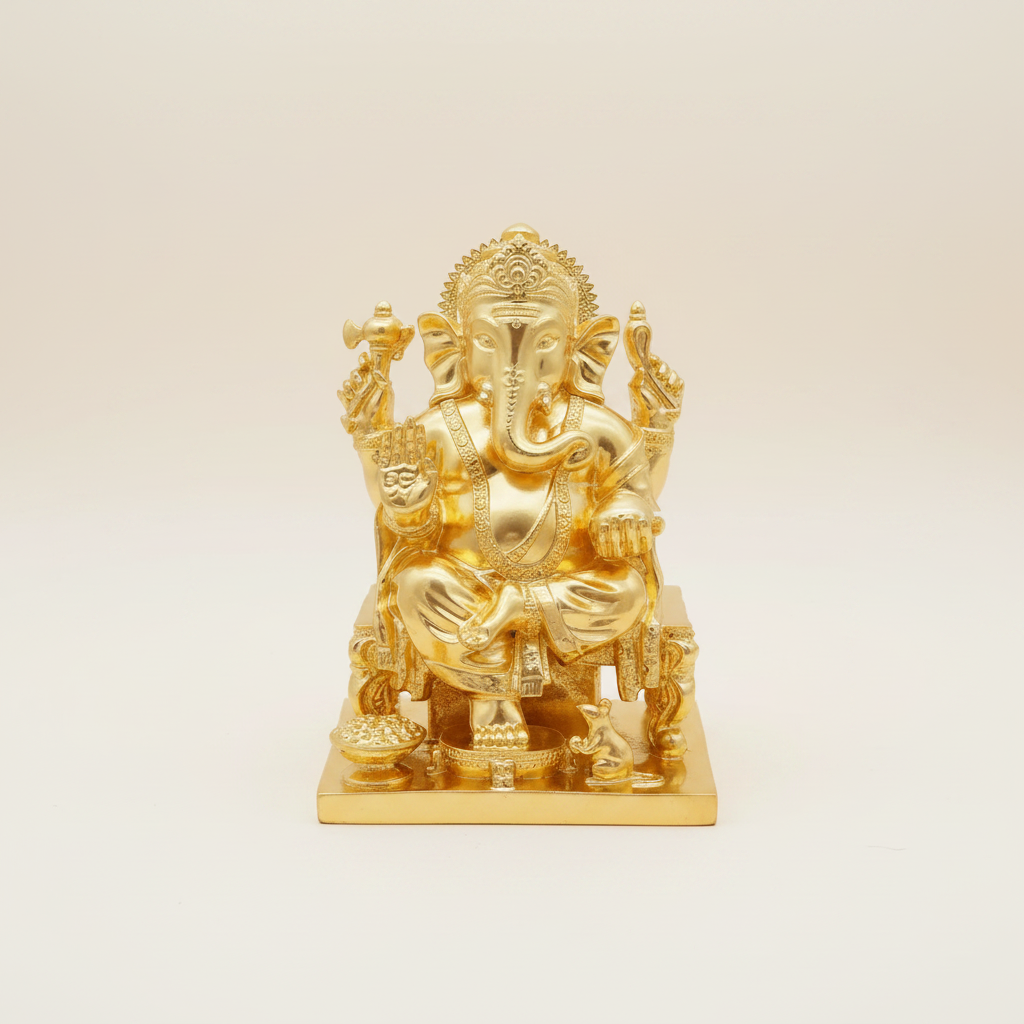
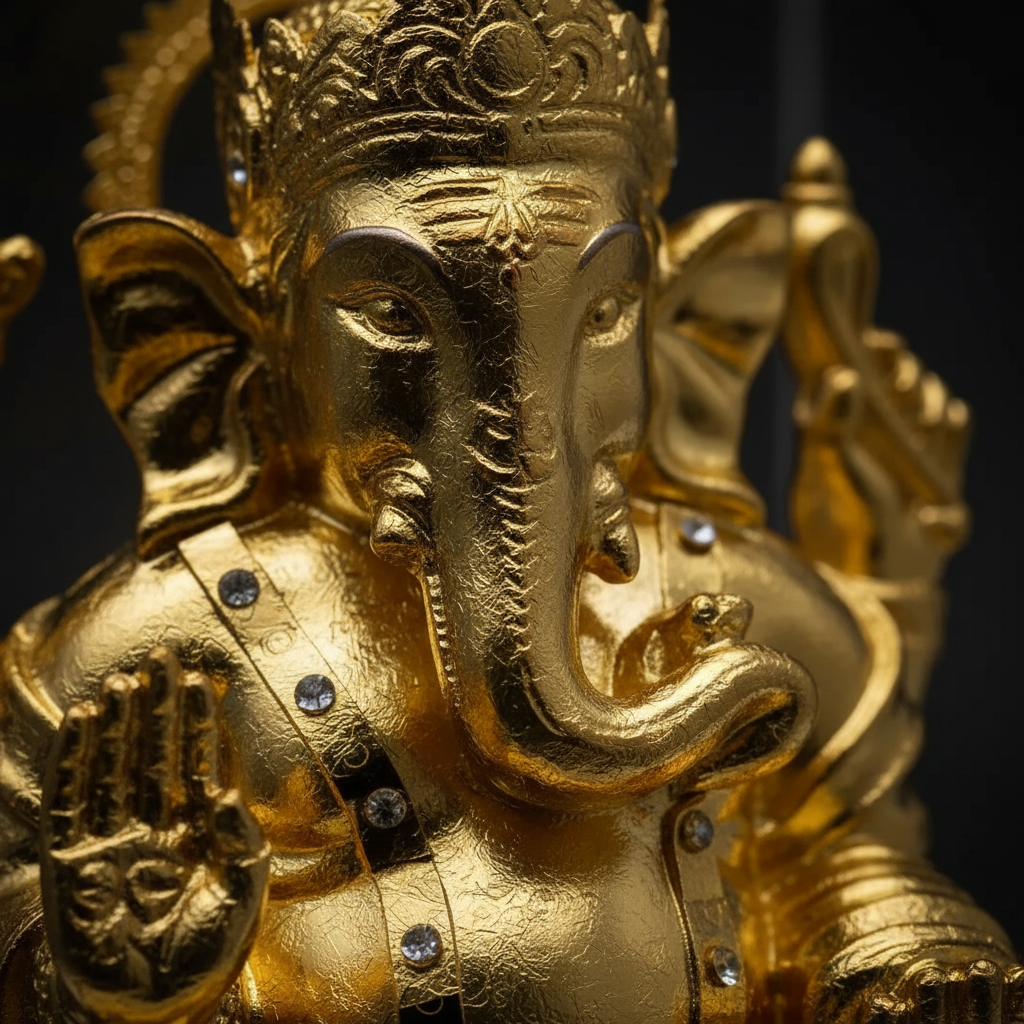
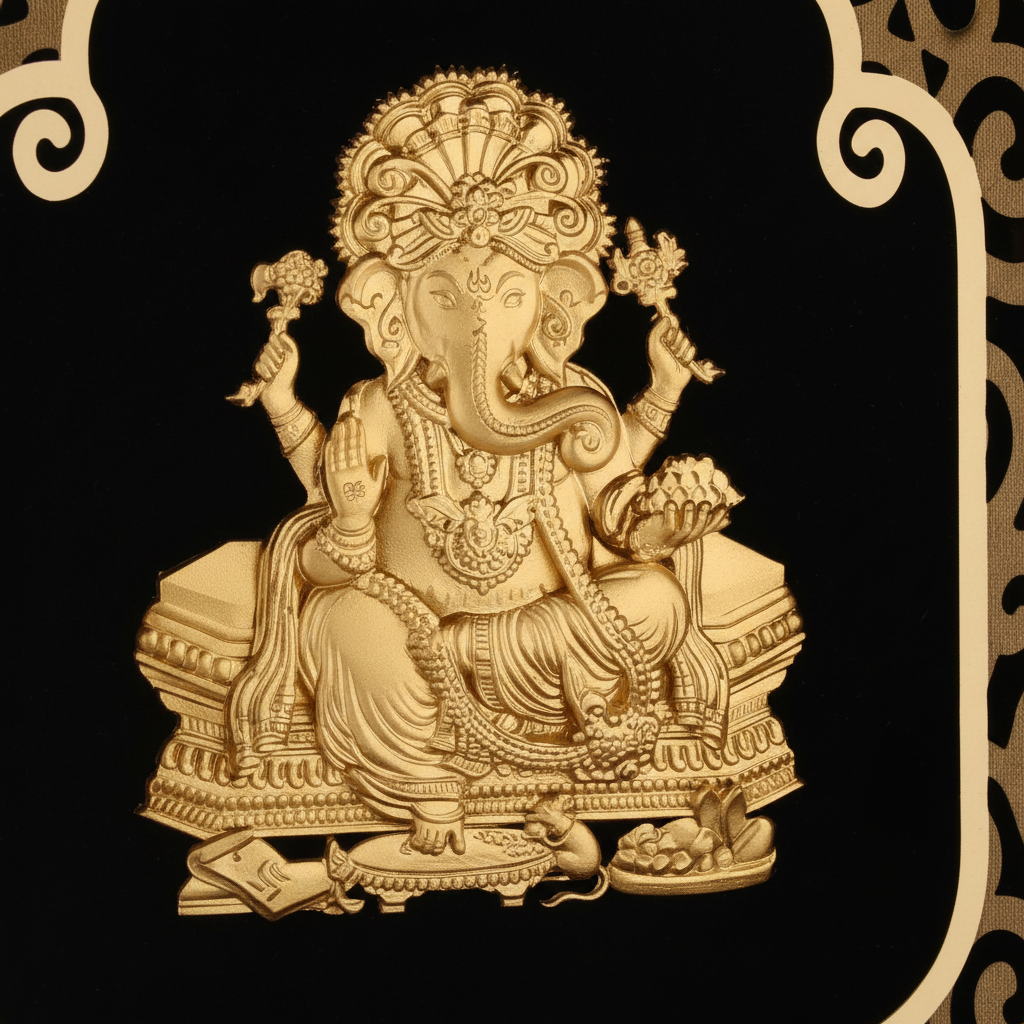
For households that love Kesari Ganesha’s warm energy but seek the most permanent, heirloom-quality sacred image, the 24K gold foil Ganesha brings the golden warmth of the saffron tradition together with the material auspiciousness of genuine gold — a luminosity that will never fade or tarnish, remaining as beautiful in ten years as on the day it first graces your mandir.
Explore our Ganesha collection in multiple sizes and frame colors — and find the form of the beloved Vighnaharta that most beautifully honors your household’s devotion.