In this series
10 Avatars of Lord Vishnu: Complete Guide to Dashavatara & Spiritual Meaning

The Dashavatara — the ten principal avatars of Lord Vishnu — is one of the most profound concepts in Hindu philosophy. It describes how the Supreme Preserver, when cosmic order (dharma) is endangered, takes on a specific earthly form to restore balance and protect creation. Each avatar is a complete expression of divine power adapted to the needs of its specific age.
The Concept of Avatar: Why Vishnu Descends
The Sanskrit word avatara means “descent” — the descent of the divine into the mortal realm. In the Bhagavad Gita, Krishna explains:
“Whenever dharma declines and the purpose of life is forgotten, I manifest myself on earth. I am born in every age to protect the good, to destroy evil, and to re-establish dharma.” (4.7–8)
The Ten Avatars of Vishnu
1. Matsya — The Fish
The first avatar: a giant fish who warns the sage Manu of a coming cosmic flood and guides his boat — carrying the Vedas and seeds of all life — to safety. Matsya is the avatar of the preservation of sacred knowledge through catastrophe. Symbolic meaning: life emerging from primordial waters, survival through transformation.
2. Kurma — The Tortoise
When the gods and demons churn the cosmic ocean (Samudra Manthan) to produce Amrita — the nectar of immortality — Vishnu takes the form of a giant tortoise to support Mount Mandara on his back so the churning can continue. Symbolic meaning: stability, patient endurance, the foundation that makes great achievement possible.
3. Varaha — The Boar
The demon Hiranyaksha plunges the Earth goddess (Bhudevi) to the bottom of the cosmic ocean. Vishnu takes the form of a great boar, defeats Hiranyaksha, and rescues Bhudevi on his tusks. Symbolic meaning: recovery, restoration, the rescue of what has been lost.
4. Narasimha — The Man-Lion
The demon king Hiranyakashipu has obtained a boon making him unkillable by any man or animal, by day or night, inside or outside. Vishnu emerges from a pillar at dusk as Narasimha — half-man, half-lion, at the threshold of day and night — to protect his devotee Prahlada. The most fierce and protective of all Vishnu’s avatars. Symbolic meaning: divine protection that transcends all limitations.
5. Vamana — The Dwarf
Vishnu appears as a dwarf Brahmin boy and asks the demon king Bali for as much land as he can cover in three steps. Bali agrees — and Vamana grows to cosmic size, covering the entire universe in two steps. Symbolic meaning: the infinite within the finite, cosmic humility.
6. Parashurama — The Warrior Brahmin
When the warrior caste becomes corrupt and oppresses the world, Vishnu takes the form of Parashurama — a Brahmin who wields a warrior’s axe — to restore the cosmic balance of power. Symbolic meaning: righteous power, the correction of social imbalance.
7. Rama — The Ideal King
The hero of the Ramayana — Vishnu’s avatar as the ideal human: perfect son, husband, brother, king, and expression of dharmic manhood (Maryada Purushottama). His story is a guide to right conduct in every relationship and challenge of human life. Symbolic meaning: dharmic conduct, the ideal of every human relationship, the triumph of righteousness.
8. Krishna — The Divine Teacher and Lover
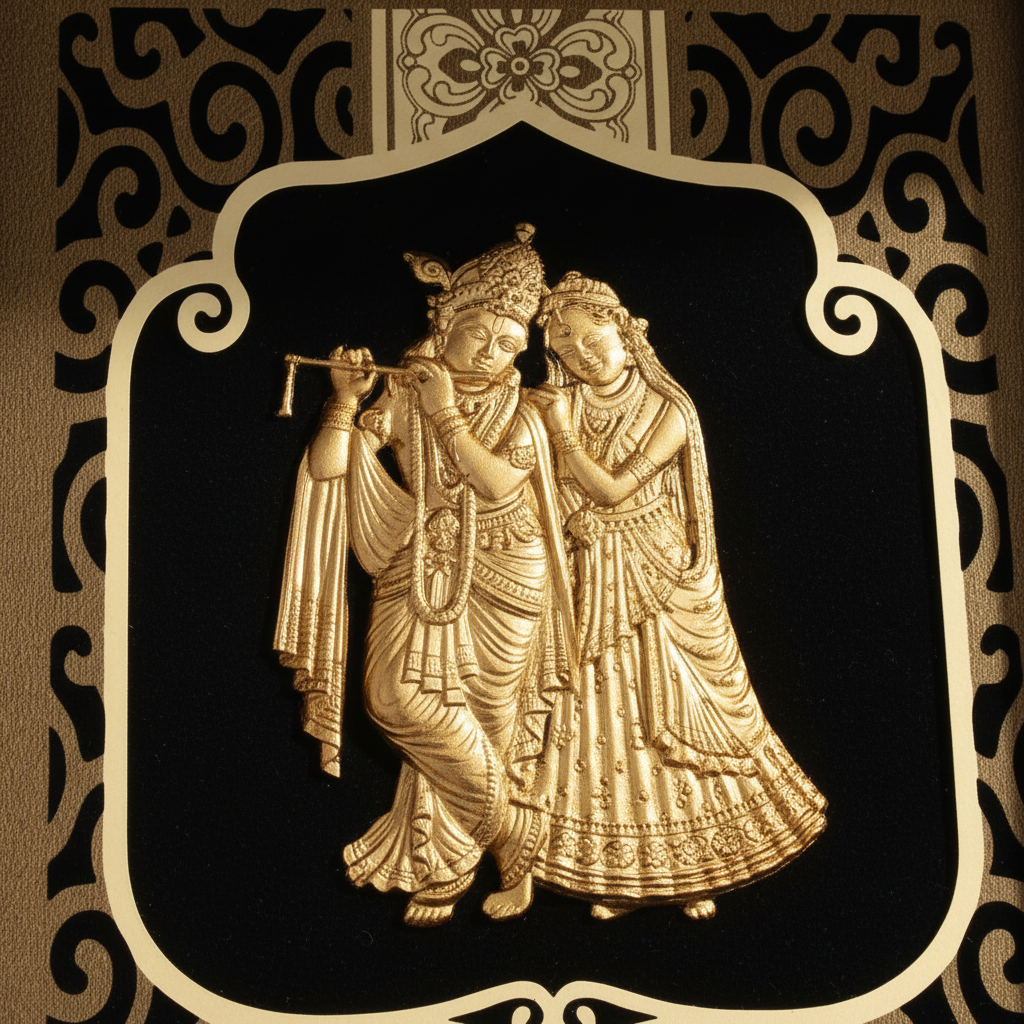
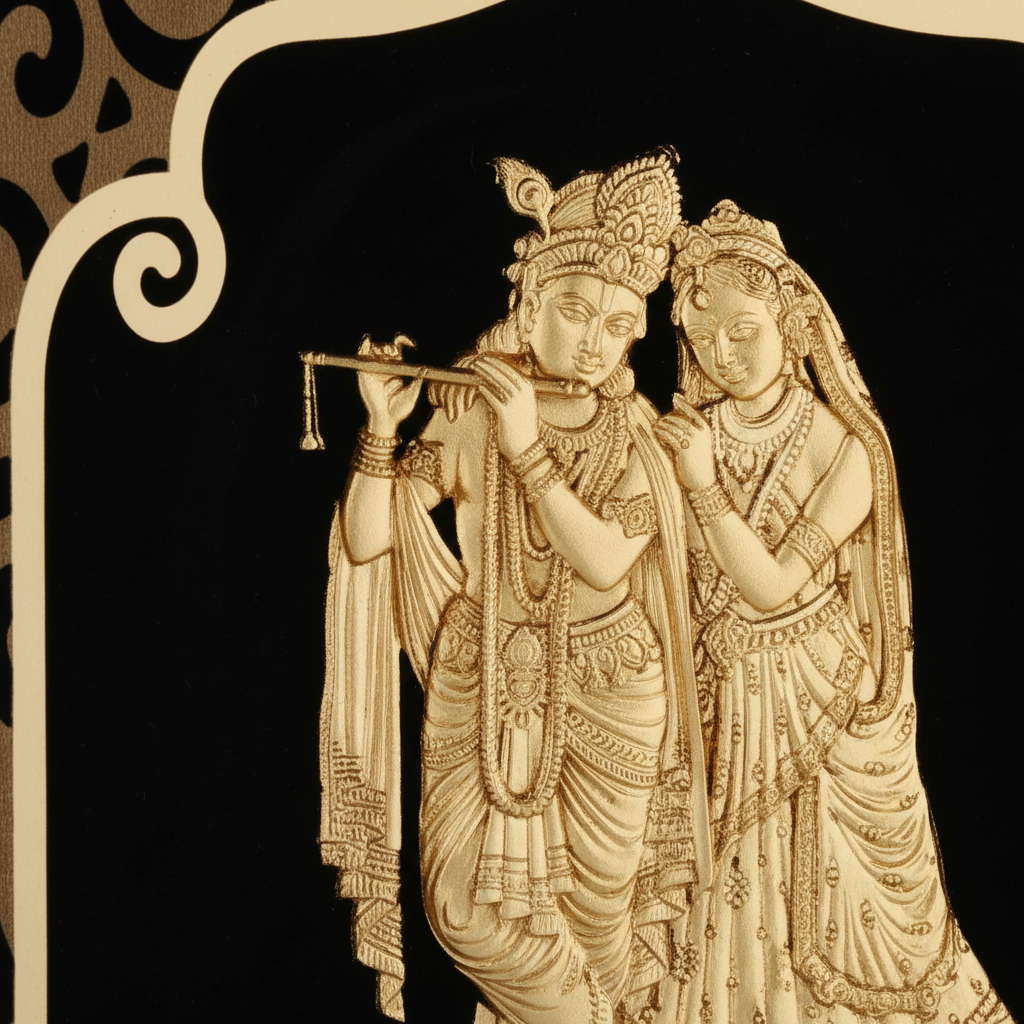
The most widely worshipped of all Vishnu’s avatars — and the most multidimensional. Playful child, divine lover playing the flute for the gopis, and the teacher who delivers the Bhagavad Gita as Arjuna’s charioteer in the Mahabharata war. Symbolic meaning: divine love, the highest wisdom, Bhakti as the supreme spiritual path.
9. Buddha — The Enlightened One
In the Vaishnava tradition, Gautama Buddha is recognized as Vishnu’s ninth avatar — the compassionate teacher who appeared to end unnecessary animal sacrifice and teach the path of non-violence (ahimsa). Symbolic meaning: compassion, non-violence, wisdom that transcends dogma.
10. Kalki — The Future Avatar
The only Dashavatara avatar who has not yet appeared. At the end of the current Kali Yuga — when dharma has declined to its lowest point — Vishnu will descend as Kalki, riding a white horse with a blazing sword, to destroy adharma and inaugurate the next Satya Yuga. Symbolic meaning: the renewal of cosmic order, the eternal return of the golden age.
The Dashavatara and the Theory of Evolution

One of the most striking aspects of the Dashavatara is how closely it parallels the modern theory of biological evolution:
- Matsya (fish) — life beginning in water
- Kurma (tortoise) — the amphibian, living in water and on land
- Varaha (boar) — a fully land-dwelling mammal
- Narasimha (man-lion) — a transitional form between animal and human
- Vamana (dwarf) — an early, smaller form of modern humanity
- Parashurama — the first fully modern human, governed by force
- Rama — the cultured, civilized, dharmic human
- Krishna — the fully spiritually realized human
- Buddha — the human who transcends the ego entirely
- Kalki — the future, beyond what current humanity can conceive
Dashavatara Sacred Art for the Home
Of the ten avatars, several are widely worshipped in household mandirs:
- Rama (Ram Darbar): Northeast corner or East wall of the puja room
- Radha-Krishna: Puja room, living room, or bedroom — the most widely worshipped avatar form
- Narasimha: Powerful protective image at the puja room or home entrance. Avoid the bedroom due to his fierce energy
A complete Dashavatara panel — all ten avatars in sequence — is a magnificent piece of sacred art for the living room or meditation space. Explore our collection of Radha-Krishna and Vishnu 24K gold foil paintings — and bring the most auspicious form of Vishnu’s sacred art into your home.