In this series
How to Set Up a Home Mandir: The Complete Guide

A home mandir — the sacred altar at the heart of a Hindu household — is more than a shelf with deity images. It is the spiritual center of the home: the point around which daily worship, seasonal rituals, and the household’s relationship with the divine are organized. Setting one up thoughtfully makes an enormous difference to the quality and consistency of your daily practice.
This guide covers everything you need to know: location, direction, structure, which deities to include, what items belong on the altar, and how to maintain it as a living sacred space.
Step 1: Choose the Right Location
The first decision — where in the home to place your mandir — is the most consequential. Vastu Shastra provides clear guidance:
- Northeast (Ishanya corner) is ideal: The most sacred zone in Vastu — associated with divine energy, clarity, and spiritual receptivity
- East wall is excellent: The direction of the rising sun — new beginnings, vitality, and positive energy
- North wall is auspicious: Kubera’s direction — the lord of wealth. Particularly suitable for Lakshmi puja
- Avoid south and southwest: Associated with Yama and considered inauspicious for deity placement
- Avoid the bedroom if possible: If the bedroom is the only option, place the mandir in the northeast corner and use a curtain or cabinet door to conceal it at night

Step 2: Choose the Right Height
The mandir should be placed at a height where the primary deity’s face is at or slightly above the eye level of a person seated for puja — typically between 3 and 5 feet from the floor. The deity should never be placed on the floor, and a mandir placed so high you must look sharply upward is not ideal for intimate devotional prayer.
Step 3: Choose Your Mandir Structure
- Dedicated mandir cabinet: A standalone wooden or marble unit with doors, multiple levels, and carved details. Ideal for permanent, visible sacred space
- Wall-mounted shelf mandir: Floating shelves dedicated to sacred art and puja items — practical for apartments and modern interiors
- Alcove or recessed mandir: A wall alcove specifically designed for the mandir — the most architecturally integrated option
- Tabletop mandir: For small spaces or rental situations, a dedicated table or console with sacred art on the wall behind it creates a complete sacred space within minimal footprint
Step 4: Choose Your Deities
The foundation pairing for any Hindu household:
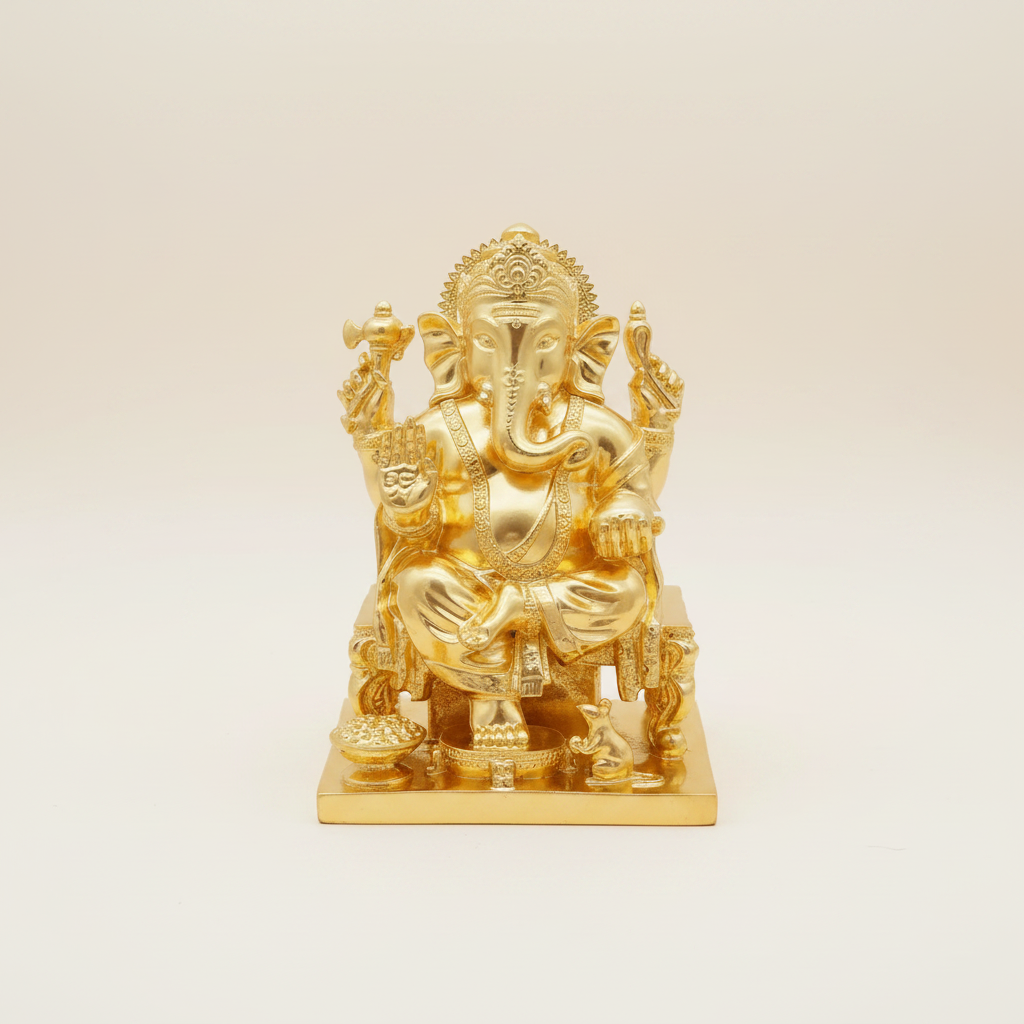
- Ganesha: Always present — the remover of obstacles, first invoked in every ritual. Place to the right of the primary deity (viewer’s right)
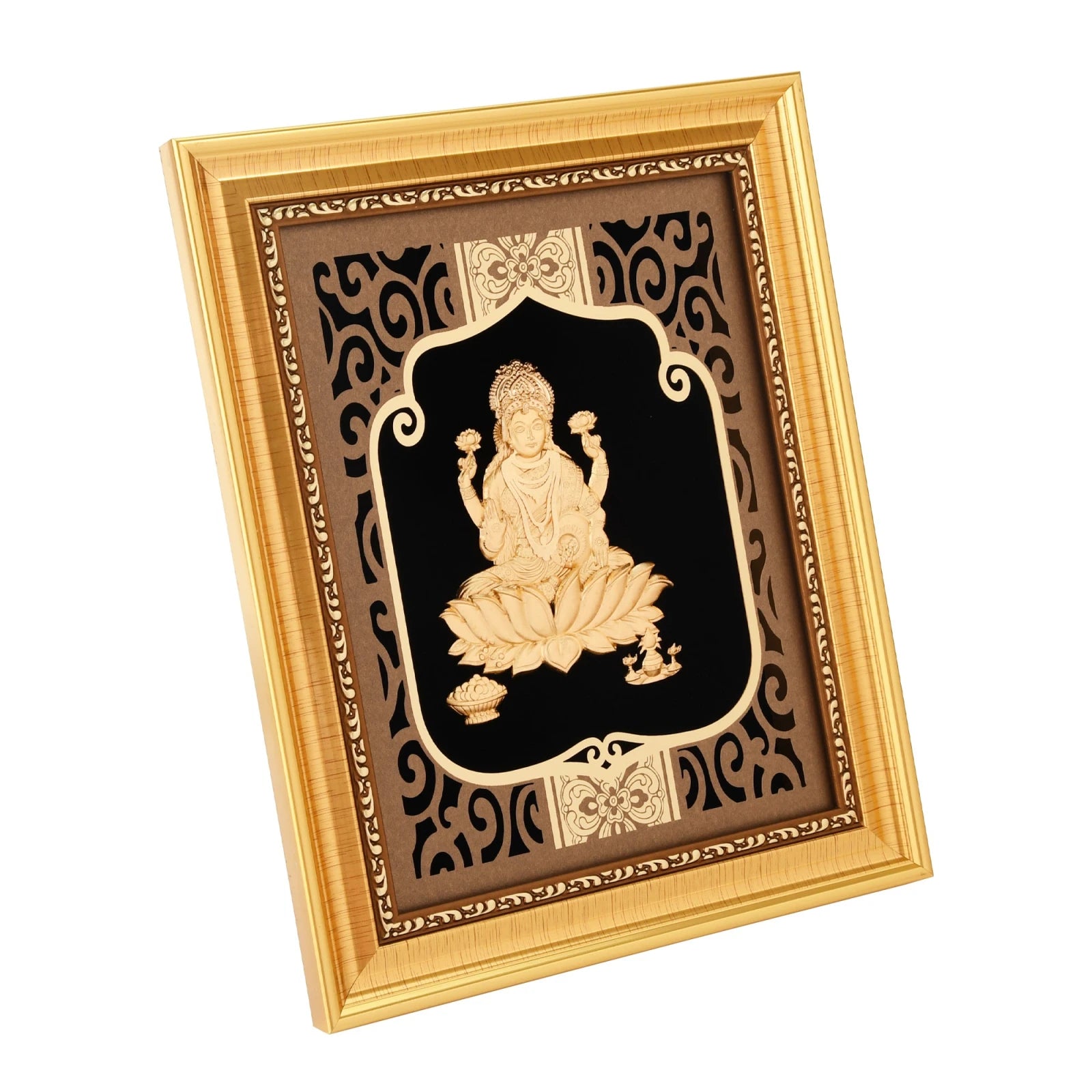
- Lakshmi: The goddess of prosperity and grace — the central deity for most Hindu households
- Family ishta devata: The chosen deity of your family lineage always has a place on the altar
Additional deities by intention: Saraswati for students and creatives, Hanuman for protection and strength, Krishna or Radha Krishna for Vaishnava households, Durga for Shakta traditions.
Guidance on number: An odd number of deity images (1, 3, 5) is traditionally preferred. More important than number is intention — each deity present should receive attentive worship.
Step 5: Arrange the Sacred Art
- The primary deity occupies the center and most elevated position
- Ganesha is placed to the right of the primary deity (viewer’s right)
- Secondary deities flank the central pair symmetrically
- The deity’s gaze and the worshipper’s gaze should meet during puja
- Paintings are placed at the back; statues in front so both are visible
Step 6: Arrange the Puja Items
- Kalash: Brass or copper pot with water, mango leaves, and coconut
- Diya or lamp: Ghee lamp or oil lamp kept burning during puja
- Incense holder: For daily incense offering — smoke carries prayers and purifies the space
- Flower tray or vase: Fresh flowers — lotus, marigold, rose, and jasmine are particularly auspicious
- Bell (ghanta): Rung at the beginning and end of puja
- Kumkum and chandan: For applying tilak to the deity and to oneself
- Puja thali: The ritual plate holding flowers, rice, kumkum, a diya, and incense
- Prasad: A sweet or food offering placed before the deity and distributed afterward

Step 7: Establish a Daily Practice
A mandir is only as alive as the practice it supports. Even five to fifteen minutes each morning establishes it as a living sacred space. A simple daily sequence:
- Cleanse: Wipe the altar, remove wilted flowers, refresh the kalash water
- Light the lamp and incense
- Ring the bell three times
- Offer flowers before the deity
- Chant or pray — a mantra, chalisa, or personal prayer
- Apply tilak to the deity and yourself
- Offer prasad and distribute to the household
- Close with a moment of gratitude

Choosing Sacred Art for Your Mandir
The sacred art at the center of your mandir deserves careful selection:
- Iconographic accuracy: Correct attributes, posture, and expression support correct devotion
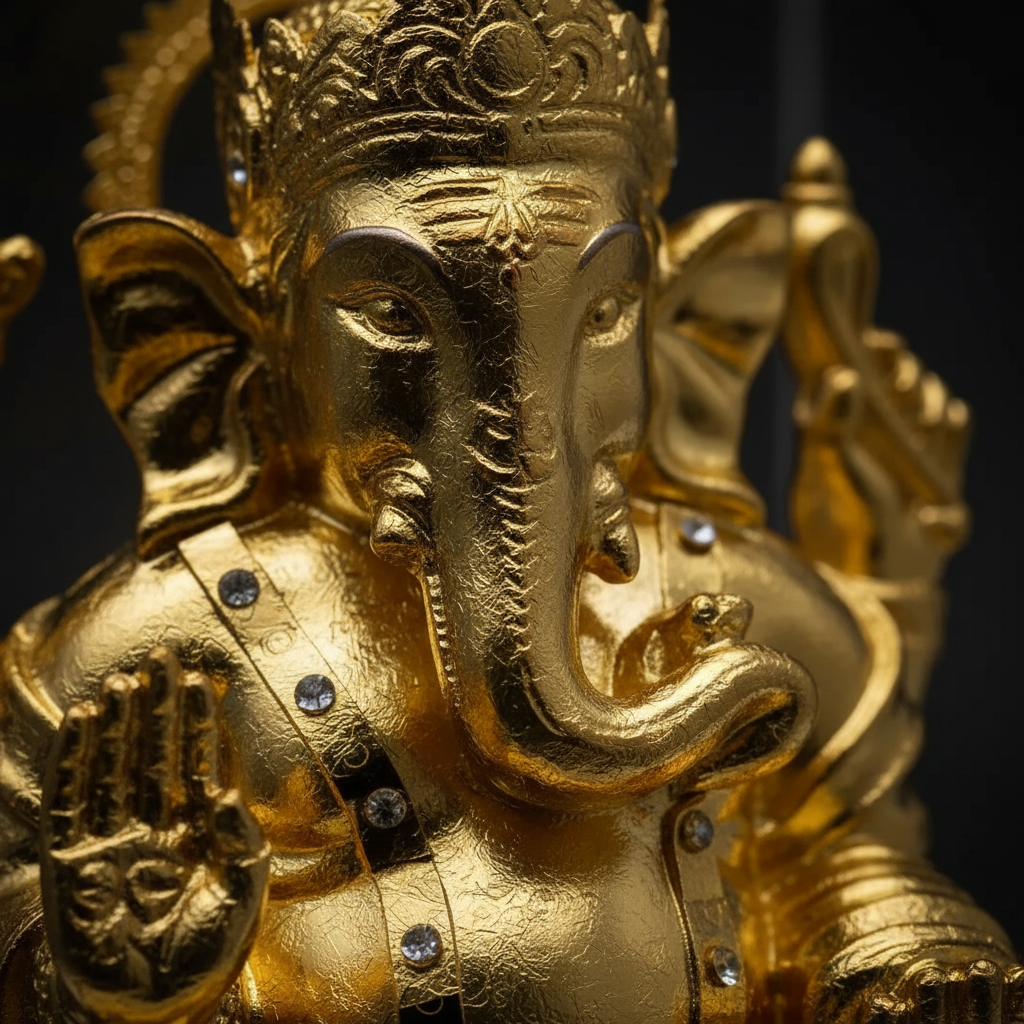
- Material quality: Gold has been the most sacred material for divine imagery across Hindu tradition for millennia. 24K gold foil paintings bring genuine gold into your mandir
- Size and scale: A 5x7" or 8x10" painting, or a 7–9" statue, is appropriate for most home mandirs
- Longevity: Choose pieces made to last — archival materials, quality frames, and craftsmanship that will remain beautiful as decades pass
Explore our collection of 24K gold foil deity paintings and sacred statues — each crafted with iconographic care, genuine gold, and the intention of serving as a living presence in your home mandir for years to come.
May your mandir be a place of genuine encounter — a threshold between the everyday and the sacred, always present at the heart of your home.