
In this series
The Murtis of Indic Civilization: Sacred Sculpture, Iconography & Spiritual Meaning
Summary
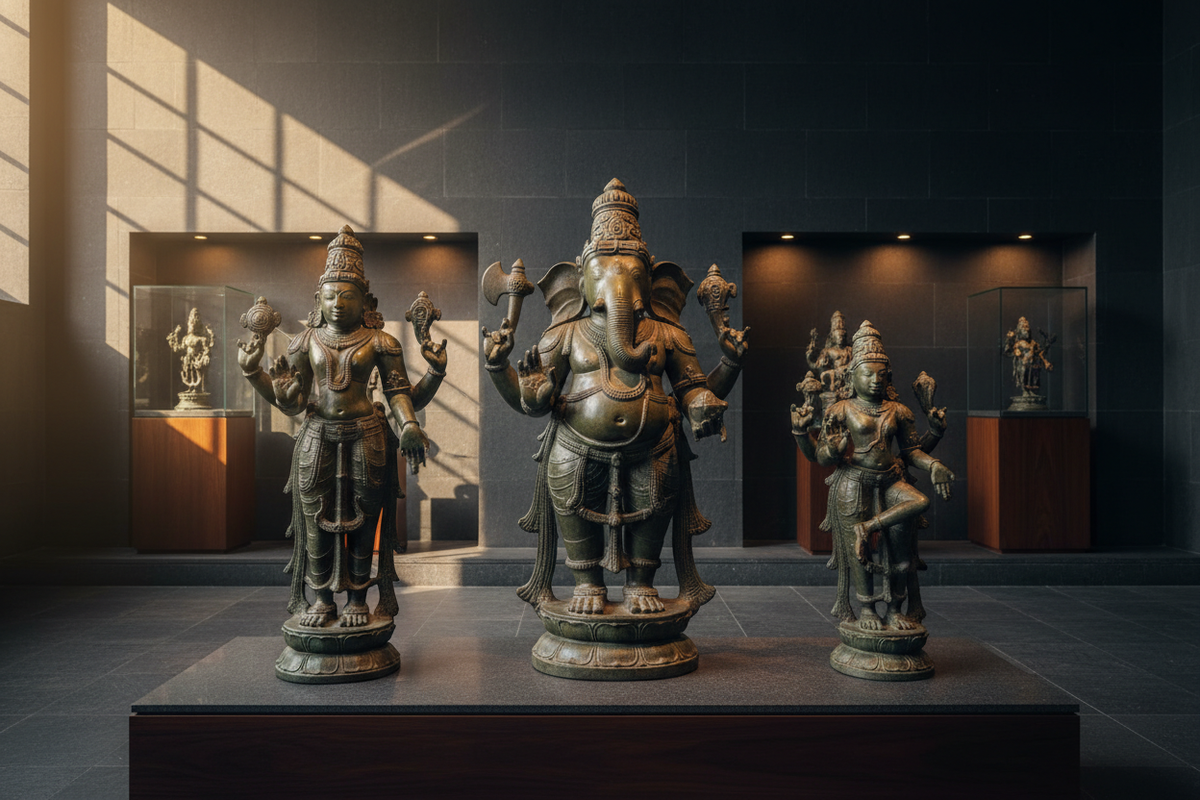
The Murti — the sacred image or idol — is one of the most distinctive and profound expressions of Indic civilization. For over 2,000 years, Indian sculptors have created sacred images of extraordinary beauty and spiritual power, following precise iconographic guidelines (Shilpashastra) that encode the qualities and energies of the divine in every proportion, gesture, and ornament. This guide explores the origins of Murti worship, the iconography of the most important Murtis, and their role in Hindu spiritual life.
The Origin of Murtis

The word Murti comes from Sanskrit, meaning "form" or "embodiment" — a sacred image that embodies the presence of the divine. The Agama Shastras (temple scriptures) teach that a properly consecrated Murti is not merely a representation of the divine but a living presence — the deity actually dwells in the image after the Prana Pratishtha (consecration) ritual. This understanding transforms the Murti from a symbol into a sacred being deserving of worship, care, and devotion.
The Shilpashastra: The Science of Sacred Sculpture
The Shilpashastra is the ancient Indian treatise on sacred art and architecture — a comprehensive system of guidelines for creating Murtis that correctly embody the qualities and energies of each deity. Every aspect of a Murti is precisely specified: the proportions of the body, the number and position of arms, the objects held, the facial expression, the posture, the ornaments, and the vehicle (vahana). These guidelines ensure that the Murti accurately represents the deity's divine qualities and serves as an effective focus for worship and meditation.
The Murtis of Lord Ganesha
| Form | Posture | Key Features | Significance |
|---|---|---|---|
| Sitting Ganesha | Seated in royal ease | Modak in hand, mouse at feet | Most auspicious for home worship; stability and blessing |
| Standing Ganesha | Standing, one leg raised | Four arms with various objects | Active blessing; used in processions and festivals |
| Dancing Ganesha | Dancing pose | Multiple arms in dynamic movement | Joy, creativity, and the cosmic dance of existence |
| Panchamukha Ganesha | Seated, five faces | Five heads facing five directions | Omniscience; protection in all directions |
The Murtis of Lord Vishnu (Perumal)
| Form | Posture | Key Features | Significance |
|---|---|---|---|
| Standing Vishnu | Standing (Sthanaka) | Four arms: conch, chakra, mace, lotus | The preserver; active blessing and protection |
| Seated Vishnu | Seated on throne (Asana) | With Lakshmi; royal dignity | Divine sovereignty; prosperity and grace |
| Reclining Vishnu | Reclining on Shesha (Shayana) | On cosmic serpent; Lakshmi at feet; Brahma from lotus | Cosmic rest; the source of all creation |
| Dashavatara | Ten avatars | Matsya, Kurma, Varaha, Narasimha, Vamana, Parashurama, Rama, Krishna, Buddha, Kalki | Vishnu's ten descents to restore dharma |
Conclusion
The Murtis of Indic civilization are among the greatest achievements of human artistic and spiritual expression — sacred images that have served as living presences of the divine for thousands of years, inspiring devotion, guiding meditation, and expressing the Hindu understanding of the divine in its infinite variety of forms. To bring a Murti into your home is to participate in this ancient tradition — to invite the divine to dwell with you in the most tangible and beautiful form possible.
Explore Moksha Craft's collection of handcrafted Murtis — made in India, delivered worldwide.

