
In this series
Srimad Bhagavad Gita: A Journey of Bhakti & Self-Discovery Through Krishna's Teachings
Summary
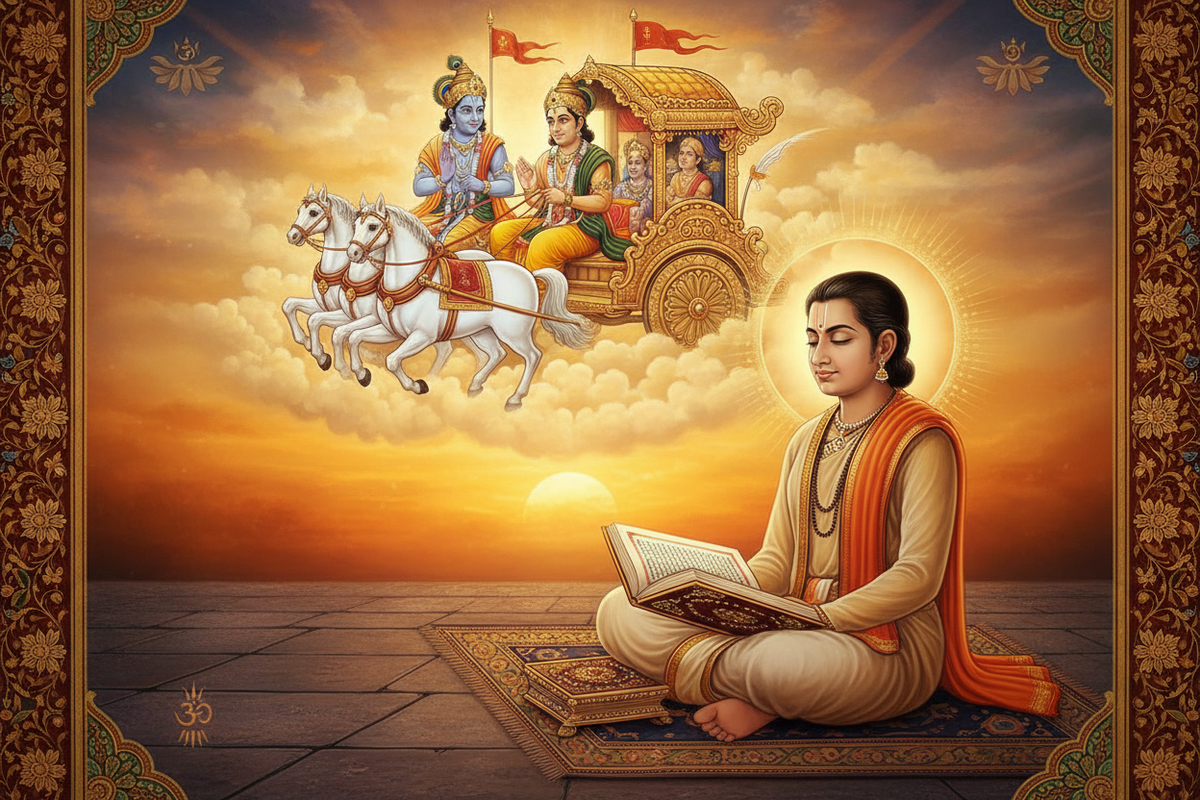
The Srimad Bhagavad Gita — embedded in the Bheeshma Parva of the Mahabharata — is Lord Krishna's divine discourse to the warrior Arjuna on the battlefield of Kurukshetra. In 18 chapters and 700 verses, it covers the complete spectrum of human experience and spiritual aspiration: from the crisis of duty and the fear of death to the highest teachings on consciousness, liberation, and the nature of the divine. This guide explores the Gita as a journey of Bhakti (devotion) and self-discovery.
The Core Topics of the Bhagavad Gita

| Topic | Chapters | Key Teaching |
|---|---|---|
| Karma Yoga | 3–6 | Act without attachment to results; offer all actions to the divine; selfless service as the path to liberation |
| Jnana Yoga | 7–12 | Knowledge of Brahman (the ultimate reality); discrimination between the real and the unreal |
| Bhakti Yoga | 9, 12 | Loving devotion to Krishna as the supreme path; surrender to the divine will |
| Dharma | Throughout | Righteous living; fulfilling one's duty according to one's nature and station in life |
| Kala (Time) | 11 | Krishna reveals himself as Time — the destroyer of all worlds; the cosmic perspective on human life |
| Prakriti (Nature) | 13–18 | The three gunas (Sattva, Rajas, Tamas) and how they govern all of nature and human behavior |
The Path of Bhakti in the Bhagavad Gita

The Bhagavad Gita's most celebrated teaching is the path of Bhakti Yoga — loving devotion to the divine. In Chapter 12, Krishna declares that the devotee who worships him with unwavering love and devotion is the most dear to him. The Bhakti path does not require renunciation of the world, mastery of philosophy, or years of meditation — it requires only a sincere, loving heart turned toward the divine.
The supreme teaching of the Gita comes in its final verse (18.66): "Abandon all dharmas and take refuge in Me alone. I will liberate you from all sins. Do not grieve." This is the Gita's ultimate invitation — to surrender completely to the divine and trust in Krishna's grace.
Rules for Reading the Bhagavad Gita
- Be in a clean, hygienic condition before reading
- Place the Gita in a clean, elevated space — never on the floor
- Read with respect, attention, and an open heart
- Begin with a prayer or invocation to Lord Krishna
- Read at least one chapter or one verse daily for sustained benefit
Best Hindi Translations of the Bhagavad Gita
| Translation | Commentary | Best For |
|---|---|---|
| Gita Press Gorakhpur edition | Sadhak Sanjeevani by Swami Ramsukhdas | Daily devotional reading; most widely used in India |
| Osho's commentary | Geeta Darshan | Philosophical and psychological exploration |
| Prabhupada's edition | Bhagavad Gita As It Is | Vaishnava devotional perspective; ISKCON tradition |
| Vinoba Bhave's Geetai | Poetic Marathi/Hindi rendering | Devotional poetry; Gandhi's favorite |
Conclusion
The Srimad Bhagavad Gita is not a book to be read once and understood — it is a lifelong companion that reveals new depths with every reading, as the reader's own consciousness deepens. Whether you approach it as a devotional text, a philosophical treatise, or a practical guide to living, the Gita offers what no other text can: a direct, personal conversation with the divine, available to every human being who opens its pages with sincerity and love.
"Sarva-dharman parityajya mam ekam sharanam vraja" — Abandon all dharmas and take refuge in Me alone. (Bhagavad Gita 18.66)
This article is part of Moksha Craft's Sacred Knowledge Series — handcrafted in India, delivered worldwide.

