In this series
How Makarana Marble Statues Are Made: The Sacred Art of Rajasthan's Divine Sculptors
Summary
Makarana marble statues are sacred works of art, hand-carved from pristine white stone found in Rajasthan's ancient quarries. Revered for their purity and durability, these murtis are crafted through a traditional process that blends spiritual devotion with ancestral skill. From quarry selection to gold-leaf detailing, every step reflects reverence, precision, and cultural heritage.
The Sacred Art of Makarana Marble Statues
White marble in the world of art is a symbol of purity, divinity, and perfection. Named after the famed quarries of Makarana in Rajasthan — the same source that provided marble for the Taj Mahal — Makarana marble murtis often find their sacred place within the garbhagriha (sanctum sanctorum) of temples and home mandirs. What sets them apart is the purity of the stone, the enduring tradition, and the ancestral craftsmanship that shapes it.
The murtikara (sculptors) of white marble statues trace their lineage to Brahma and Vishwakarma, the divine artists. Through endless days and sleepless months, their hands sculpt life into cold stone — until marble begins to breathe.
The Sacred 5-Step Process of Making a Makarana Marble Statue

Step 1: Selecting the Marble Block
Sculptors visit the mines in Makarana and identify a stone piece based on the size and subject of the idol. The chosen block is transported to the workshop, where the artistry begins. The selection itself is a sacred act — the sculptor looks for stone with the right grain, purity, and energy.
Step 2: Sketching and Modeling
A model of the sculpture is made in mud, or a rough sketch is drawn on the marble block. This gives the sculptor a precise guide for the form, proportions, and iconographic details of the deity — following the sacred measurements prescribed in the Shilpa Shastra.
Step 3: Hand Carving
While machines help with rough shaping, the true sculpting — bringing form and life to marble — is done entirely by hand, using chisels, hammers, and nails of varying textures and gauges. Each tool leaves its mark, revealing the deity layer by layer. This is the most time-intensive stage, requiring weeks or months of focused work.
Step 4: Painting with Natural Colors
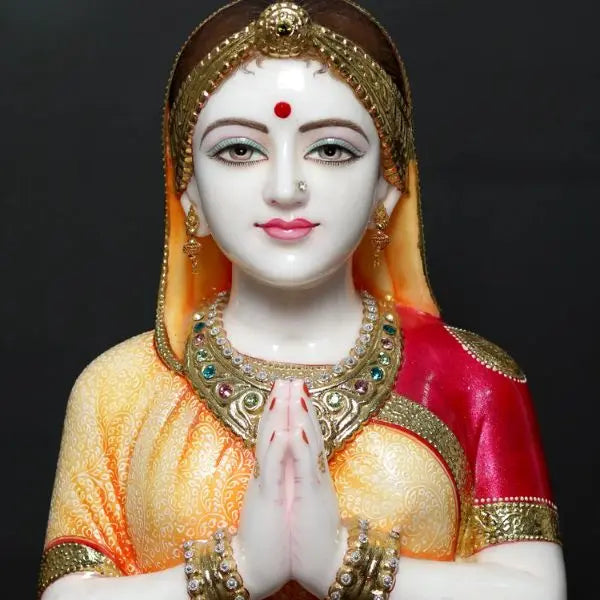
Decorating the sculpted statue with colors — highlighting the ornaments, attire, and facial features — is a unique step in marble sculpture making. Traditionally, mineral colors made from ground stones were mixed with gum. Today, both mineral and acrylic colors are used, applied by hand with devotional care.
Step 5: Gold Leaf Detailing and Finishing
Fine layers of 24K gold leaf are applied to adorn the ornaments, crown, and sacred details of the marble statue, giving them a luminous, divine finish. A protective layer of lacquer guards the gold and colors from chipping or fading — ensuring the murti retains its sacred beauty for generations.
Why Makarana Marble Is Sacred
| Quality | Significance |
|---|---|
| Purity | White symbolizes divine purity and spiritual clarity in Hindu tradition |
| Durability | Makarana marble lasts centuries — making it ideal for heirloom murtis |
| Sacred lineage | The same marble used in the Taj Mahal and countless Rajasthan temples |
| Ancestral craft | Sculptors follow traditions passed down through generations of murtikara families |
| Shilpa Shastra alignment | Every proportion follows the sacred iconometric guidelines of ancient texts |
Frequently Asked Questions
Q: What is special about Makarana marble statues?
Makarana marble statues are prized for their purity, durability, and spiritual symbolism. They are handcrafted by artists with centuries-old lineage following the Shilpa Shastra.
Q: Where does Makarana marble come from?
From the Makarana quarries in Rajasthan, India — one of the oldest and purest marble sources in the world, also used in the Taj Mahal.
Q: Why is gold leaf used in marble idols?
Gold symbolizes divine radiance. Applying gold leaf is a sacred tradition used to highlight spiritual elements like crowns and ornaments, connecting the murti to the divine light of the deity.
Q: How long does it take to make a Makarana marble murti?
Depending on size and detail, from several weeks to several months. Each step is done by hand with ritual care and spiritual focus.
Conclusion: Putting Soul into Stone
If a marble statue seems alive, it is because the artist has breathed into it moments of their own life and soul. Every Makarana marble murti is not merely a sculpture — it is a sacred invocation, a meeting point between human devotion and divine presence.
"The sculptor does not create the deity. The sculptor reveals what was always within the stone."
This article is part of Moksha Craft's Sacred Knowledge Series — handcrafted in India, delivered worldwide.