In this series
Hindu Wall Art: How to Choose & Place Sacred Deity Art in Modern Homes

Hindu wall art has moved well beyond the temple and the traditional puja room. In modern homes across the US, UK, Canada, and Australia — and in contemporary Indian apartments — sacred deity art is increasingly understood as something that can be both devotionally meaningful and visually stunning. This guide covers everything you need to know about choosing and placing Hindu wall art in the modern home.
Devotional Art vs. Decorative Art
The first question to clarify: what role do you want this image to play?
- Devotional sacred art is a focal point for daily worship — chosen primarily for its devotional and iconographic qualities, belonging in the mandir space
- Devotional-decorative art serves both purposes: genuine sacred meaning and aesthetic beauty, placed in living rooms, entryways, and bedrooms as part of the home’s spiritual atmosphere and interior design
The best Hindu wall art in the modern home operates at the devotional-decorative level — sacred images made with genuine devotional intention, chosen and placed with awareness of both their spiritual and aesthetic qualities.
Choosing the Right Deity for Each Space
Entryway
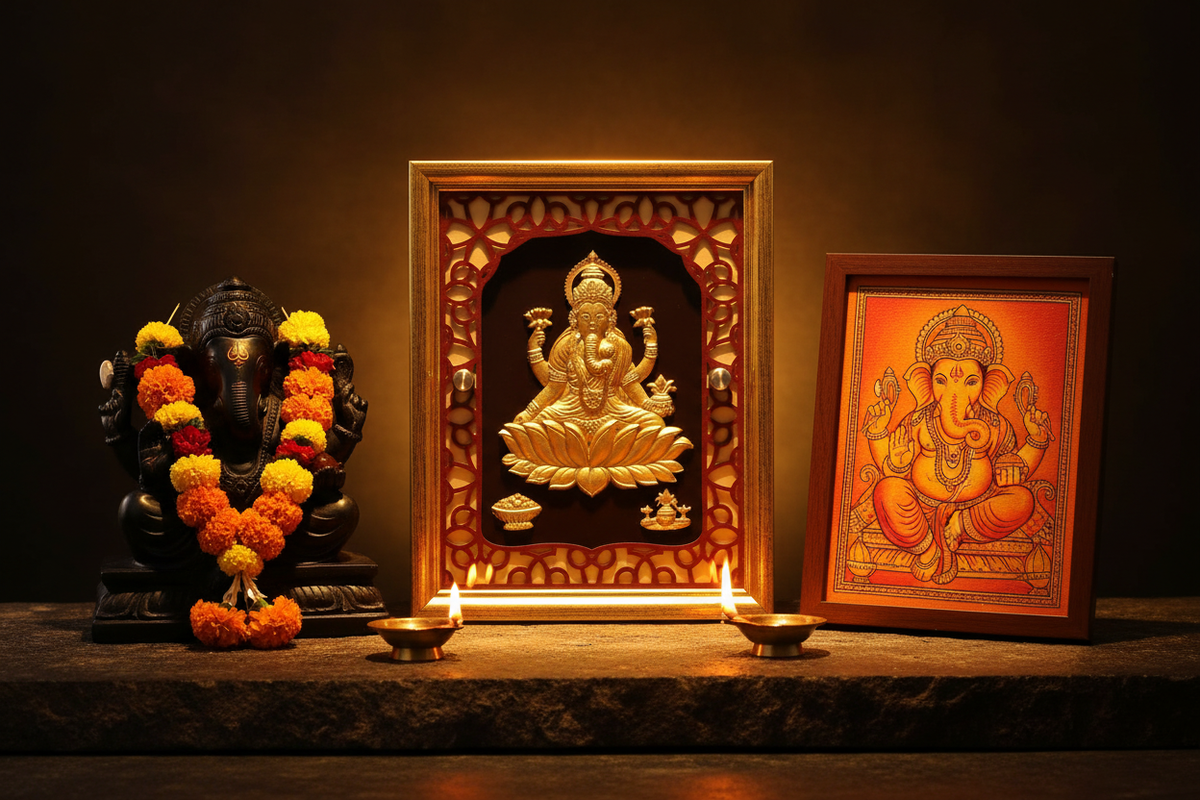
Ganesha is the most universally appropriate deity for the entryway — the lord of thresholds, remover of obstacles, facing inward to welcome those who enter and guard against negative energies. Lakshmi at the entrance invites abundance with every opening of the door. Placement: beside the main door, facing inward, at eye level.
Living Room
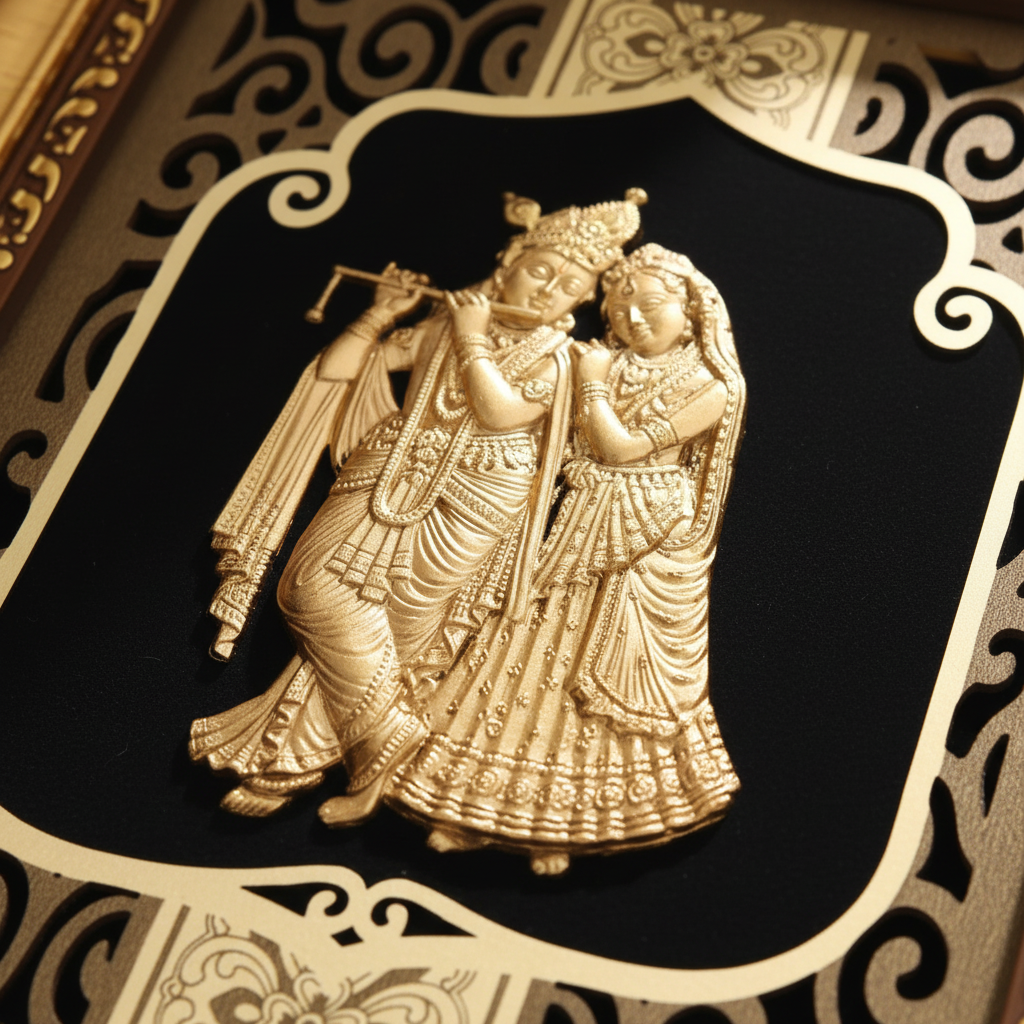
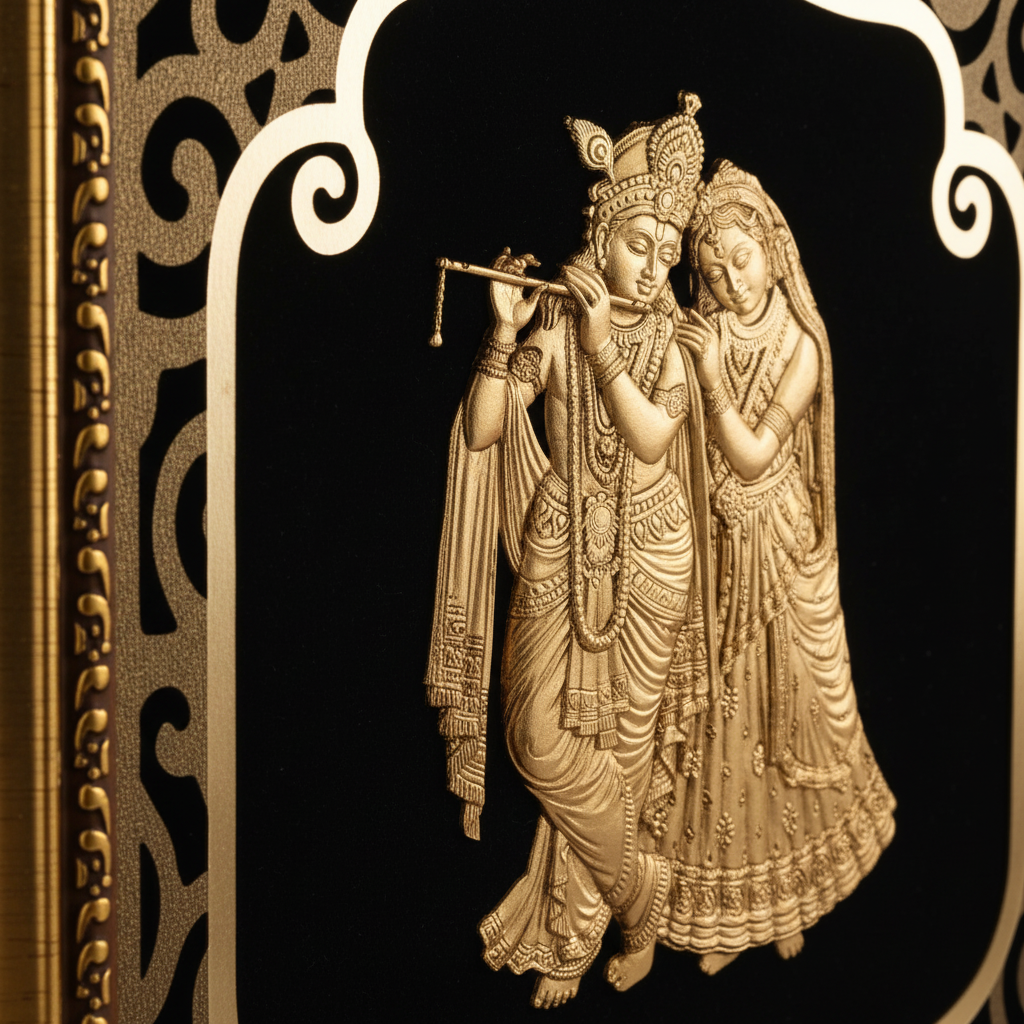
Radha-Krishna brings joy, warmth, and divine love to the primary gathering space. Lakshmi aligns the living room with prosperity and grace. Ganesha ensures all conversations and decisions begin auspiciously. Saraswati brings wisdom and the arts to shared space. Vastu placement: Northeast corner ideal, East wall second choice, North wall for Lakshmi. Avoid the South wall as the primary image position.
Study Room or Home Office
Saraswati — the goddess of knowledge, learning, and the arts — is the natural deity for any study or workspace. A Saraswati image on the East wall creates a spiritually supportive environment for intellectual and creative work. Students traditionally keep Saraswati in their study space throughout the academic year.
Bedroom
Radha-Krishna is the most appropriate bedroom deity — divine love’s energy is auspicious in the space of rest and intimacy. Avoid fierce or active goddess forms whose energy is too intense for the bedroom. Keep the bedroom image smaller and quieter than the main mandir focal point.
Kitchen
A small Lakshmi or Annapurna image in the kitchen’s Northeast corner aligns the space of food preparation with gratitude and abundance.
Choosing the Right Format

Mass-produced prints fade within months, lack intrinsic sacred quality, and cannot serve as long-term devotional focal points.
24K gold foil paintings are categorically different:
- Luminosity: Genuine gold reflects light differently at dawn, dusk, and by lamplight — the painting appears to glow in ways no print or gold-colored paint can replicate
- Permanence: 24K gold does not tarnish, oxidize, or fade. The painting looks the same in twenty years as it does today
- Material devotion: Gold is the most auspicious material in the Hindu understanding — associated with Lakshmi, purity, and the sun. A painting made with genuine gold carries sacred intention that no print can replicate
- Heirloom quality: A 24K gold foil painting is a permanent sacred presence that can be passed from generation to generation
Choosing the Right Size

- Entryway: 6x7 to 8x10 inches — visible and beautiful without overwhelming the threshold
- Living room mandir shelf: 8x10 to 12x15 inches — commanding presence as the focal point
- Living room statement wall: 12x15 inches and larger — anchors the room’s aesthetic and spiritual atmosphere
- Study or bedroom: 6x7 to 8x10 inches — focused and intimate
Frame Selection
Gold frames are the traditional choice and most universally appropriate — extending the luminosity of the gold foil into the frame itself, creating a unified sacred object. For contemporary interiors with darker palettes, a dark wood or ebony frame creates a dramatic jewel-like effect against the gold foil image.
Vastu Placement Checklist
- Northeast corner or East wall for the primary mandir image in any room
- North wall for Lakshmi images
- East wall for Saraswati
- Main entrance: Ganesha facing inward at eye level
- Avoid South wall for primary mandir images (exception: Hanuman)
- Avoid bathroom walls and walls shared with bathrooms
- All images at eye level or above — never on the floor or below waist level
- All altar images facing the same direction
Building a Sacred Art Collection
Begin with the entryway (Ganesha), establish the mandir (Lakshmi and Ganesha, or your primary deity), then expand room by room. A home gradually filled with intentional sacred art becomes fully alive with sacred presence — each image chosen for a specific space and a specific devotional purpose, building over years into a home that reflects the full richness of the Hindu devotional tradition.
Explore our full collection of 24K gold foil paintings in Ganesha, Lakshmi, Durga, Saraswati, Krishna, Radha-Krishna, and Hanuman — and find the sacred image for every space in your home.