
In this series
Lord Hanuman: The Powerful Hindu God — Meaning, Symbolism, Mudras & Sacred Idols
Summary
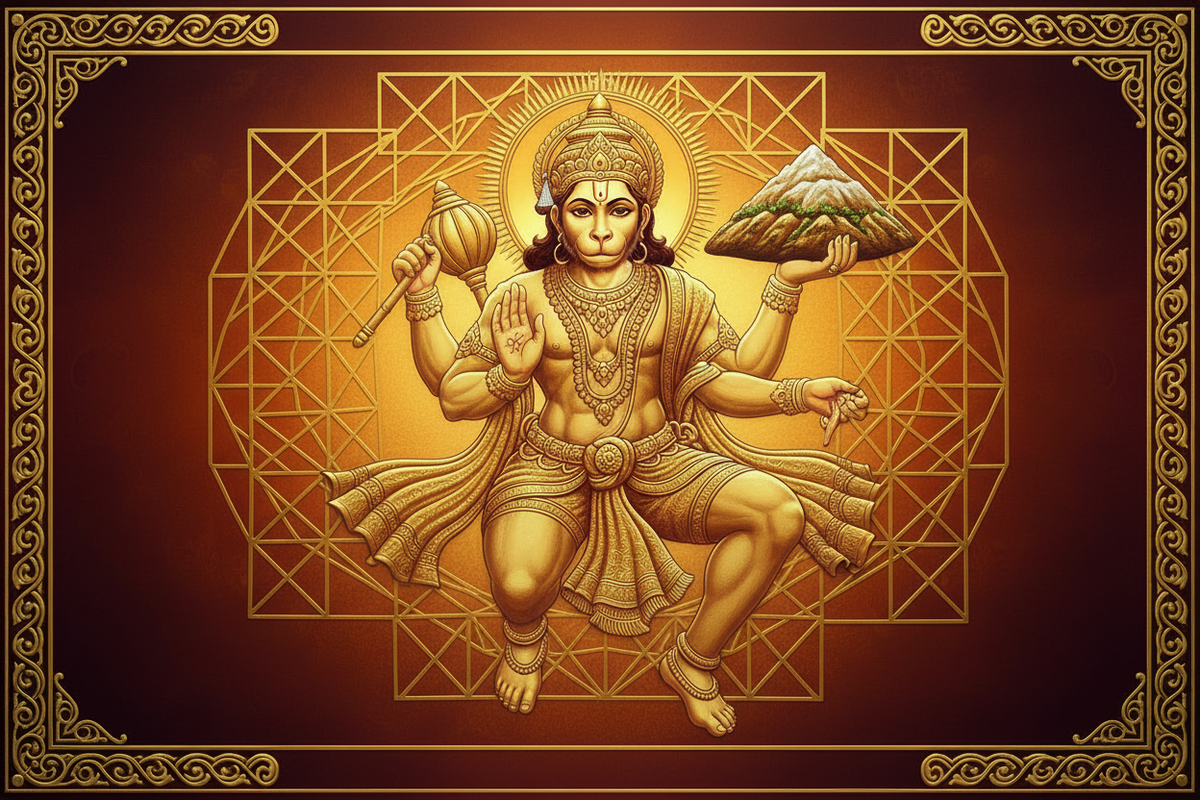
Lord Hanuman is one of the most beloved and powerful deities in the Hindu pantheon — the embodiment of devotion, strength, courage, and selfless service. As the greatest devotee of Lord Rama and the hero of the Ramayana, Hanuman represents the highest ideal of Bhakti (devotion) and the unlimited power that flows from complete surrender to the divine. This guide explores his symbolism, sacred mudras, and how to choose the right Hanuman idol for your sacred space.
Who is Lord Hanuman?
Lord Hanuman is the son of Vayu (the wind god) and Anjana, born with divine powers and an indestructible body. He is one of the eight Chiranjeevis — immortal beings who remain alive through the current age. As the devoted servant of Lord Rama, Hanuman played a pivotal role in the Ramayana — crossing the ocean to Lanka, finding Sita, burning Lanka, and carrying the Sanjeevani mountain to save Lakshmana's life.
Hanuman is worshipped as the deity of strength, courage, protection, and devotion. He is especially revered on Tuesdays and Saturdays, and his most sacred text — the Hanuman Chalisa — is recited by millions of devotees daily as a prayer for protection and strength.
The Sacred Mudras of Hanuman

| Mudra | Pose | Blessing | Best Placement |
|---|---|---|---|
| Aashirvaad Mudra | Right hand raised in blessing, mace in left hand | Divine blessings, protection, and grace | Main entrance, living room |
| Namaskar Mudra | Both hands folded in prayer, eyes closed | Devotion, humility, and inner peace | Meditation room, mandir |
| Dhyana Mudra | Seated in meditation, eyes half-closed | Spiritual focus, wisdom, and tranquility | Study, meditation space |
| Veera Mudra | Standing with mace raised, fierce expression | Courage, strength, and protection from enemies | Entrance, south-facing wall |
The Symbolism of Hanuman

| Symbol | Spiritual Meaning |
|---|---|
| Monkey form | The restless mind tamed and directed toward the divine through devotion |
| Mace (Gada) | Strength, power, and the ability to destroy obstacles and evil |
| Rama and Sita in his heart | The highest ideal of Bhakti — the devotee who carries the divine within |
| Sanjeevani mountain | The life-giving power of devotion; Hanuman as the healer and protector |
| Red color | Courage, vitality, and the fierce protective energy of Hanuman |
| Sacred thread (Yajnopavita) | Hanuman as a Brahmachari — celibate, disciplined, and devoted |
How to Worship Lord Hanuman
- Recite the Hanuman Chalisa daily — especially on Tuesdays and Saturdays
- Offer red flowers, sindoor (vermilion), and sesame oil to the Hanuman idol
- Light a sesame oil lamp on Saturdays to remove the malefic effects of Shani (Saturn)
- Chant "Om Hanumate Namah" 108 times for strength and protection
- Place the Hanuman idol facing south — the direction of Yama, which Hanuman guards
- Read the Sundara Kanda of the Ramayana for Hanuman's blessings
Conclusion
Lord Hanuman is the living proof that devotion is the greatest power in the universe. His story teaches us that when the mind is completely surrendered to the divine, it becomes capable of crossing oceans, moving mountains, and conquering death itself. To worship Hanuman is to invoke the limitless strength that lies within every devoted heart.
"Jai Hanuman gyan gun sagar, Jai Kapis tihun lok ujagar." — Hanuman Chalisa
This article is part of Moksha Craft's Sacred Knowledge Series — handcrafted in India, delivered worldwide.
