
In this series
Is Avalokiteshvara Male or Female? The Bodhisattva of Compassion Explained
Summary
Avalokiteshvara — the Bodhisattva of Compassion — is one of the most beloved and widely worshipped figures in all of Buddhism. But is Avalokiteshvara male or female? The answer is: both, and neither. Avalokiteshvara is a transcendent being of pure compassion who can appear in any form — male, female, or non-binary — according to the needs of the beings he or she is helping. This guide explores the many forms of Avalokiteshvara across Buddhist traditions.
Who is Avalokiteshvara?

The name Avalokiteshvara comes from Sanskrit: Avalokita ("one who looks down") + Ishvara ("lord") — "the lord who looks down upon the world with compassion." According to the Lotus Sutra, Avalokiteshvara can appear in 33 different manifestations — male, female, human, divine, or animal — whatever form is most helpful to the beings who need assistance.
The Major Forms of Avalokiteshvara
| Form | Tradition | Gender | Key Features |
|---|---|---|---|
| Chenrezig | Tibetan Buddhism | Male | Four arms, wish-fulfilling gem, mala; the patron deity of Tibet; the Dalai Lama is considered his incarnation |
| Guanyin (Guanshiyin) | Chinese Buddhism | Female | White robes, willow branch, vase of pure water; the "Goddess of Mercy"; most popular deity in East Asia |
| Kannon | Japanese Buddhism | Both / androgynous | Multiple forms; one of the most widely worshipped deities in Japan |
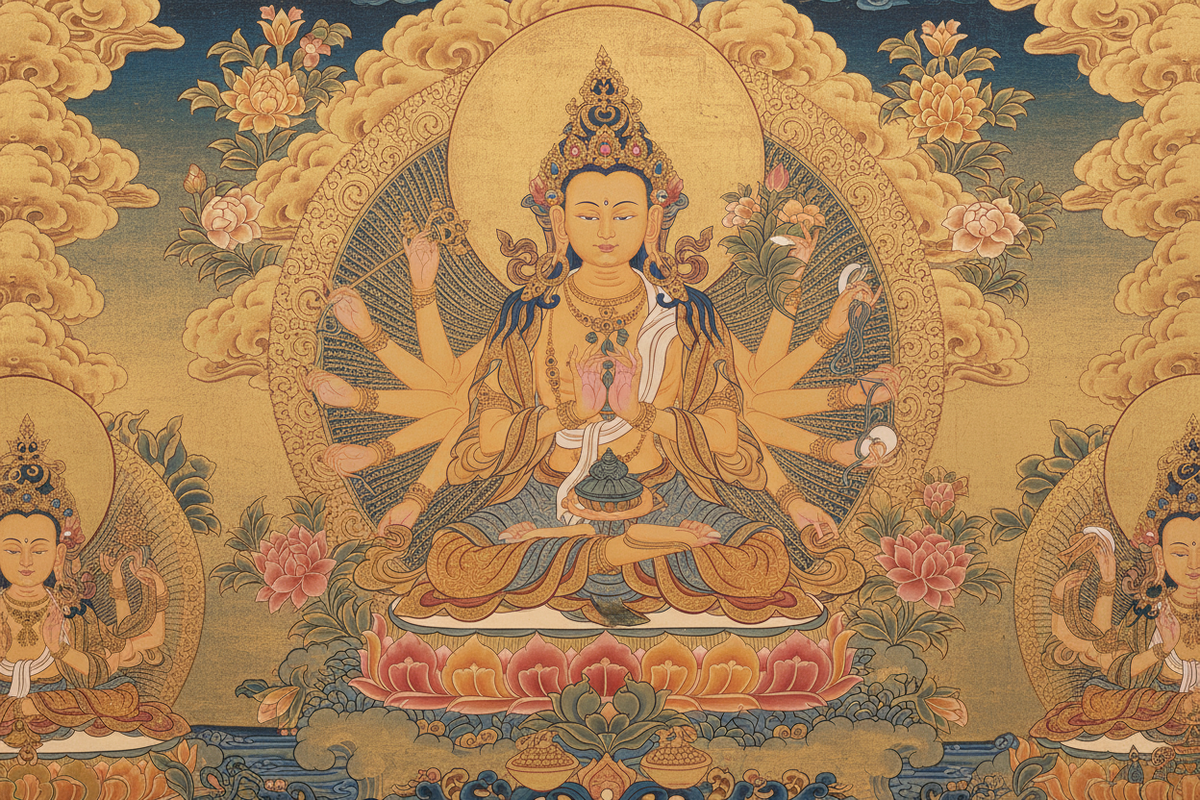
| Ekadashamukha | Pan-Buddhist | Male | Eleven faces representing compassion in all directions; eight or ten arms |
| Chintamanichakra | Pan-Buddhist | Male | Six arms holding wish-fulfilling gem and Dharma Wheel; seated in royal ease |
| Tara (White and Green) | Tibetan Buddhism | Female | Born from Avalokiteshvara's tears of compassion; White Tara (longevity), Green Tara (protection) |
Guanyin: The Female Face of Compassion

In China, Avalokiteshvara transformed over centuries from a male Indian Bodhisattva into Guanyin — the female "Goddess of Mercy" who is arguably the most widely worshipped deity in East Asia. This transformation reflects the Buddhist teaching that compassion has no fixed gender — it takes whatever form is most accessible and helpful to those who need it. Guanyin is depicted in white robes, holding a willow branch and a vase of pure water, radiating infinite compassion and grace.
Why Avalokiteshvara Transcends Gender
The question of Avalokiteshvara's gender points to a profound Buddhist teaching: compassion itself has no gender. The Bodhisattva of Compassion appears in whatever form — male, female, human, divine — is most helpful to the beings who need assistance. This is the meaning of the 33 manifestations described in the Lotus Sutra: Avalokiteshvara's compassion is so vast and so responsive that it can take any form, speak any language, and meet any being exactly where they are.
Conclusion
Avalokiteshvara is neither male nor female — and both. This Bodhisattva of infinite compassion transcends all categories, including gender, appearing in whatever form brings the most benefit to suffering beings. Whether you are drawn to the male Chenrezig of Tibet, the female Guanyin of China, or the androgynous Kannon of Japan, you are connecting with the same infinite compassion — the heart of the Buddhist path.
Explore Moksha Craft's collection of handcrafted Avalokiteshvara and Guanyin statues — made in India and Nepal, delivered worldwide.

